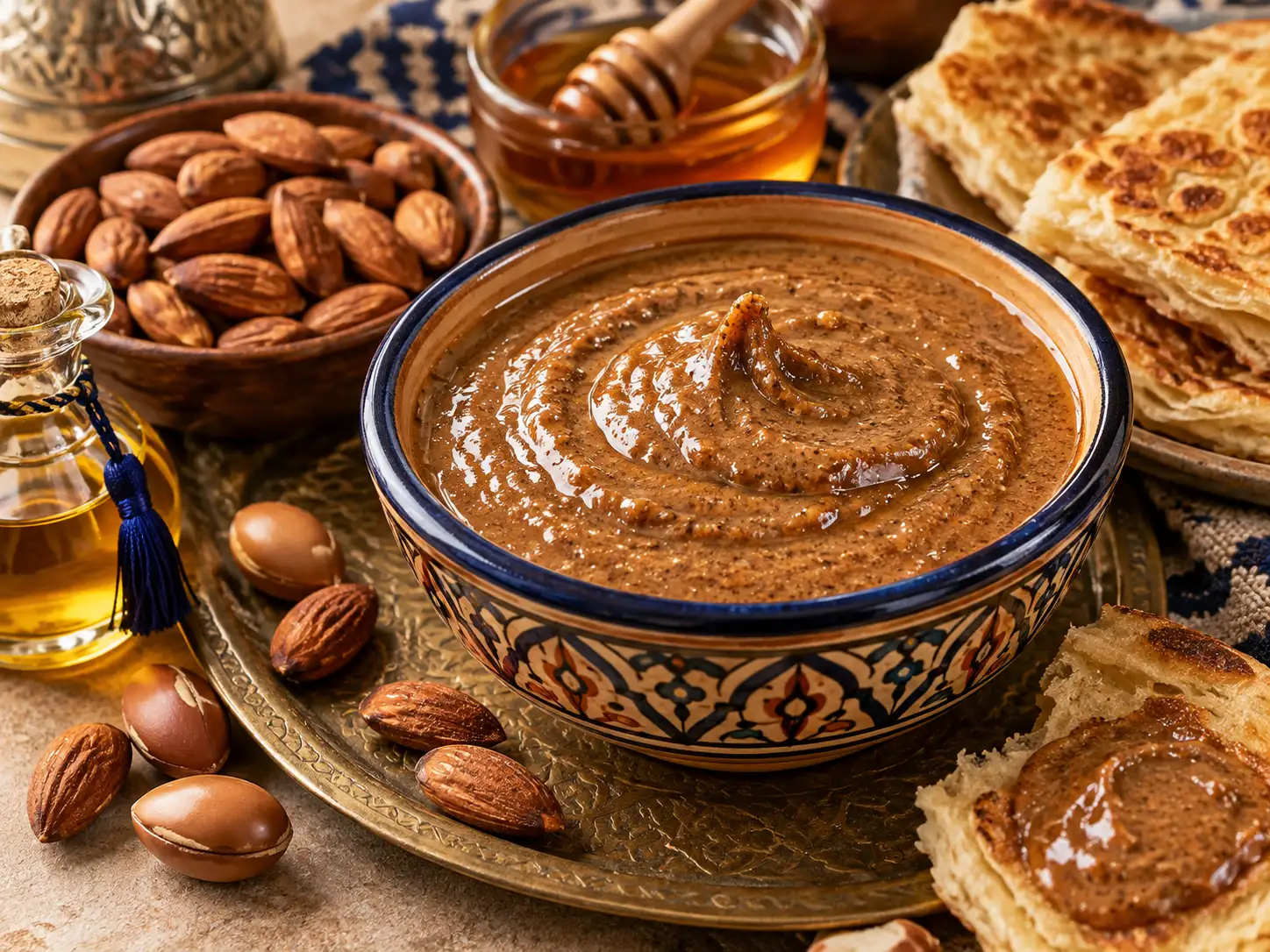
Moroccan Amlou Recipe – Almond, Argan Oil & Honey Spread
Moroccan Amlou – Almond, Argan Oil & Honey Spread
Ingredients
- 2 cups whole raw almonds about 280 g
- 1/2 cup culinary argan oil 120 mL, preferably added gradually
- 1/4 cup runny honey about 85 g, plus more to taste
- 1/4 teaspoon fine sea salt optional
Instructions
- Preheat the oven to 350°F (175°C).
- Spread the almonds in a single layer on a baking sheet. Roast for 10 to 12 minutes, stirring once halfway through, until fragrant and lightly toasted. Watch them carefully toward the end so they do not burn.
- Let the almonds cool for about 5 to 10 minutes. They can still be slightly warm, but they should not be piping hot.
- Transfer the toasted almonds to a food processor or powerful blender. Process until very finely ground, stopping to scrape down the sides as needed.
- Continue processing. The almonds will move from crumbs to a thick paste as their natural oils begin to release. Depending on your machine, this may take several minutes.
- With the processor running, slowly drizzle in the culinary argan oil. Start with about 1/3 cup (80 mL), then add more until the Amlou reaches a thick, creamy, spoonable consistency.
- Add the honey and optional salt. Process again until smooth and evenly combined.
- Taste and adjust. Add a little more honey for sweetness or a small amount of argan oil for a looser texture.
- Transfer the Amlou to a clean jar or serving bowl. Stir before serving if natural oil separation occurs.
Notes
Use only argan oil specifically labeled for culinary or food use. Do not use cosmetic argan oil. OLIVE OIL VERSION:
For an accessible variation, replace the argan oil with a mild-tasting olive oil. The flavor will be different from traditional Amlou, but the method remains similar. PEANUT VERSION:
Roasted unsalted peanuts can replace the almonds for a budget-friendly Amlou-inspired spread. Because peanuts release plenty of natural oil, start with less added oil and increase only as needed. TEXTURE:
Amlou can range from thick and spreadable to relatively loose and pourable. Adjust the oil gradually according to your preferred consistency. STORAGE:
For best freshness in a home kitchen, keep in a clean airtight jar in the refrigerator and stir before serving.
 Sale!
International Dinner Recipes eBook – The Dinner Atlas: 32 Recipes
Explore dinner around the world with 32 approachable international recipes from 19 countries. The Dinner Atlas – Collection I brings together comforting soups, rice dishes, noodles,…
View ProductMoroccan Amlou is one of those recipes that proves how extraordinary three simple ingredients can become. Roasted almonds are ground until rich and nutty, then blended with culinary argan oil and honey to create a smooth, deeply flavored spread that sits somewhere between almond butter, a dip, and a breakfast treat.
In Morocco, Amlou is closely associated with the southern regions where argan trees grow and where culinary argan oil has long been part of local food traditions. Served with warm bread and tea, it turns an ordinary breakfast or afternoon snack into something memorable.
This Moroccan Amlou recipe starts with the classic combination of roasted almonds, food-grade argan oil, and honey. But we’ll also cover practical alternatives for home cooks who cannot easily find culinary argan oil or who want a more budget-friendly variation using peanuts.
The most important distinction is simple: the almond-and-argan version is our traditional-style recipe. The olive oil and peanut versions are useful adaptations, and their flavor will not be identical to classic Amlou.
If you enjoy discovering foods from different cultures, explore more international recipes from Family Flavor Atlas or browse our international breakfast recipes.
What Is Amlou?
Amlou is a Moroccan spread traditionally made from three main ingredients: toasted almonds, culinary argan oil, and honey.
The almonds provide the body of the spread. Roasting develops their flavor before they are ground into a paste. Culinary argan oil gives Amlou its especially distinctive roasted, nutty character, while honey provides sweetness and helps bring everything together.
The final texture depends on the family, producer, and personal preference. Some Amlou is thick enough to spread with a knife, while other versions are looser and easily spooned or poured over bread.
Think of it as a natural nut spread with a very Moroccan personality: intensely nutty, lightly sweet, and rich without needing chocolate, dairy, or refined frosting-style ingredients.
Where Does Amlou Come From?
Amlou is strongly associated with southern Morocco and particularly the Souss region, where the argan tree and culinary argan oil are deeply connected to local food culture.
For many Moroccan families, Amlou is associated with breakfast, bread, hospitality, tea, and shared food. That context is important because Amlou is more than simply “Moroccan almond butter.”
Calling it almond butter may help someone unfamiliar with the recipe imagine its texture, but traditional Amlou gets much of its identity from the combination of almonds, honey, and especially culinary argan oil.
What Does Amlou Taste Like?
Classic Amlou tastes roasted, nutty, slightly sweet, and rich.
The almonds provide the familiar roasted nut flavor, but culinary argan oil adds another layer with a distinctive toasted aroma. Honey rounds out those flavors without needing to make the spread extremely sweet.
Good Amlou should taste balanced. You should still notice the almonds and argan oil rather than tasting only honey.
Traditional Amlou Ingredients
Almonds
Whole almonds are the foundation of classic Amlou. Roasting them before grinding is essential because it develops a deeper flavor and helps create the characteristic nutty aroma of the spread.
You can use almonds with their skins. There is no need to blanch them for this everyday version.
Culinary Argan Oil
This is what makes classic Amlou particularly distinctive.
Always buy food-grade or culinary argan oil. The argan oil sold for hair, skin, and cosmetic use is not the ingredient we want for this recipe.
Culinary argan oil has a strong roasted, nutty personality, so quality matters. If possible, choose an oil specifically sold for eating and cooking.
Honey
Honey sweetens the spread and balances the roasted almond and argan flavors.
A mild, runny honey works especially well because it blends easily and does not overpower the almonds.
Salt
Salt is optional, but a small pinch can sharpen the almond flavor and keep the sweetness from tasting flat.
How to Make Moroccan Amlou
The full quantities and printable instructions are in the recipe card above, but the process can be understood in four main stages.
1. Roast the Almonds
Spread the almonds evenly on a baking sheet and roast them until fragrant and lightly toasted.
Do not walk away during the last few minutes. Nuts can move from beautifully roasted to unpleasantly burnt surprisingly quickly.
2. Grind Until the Almonds Become a Paste
A common mistake is stopping the food processor too early.
At first, the almonds become crumbs. Then they look like almond flour. Continue processing and scraping the bowl, and eventually their natural oils begin to release.
The mixture should start turning from a dry powder into a dense nut paste.
3. Add the Argan Oil Gradually
Do not pour all the oil in immediately.
Start with part of it and add more gradually. This gives you control over the consistency and makes it much easier to avoid an Amlou that is thinner than you wanted.
4. Add Honey and Adjust
Blend in the honey and optional salt, then taste.
Amlou is one of those recipes where personal preference matters. Some families prefer it sweeter. Others want a more pronounced argan flavor or a thinner consistency for dipping bread.
How Fine Should You Grind the Almonds?
That depends partly on the texture you enjoy.
For a rustic Amlou, leave a tiny amount of almond texture. For a smoother spread, keep processing until the almonds have released enough of their natural oils to form a much silkier paste.
A powerful food processor or blender will usually produce a smoother result than a smaller low-powered machine.
If your machine starts becoming hot, stop and let it rest briefly before continuing.
How Much Argan Oil Should You Add?
There is no reason to force every batch of Amlou to use exactly the same amount of oil.
Almonds vary, food processors vary, and people prefer different textures.
That is why this recipe starts by adding the argan oil gradually. Stop when the Amlou reaches the consistency you enjoy.
If you want to spread it thickly over toast, use less oil. If you want to dip pieces of warm Moroccan bread into it, a slightly looser consistency can be wonderful.
Culinary Argan Oil vs Cosmetic Argan Oil
This distinction is especially important for readers outside Morocco.
Use only argan oil labeled for culinary, edible, or food use in Amlou.
Argan oil is widely sold internationally as a cosmetic ingredient for hair and skin, but that does not mean every bottle is intended to be consumed.
When shopping online or in a specialty store, check the label carefully and look specifically for culinary argan oil.
Can You Make Amlou Without Argan Oil?
Yes, but the result should be understood as an adaptation rather than classic Amlou.
If culinary argan oil is unavailable or outside your budget, a mild-tasting olive oil is the substitution I recommend first.
Use roughly the same technique: add the olive oil gradually to the ground almonds until you reach the consistency you want.
A strong, bitter, intensely peppery olive oil can overpower the honey and almonds, so choose something relatively mild and smooth.
The result is still a delicious almond-and-honey spread, but it will not have the distinctive roasted argan flavor of traditional Amlou.
Can You Make Amlou with Peanuts?
Yes. Roasted unsalted peanuts can be used to make an affordable Amlou-inspired variation.
Peanuts create a creamier, more familiar peanut-butter-like flavor and can be much easier to find than good almonds in some places.
Because peanuts already release a generous amount of their own oil when processed, do not automatically add the full amount of argan or olive oil used in the almond version.
Start with the roasted peanuts, process until creamy, then add a smaller amount of oil gradually along with the honey.
This is particularly useful when cooking for a family on a budget, but it should not be confused with the classic almond-based Amlou.
Four Ways to Make Amlou at Home
| Version | Nut | Oil | Flavor & Texture |
|---|---|---|---|
| Classic-Style Amlou | Roasted almonds | Culinary argan oil | Deeply nutty, distinctive and rich |
| Olive Oil Variation | Roasted almonds | Mild olive oil | Fruity, accessible and less argan-forward |
| Peanut Variation | Roasted peanuts | Culinary argan oil | Creamier with stronger peanut flavor |
| Budget-Friendly Variation | Roasted peanuts | Mild olive oil | Affordable, creamy and familiar |
Amlou vs Almond Butter: What’s the Difference?
They may look similar, but Amlou and almond butter are not exactly the same product.
Standard almond butter is generally based primarily on ground almonds, sometimes with salt or a small amount of added oil.
Amlou intentionally combines roasted almonds with culinary argan oil and honey. Those additional ingredients are not minor flavorings; they are central to the character of the spread.
So if you are introducing Amlou to someone who has never tasted it, “Moroccan almond spread” is often more accurate than simply calling it almond butter.
How to Adjust Amlou Texture
If Your Amlou Is Too Thick
Add culinary argan oil one tablespoon at a time and process again.
A little extra oil can make a dramatic difference, so work gradually.
If Your Amlou Is Too Thin
Let it rest first. Freshly processed nut spreads can sometimes appear looser while still warm.
If it remains much thinner than you prefer, process a small additional quantity of roasted almonds and blend them into the mixture.
If Your Amlou Is Gritty
The almonds probably need more processing.
Scrape down the bowl and continue blending, giving the machine breaks if needed.
How Sweet Should Amlou Be?
Amlou does not need to taste like dessert frosting.
I recommend starting with enough honey to bring gentle sweetness while still allowing the roasted almonds and argan oil to remain noticeable.
You can always blend in another spoonful of honey after tasting.
This approach is especially useful when serving Amlou with already-sweet foods such as pancakes or fruit.
How Is Amlou Served?
The simplest way to serve Amlou is in a small bowl alongside warm bread.
Rather than treating it only as something to spread with a knife, place it in the middle of the breakfast table and let everyone tear off pieces of bread and enjoy it together.
That shared style of eating suits the spirit of Family Flavor Atlas perfectly: simple food becoming part of a family moment.
What to Serve with Amlou
Amlou pairs beautifully with:
- Warm Moroccan bread
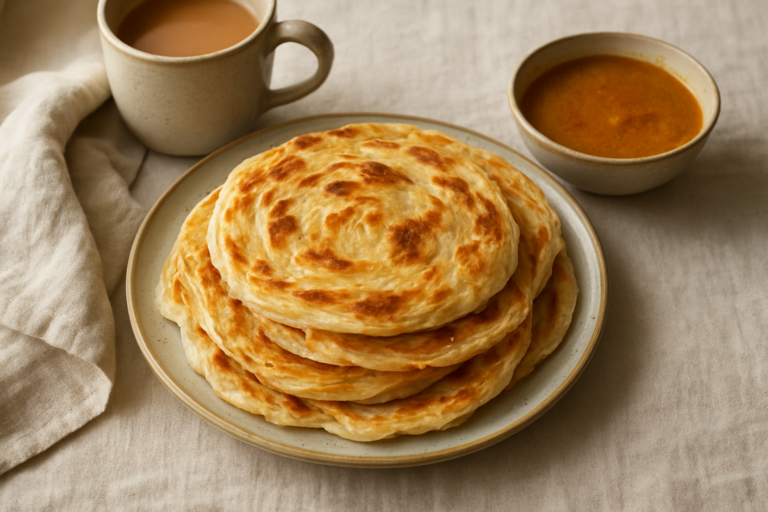
- Msemen
- Baghrir
- Tafernout-style bread
- Toast
- Pancakes
- Fresh fruit
- Apple or banana slices
- Plain yogurt
- Moroccan mint tea
For more ideas for the morning table, explore our breakfast recipes.
Is Amlou Only for Breakfast?
Not at all.
Amlou is wonderful at breakfast, but it also works beautifully as an afternoon snack, a dip for fruit, a toast topping, or part of a larger spread when guests visit.
A spoonful can also turn a very simple piece of bread into something much more satisfying.
Common Amlou Mistakes
Using Cosmetic Argan Oil
This is the mistake international readers most need to avoid. Use culinary argan oil intended for eating.
Burning the Almonds
A little roasting develops flavor. Burning creates bitterness that honey cannot hide.
Stopping the Food Processor Too Soon
Ground almonds need time to move from crumbs to paste.
Adding Too Much Oil Immediately
Add it gradually. You can always add more, but correcting an overly runny batch is more difficult.
Making It Too Sweet
Honey should support the flavor of the nuts and oil rather than completely dominate them.
How to Store Homemade Amlou
Transfer homemade Amlou to a clean, airtight jar.
Because this is a homemade product without preservatives and storage conditions vary from kitchen to kitchen, I prefer keeping it refrigerated for best freshness.
The oils may naturally separate slightly during storage. This is normal for a minimally processed nut spread. Simply stir the Amlou thoroughly before serving.
If the mixture becomes firm in the refrigerator, let the amount you plan to serve stand briefly at room temperature before eating.
Why This Recipe Works for Home Cooks Outside Morocco
The traditional ingredient list is remarkably short, but culinary argan oil can be difficult or expensive to find outside Morocco.
Rather than hiding that difficulty, this recipe gives you choices.
If you can find good culinary argan oil, make the almond version first and experience the ingredient that gives classic Amlou much of its identity.
If you cannot, make the almond-and-olive-oil variation and enjoy it for what it is: an accessible adaptation.
If almonds are expensive where you live, roasted peanuts provide another practical option.
The goal is to preserve the cultural identity of the original while still helping real home cooks make something delicious with the ingredients available to them.
Frequently Asked Questions About Amlou
What is Moroccan Amlou made of?
Classic Moroccan Amlou is made primarily from roasted almonds, culinary argan oil, and honey. Some recipes also include a small pinch of salt.
Can I make Amlou without argan oil?
Yes. Mild olive oil can be used as an accessible substitute, although the final flavor will be different from Amlou made with culinary argan oil.
Can I make Amlou with peanuts?
Yes. Roasted unsalted peanuts can replace almonds for an affordable Amlou-inspired variation. Start with less additional oil because peanuts release plenty of their own natural oil while blending.
Can I use regular cosmetic argan oil in Amlou?
No. Use only argan oil specifically labeled for culinary or food use.
Why is my Amlou too thick?
Add a small amount of culinary argan oil or mild olive oil, one tablespoon at a time, until the texture becomes smooth and spoonable.
Why is my Amlou oily?
You may have added more oil than the ground nuts could hold for your preferred texture. Let the mixture rest first, stir thoroughly, and if necessary blend in a small amount of additional roasted nuts.
What do you eat Amlou with?
Amlou is excellent with Moroccan bread, msemen, baghrir, toast, pancakes, fruit, or as part of a breakfast table with tea.
Is Amlou the same as almond butter?
No. While both contain ground almonds, Amlou traditionally includes culinary argan oil and honey, giving it a different flavor, texture, and cultural identity.
Bring a Taste of Morocco to Your Breakfast Table
This Moroccan Amlou recipe is simple enough to make with only a few ingredients, yet each ingredient tells part of the story.
Roasted almonds create richness. Honey brings gentle sweetness. Culinary argan oil gives the classic version its unmistakably Moroccan character.
And when those ingredients are not available, the olive oil and peanut variations give home cooks a practical way to experiment while still understanding what makes the original preparation special.
Discover more international recipes from around the world, or explore our curated Family Flavor Atlas cookbooks.
Good Food Brings Us Closer.