
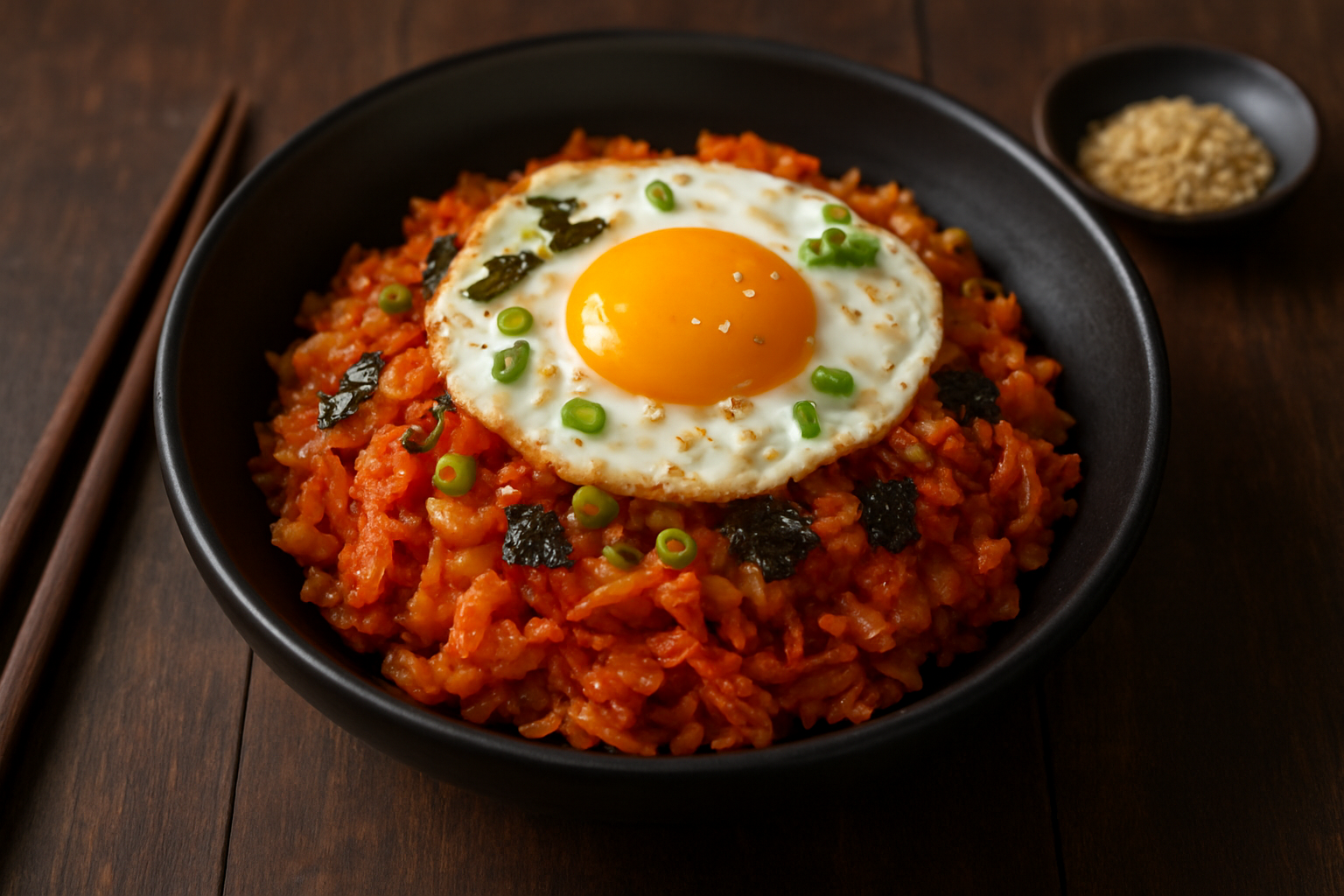
easy korean kimchi fried rice recipe: Simple Kimchi Bokkeumbap with Egg
easy korean kimchi fried rice recipe: Simple Kimchi Bokkeumbap with Egg
Ingredients
- 3 cups cold cooked short-grain or medium-grain white rice about 525 g
- 1 cup well-fermented napa cabbage kimchi chopped (about 170 g)
- 1/4 cup kimchi brine or juice from the jar 60 mL
- 1 tablespoon neutral cooking oil such as avocado, canola, or vegetable oil (15 mL), divided
- 1/2 medium yellow onion finely diced (about 3/4 cup or 110 g)
- 2 garlic cloves minced (about 2 teaspoons or 6 g)
- 1 tablespoon gochujang Korean red chile paste (15 g)
- 1 tablespoon low-sodium soy sauce 15 mL
- 1 teaspoon toasted sesame oil 5 mL
- 3 large eggs about 150 g without shells
- 2 scallions thinly sliced (about 1/4 cup or 25 g)
- 1 teaspoon toasted sesame seeds 3 g, optional
- 1 sheet roasted seaweed snack crumbled (about 2 g), optional
Instructions
- Break up the cold rice with clean hands or a spoon so there are no large clumps. Chop the kimchi and reserve its brine.
- Heat 2 teaspoons (10 mL) of the neutral oil in a large nonstick skillet over medium-high heat. Add the onion and cook, stirring often, until softened and lightly golden, about 3 to 4 minutes. Add the garlic and cook for 30 seconds, just until fragrant.
- Add the chopped kimchi and cook for 2 minutes, stirring, until hot and slightly concentrated. Stir in the gochujang, soy sauce, and kimchi brine until the gochujang is dissolved.
- Add the cold rice. Press and toss it through the kimchi mixture until evenly colored and heated through, about 4 to 5 minutes. Let it sit undisturbed for short intervals so a few grains can lightly crisp. Remove from the heat and stir in the sesame oil and most of the scallions.
- While the rice cooks, heat the remaining 1 teaspoon (5 mL) neutral oil in a separate nonstick skillet over medium heat. Crack in the eggs and cook until the whites are set and the yolks are cooked to your preference, about 3 to 4 minutes for a runny yolk.
- Divide the kimchi fried rice among bowls. Top each portion with a fried egg, remaining scallions, sesame seeds, and crumbled roasted seaweed, if using. Serve hot.
If you need a lively dinner that makes smart use of leftover rice, this easy korean kimchi fried rice recipe delivers big, tangy flavor without requiring advanced cooking skills. Kimchi bokkeumbap is a popular Korean fried rice dish built around fermented kimchi, cold rice, and a savory-spicy finish. A fried egg on top adds richness and turns a simple bowl into a comforting meal that feels special on a busy weeknight.
Why This Easy Korean Kimchi Fried Rice Recipe Works for Busy Nights
This is the kind of dinner that rewards keeping a jar of kimchi in the refrigerator. Kimchi brings acidity, chile warmth, garlic, and deep fermented flavor in one convenient ingredient, so the finished rice tastes layered even though the cooking is straightforward. It is also flexible: use leftover rice, add a protein if you have one, or keep it meatless for an uncomplicated vegetarian-friendly option when your kimchi is suitable.
Cold cooked rice is the key to a satisfying texture. Rice that has cooled in the refrigerator is drier and separates more easily in the pan than freshly cooked rice, helping it develop lightly toasted edges rather than turning soft or clumpy. This makes easy korean kimchi fried rice recipe a particularly useful plan for the day after a rice-based dinner. If you enjoy another globally inspired way to use cooked rice, try this beginner-friendly Indonesian nasi goreng fried rice on a future weeknight.
The egg is more than a garnish. Breaking a soft yolk over hot fried rice creates a silky sauce that rounds out kimchi’s sharpness and heat. Prefer a fully cooked yolk? That works beautifully too. The goal is a dinner that fits your household’s tastes and feels manageable from the first sizzle to the last bite.
Helpful Tips for Flavorful Kimchi Bokkeumbap
Choose well-fermented kimchi for the strongest flavor. Older kimchi is usually tangier and softer, which makes it especially good for cooking. Save some of the liquid from the jar, often called kimchi brine or kimchi juice, because it adds color and concentrated flavor to the rice. Since brands vary widely in saltiness, taste before adding extra soy sauce or salt. Many jars contain enough seasoning on their own.
Give the rice enough room in the skillet. An overcrowded pan traps steam, while a large skillet lets moisture cook away and encourages the bits of rice touching the pan to toast. Stir often enough to coat the grains, but allow brief pauses so the rice can pick up a little texture. A nonstick skillet is especially reassuring for newer cooks and makes the egg easier to manage.
Gochujang is the classic chile paste for this style of Korean fried rice. It is savory, mildly sweet, and deeper in flavor than plain hot sauce. Look for it in the international aisle of many American supermarkets, at Asian grocery stores, or online. If you are new to it, start conservatively; you can always add more heat at the table. Check labels if serving vegetarians, because kimchi itself is not always vegetarian.
Easy Variations for Your Family
For a heartier fried rice with kimchi, fold in diced cooked ham, crisp bacon, shredded chicken, cooked ground pork, or cubed tofu. Frozen peas, corn, or finely chopped carrots can add color and make the dish stretch further. Add tender vegetables early enough that they become hot, but avoid loading the pan with watery produce that can make the rice steam.
For a more substantial Korean-inspired dinner spread, serve the rice with crisp cucumber slices, roasted seaweed, or a simple salad. The cool, creamy contrast of an easy homemade tzatziki sauce with pita is not traditional alongside kimchi bokkeumbap, but it can be a family-friendly side for anyone who appreciates a milder, cooling element. If you want another quick rice bowl idea, these Japanese teriyaki chicken bowls with rice are also a useful addition to a busy dinner rotation.
Storage, Reheating, and Food Safety
Store leftover fried rice promptly in a shallow, airtight container so it cools quickly, then refrigerate it. Enjoy it within three to four days for the best quality. Reheat only the portion you plan to eat until it is steaming hot throughout. A skillet restores some toasted texture, while a microwave is convenient; a small splash of water can help loosen rice that has dried out. Freshly fry an egg for each reheated bowl when you can.
Cooked rice deserves careful handling because it should not sit at room temperature for long. Refrigerate it within two hours of cooking or serving, and discard leftovers that were left out longer. Use clean utensils when scooping from the kimchi jar and keep it refrigerated according to the package directions. For egg safety, choose fully cooked yolks if someone at your table needs to avoid undercooked eggs.
Frequently Asked Questions
Can I use freshly cooked rice?
Yes, but it will be softer and more prone to sticking. Spread freshly cooked rice on a tray, let it stop steaming, and chill it uncovered until cool before using. Day-old rice remains the easiest option for a classic fried-rice texture.
What does kimchi bokkeumbap taste like?
It is savory, tangy, gently sweet, garlicky, and spicy to the degree your kimchi and chile paste provide. The fried egg softens and enriches those bold flavors, which is one reason this easy korean kimchi fried rice recipe is approachable even for cooks who are trying Korean food at home for the first time.
Can I make it less spicy for kids?
Absolutely. Select a mild kimchi, use less gochujang, and add more plain rice if needed. Serving extra chile paste separately lets adults customize their bowls without making the entire dinner too hot.

2 Comments