Simple Nigerian Egusi Soup with Spinach: easy nigerian egusi soup recipe for Beginners
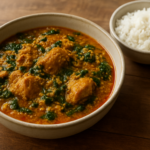
Simple Nigerian Egusi Soup with Spinach: easy nigerian egusi soup recipe for Beginners
Ingredients
- 1 lb boneless skinless chicken thighs (454 g)
- 3 cups low-sodium chicken broth divided (720 ml)
- 1/4 tsp kosher salt plus more to taste (1.5 g)
- 1/3 cup red palm oil 80 ml
- 1 medium yellow onion finely chopped, about 5 oz (150 g)
- 2 tbsp tomato paste 30 g
- 1 cup ground egusi melon seeds (120 g)
- 1/2 cup water 120 ml
- 2 tbsp ground crayfish optional (12 g)
- 1 tsp chicken bouillon powder or 1 crushed bouillon cube about 3 g
- 1/2 tsp ground cayenne pepper or dried ground pepper optional (1 g)
- 5 oz fresh baby spinach roughly chopped (140 g)
Instructions
- Place the chicken thighs, 2 cups of the chicken broth, and the salt in a medium pot. Bring to a gentle simmer over medium heat. Cover loosely and cook until the chicken reaches 165°F (74°C) in the thickest part. Transfer the chicken to a plate and reserve the broth in the pot. When cool enough to handle, cut or shred the chicken into bite-size pieces.
- Heat the red palm oil in a Dutch oven or large soup pot over medium heat. Add the onion and cook, stirring often, until softened. Stir in the tomato paste and cook until it darkens slightly and smells less raw.
- Pour in the reserved chicken broth and the remaining 1 cup broth. Stir in the ground crayfish, if using, bouillon, and cayenne. Bring the mixture to a gentle simmer.
- In a small bowl, mix the ground egusi with the water to make a thick, scoopable paste. Spoon the paste into the simmering broth in small mounds. Do not stir for the first 8 minutes so the egusi can set into soft dumplings.
- Gently stir and break up some of the egusi mounds, leaving a few larger pieces if you like more texture. Simmer gently, stirring occasionally, until the soup looks thick and the ground melon seeds no longer taste raw.
- Return the chicken to the pot. Stir in the spinach a handful at a time just until wilted. Taste and add more salt only if needed. Serve warm with pounded yam, fufu, eba, or rice.
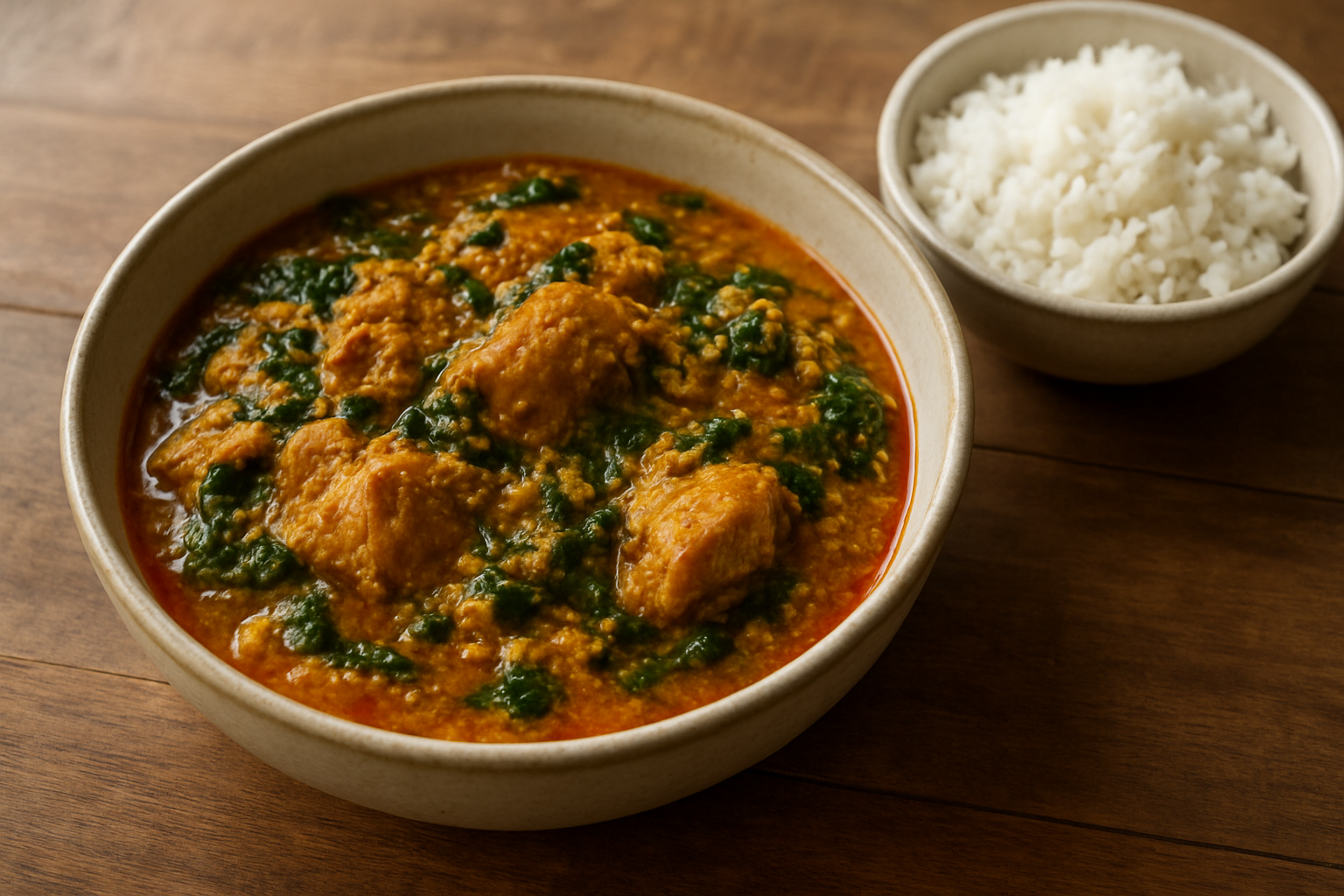
This easy nigerian egusi soup recipe brings the rich, nutty comfort of Nigerian melon seed soup to a beginner-friendly family dinner. Egusi, or ground melon seeds, gives the broth its famously thick texture, while spinach makes this version accessible for U.S. grocery shoppers. Chicken, red palm oil, onion, and optional ground crayfish build a savory base that tastes special without requiring complicated techniques.
Why this easy nigerian egusi soup recipe works for beginners
Egusi soup can look unfamiliar if you have never cooked with ground melon seeds, but the process is straightforward. The key is making a thick egusi paste, letting the spoonfuls set in the broth, and then stirring gently. This method prevents the seeds from clumping into one large mass and creates tender, satisfying pieces throughout the soup.
This version is designed for a practical weeknight-style dinner rather than an overwhelming ingredient list. Fresh baby spinach wilts quickly, boneless chicken thighs are easy to handle, and store-bought broth keeps the flavor-building simple. Red palm oil is worth seeking out at an African market or online because it gives the dish its warm orange color and signature earthy richness. If you cannot find it, the soup will still be enjoyable with a neutral oil, although the final flavor and color will be different.
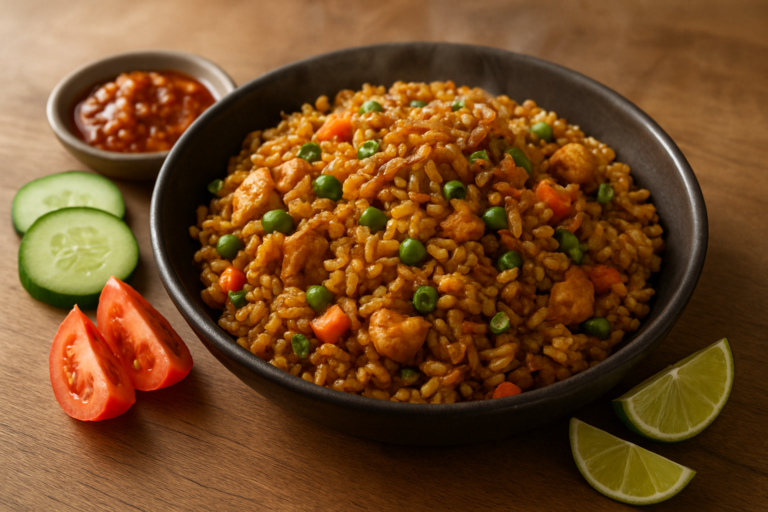
The result is hearty enough to serve as the centerpiece of dinner. Spoon it over rice for an especially approachable meal, or enjoy it in the traditional style with pounded yam, eba, or another swallow. For another Nigerian family favorite to serve alongside or on a different night, try this simple Nigerian jollof rice for beginner cooks.
Helpful tips for Nigerian melon seed soup
Use finely ground egusi for the smoothest, easiest result. If your melon seeds are whole, grind them to a fine, sandy consistency in a clean spice grinder or high-powered blender before starting. Ground egusi can go stale because it contains natural oils, so keep an opened package sealed in the refrigerator or freezer for the best flavor.
Keep the soup at a gentle simmer rather than a hard boil. A calm simmer helps the egusi cook evenly and lets the broth thicken without scorching on the bottom of the pot. Stir every so often after the initial setting stage, scraping the bottom gently with a wooden spoon. If the soup becomes thicker than your family likes, stir in a small splash of broth or water until it reaches a consistency you enjoy.
Ground crayfish is optional, but it contributes a deep savory flavor often found in Nigerian soups. It is not the same as fresh seafood and is usually sold dried and finely ground. Leave it out for a fish-free pot, then taste before adding extra salt because bouillon and broth can both be salty. This is also a good dish for mild customization: start with a small amount of pepper, then offer hot sauce or sliced fresh chiles at the table for adults who want more heat.
Easy variations and serving ideas
Spinach is a convenient green, but you can use kale or collard greens when you want a sturdier leaf. Slice tougher greens thinly and give them more time in the broth to soften. For a meat-free dinner, swap in vegetable broth, skip the chicken and crayfish, and add mushrooms or black-eyed peas. The ground melon seeds still make the soup feel substantial.
Rice is an easy choice for children and first-time egusi eaters because it soaks up the flavorful broth. If you enjoy vegetable-forward soups, you may also like this Caribbean callaloo soup made with spinach. For a coconut-based vegetable dinner on another busy evening, this Indonesian coconut milk vegetable stew is another comforting option.
Storage and reheating
Egusi soup often thickens after chilling because the melon seeds continue to absorb liquid. Store cooled leftovers in a covered container in the refrigerator, and loosen the soup with a splash of broth or water as it reheats. Warm it gently on the stove, stirring frequently so the thick base heats evenly. It also freezes well for a future dinner; freeze individual portions when possible for easier thawing.
Food safety note
Use a food thermometer to confirm that the chicken reaches 165°F in its thickest portion. Cool leftovers promptly rather than leaving the pot on the counter for an extended period, and refrigerate them within two hours. Reheat only the portion you plan to eat whenever possible, since repeated cooling and reheating can affect both quality and safe handling.
Frequently asked questions
How do I know when egusi is cooked?
Cooked egusi loses its raw, chalky taste and takes on a rich, nutty flavor. The soup should look thick and cohesive, with soft egusi pieces suspended in the broth. A gentle simmer and occasional stirring are more useful than rushing the process with high heat.
Can I make this easy nigerian egusi soup recipe without palm oil?
Yes. Use a mild vegetable oil if necessary, but know that red palm oil is a defining ingredient in many versions of egusi soup. It adds both color and a distinctive earthy flavor that neutral oil cannot fully duplicate.
Why is my egusi soup too thick?
Egusi is naturally absorbent, so a thick result is normal. Stir in warm broth or water a little at a time until the soup is loose enough for your preferred serving style. Taste again afterward and adjust seasoning only if needed.