Easy Taiwanese Lu Rou Fan Recipe: Braised Pork Rice Bowls for Family Dinner
Easy Taiwanese Lu Rou Fan Recipe: Braised Pork Rice Bowls for Family Dinner
Ingredients
- 1 1/2 pounds pork belly cut into 1/4-inch pieces (680 g)
- 4 dried shiitake mushrooms about 1/2 ounce (14 g)
- 2 medium shallots finely chopped, about 1/2 cup (75 g)
- 4 garlic cloves minced
- 1/3 cup regular soy sauce 80 ml
- 1 tablespoon dark soy sauce 15 ml
- 2 tablespoons Shaoxing wine or dry sherry 30 ml
- 2 tablespoons packed light brown sugar 25 g
- 2 cups water 480 ml, divided
- 2 whole star anise
- 1/2 teaspoon Chinese five-spice powder 1 g
- 1/4 teaspoon ground white pepper 0.5 g
- 6 peeled hard-boiled eggs optional
- 6 cups cooked jasmine rice about 1.2 kg
- 2 scallions thinly sliced, about 1/4 cup (25 g), for serving
- Optional for serving: blanched bok choy or other leafy greens about 12 ounces (340 g)
Instructions
- Place the dried shiitake mushrooms in a heatproof bowl and cover with 1/2 cup (120 ml) hot water. Soak until softened, then remove the mushrooms and finely chop them. Reserve the soaking liquid, leaving behind any gritty sediment in the bottom of the bowl.
- Set a Dutch oven or heavy-bottomed pot over medium heat. Add the pork belly and cook, stirring occasionally, until some fat has rendered and the pork is lightly browned, about 8 to 10 minutes. Carefully spoon off excess fat, leaving about 1 tablespoon in the pot.
- Add the shallots, garlic, and chopped mushrooms. Cook, stirring often, until fragrant and softened, about 3 minutes.
- Stir in the regular soy sauce, dark soy sauce, Shaoxing wine, brown sugar, reserved mushroom soaking liquid, remaining 1 1/2 cups (360 ml) water, star anise, five-spice powder, and white pepper. Scrape up any browned bits from the bottom of the pot.
- Bring the liquid to a gentle simmer. Reduce the heat to low, cover partially, and simmer for 40 minutes, stirring once or twice so the pork does not stick.
- If using hard-boiled eggs, nestle them into the sauce. Continue simmering, uncovered or partly covered, until the pork is tender and the sauce has thickened enough to coat a spoon, about 15 to 20 minutes. Remove and discard the star anise. Taste and add a small splash of water if the sauce is too salty or thick.
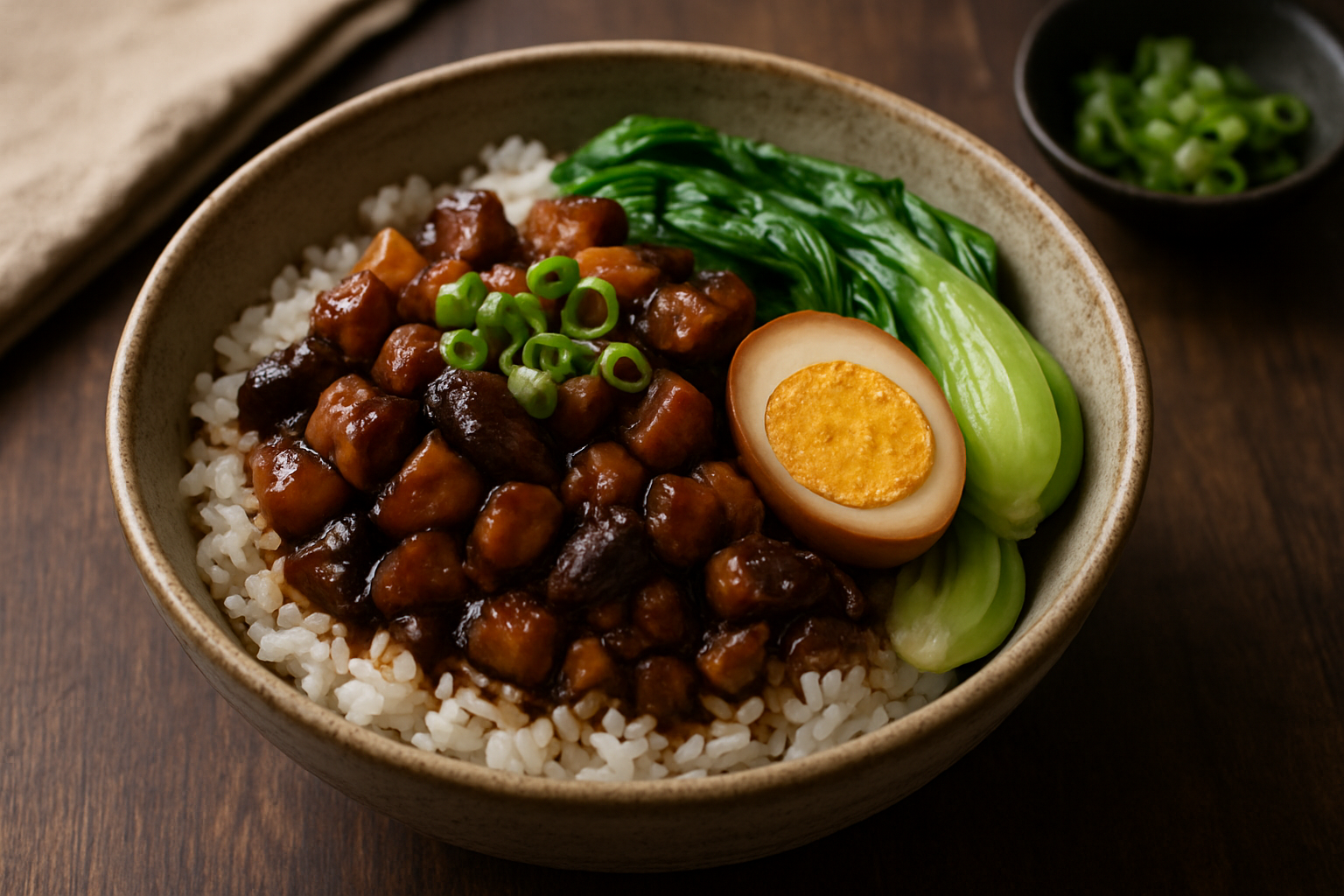
- Divide the hot rice among six bowls. Spoon the braised pork and sauce over the rice, add a halved egg and greens if using, and finish with sliced scallions.
 Sale!
International Dinner Recipes eBook – The Dinner Atlas: 32 Recipes
Explore dinner around the world with 32 approachable international recipes from 19 countries. The Dinner Atlas – Collection I brings together comforting soups, rice dishes, noodles,…
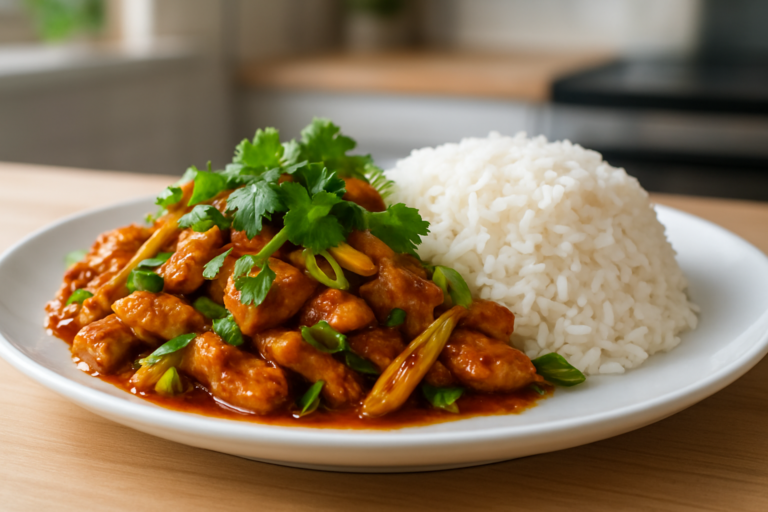
View ProductBring a much-loved Taiwanese comfort food to your weeknight table with this easy taiwanese lu rou fan recipe. Lu Rou Fan is a home-style braised pork rice bowl: tender, savory pork spooned over fluffy rice, often finished with a soy-stained egg and a simple green vegetable. The flavor is deeply satisfying, but the cooking approach is approachable for beginners. Most of the work is simply letting the pork gently simmer while you get the table ready.
Why this braised pork rice bowl works for family dinner
This is the kind of dinner that makes a modest list of pantry ingredients taste special. Soy sauce brings savory depth, brown sugar rounds out the saltiness, and star anise and Chinese five-spice add a warm, fragrant background without making the dish hot or spicy. Dried shiitake mushrooms are a helpful addition because they make the sauce taste fuller and more savory while stretching the pork across several generous bowls.
Using finely cut pork belly gives Taiwanese pork rice its signature silky, rich texture. As it cooks, some fat renders into the sauce, which is exactly what helps it turn glossy and flavorful. Rice absorbs that sauce beautifully, making this a practical meal for family members who prefer familiar, simple components served in a bowl. Add a leafy green on the side for freshness, and let everyone build a bowl with as much sauce as they like.
Although the classic dish takes time to become tender, it does not require complicated methods, specialty equipment, or difficult knife skills. A heavy pot with a lid is all you need for the braise. For another Taiwanese-inspired weeknight option with bold aromatics, try this Taiwanese three cup chicken for family dinner.
Helpful tips for an easy taiwanese lu rou fan recipe
Cut the pork into small, fairly even pieces so it cooks evenly and is easy to eat with a spoon. Pork belly is naturally fatty, so there is no need to add much oil. Let it brown enough to render some fat, then carefully remove the excess before adding the aromatics. Leaving a small amount in the pot keeps the finished braise rich without making the bowls greasy.
Keep the sauce at a quiet simmer rather than a hard boil. Gentle bubbling gives the pork time to soften and lets the seasonings blend without reducing the liquid too quickly. If the sauce seems overly thick before the pork is tender, stir in a small splash of water. If it is still thin once the pork is tender, uncover the pot and let it reduce gradually. The finished sauce should be loose enough to soak into rice, not dry or sticky like a glaze.
Star anise has a strong flavor, so remove the whole pods before serving. The amount in this dish is meant to be aromatic, not overpowering. If your family is new to five-spice, use the listed amount the first time; its cinnamon-like warmth becomes gentler when paired with the pork, mushrooms, and rice.
Easy variations and serving ideas
For a lighter variation, make the same sauce with ground pork. It will not have the traditional melt-in-your-mouth pork belly texture, but it is still a tasty simple meat rice dish and needs less hands-on trimming. Ground turkey can work as well, though the result will be noticeably leaner and less rich. A few extra chopped mushrooms help add back savory depth.
A halved soy-braised egg is a familiar finishing touch, but it is optional. Blanched bok choy, broccoli, green beans, or spinach give the bowls welcome color and contrast. If you need a fresh side to balance the rich sauce, a few cucumber slices work well. Families who enjoy rice-based dinners may also like this Thai pineapple fried rice for busy weeknights, which is another flexible way to use everyday ingredients.
Use freshly cooked jasmine rice for the softest bowl, but leftover rice warmed with a spoonful of water is perfectly fine. Serve the pork sauce at the table so each person can add extra sauce to their rice. A spoon is the easiest utensil for young children, while chopsticks are great for anyone who prefers them.
Storage and reheating
The braised pork is especially useful for make-ahead dinners because the flavor continues to settle as it chills. Store the pork and its sauce in a tightly covered container, ideally apart from the rice and vegetables so each component keeps its best texture. Refrigerated pork makes an easy next-day lunch bowl, lettuce-wrap filling, or topping for steamed vegetables.
Reheat the pork slowly with a splash of water to loosen the sauce, stirring once or twice so it warms evenly. Heat rice separately and add the pork only when both are hot. For longer storage, freeze cooled pork sauce in meal-size portions; rice is best cooked fresh or frozen separately.
Food safety notes
Use a clean cutting board and knife for the raw pork, then wash them thoroughly before cutting scallions or handling cooked food. Keep leftovers out of the temperature danger zone by refrigerating them promptly. When reheating a braised pork rice bowl, heat it until it is steaming hot throughout rather than merely warm. If the dish has been left out too long, discard it rather than trying to make it safe by reheating.
Frequently asked questions
Is this easy taiwanese lu rou fan recipe spicy?
No. The star anise and five-spice provide warm, fragrant seasoning rather than chile heat. If your family enjoys spice, offer chili crisp or a mild hot sauce at the table so everyone can adjust their own bowl.
Can I use another cut of pork?
Pork shoulder can be used when pork belly is unavailable. It will be less silky and rich, but it becomes tender with gentle braising. Trim very large pieces of exterior fat and cut the meat small so it cooks evenly.
Why is my sauce too salty?
Brands of soy sauce vary in saltiness, and reduction concentrates the seasoning. Add a little hot water, then taste again. Serving the pork over plenty of plain rice and greens also balances the sauce.
What can I make with leftover rice?
Turn it into a packed lunch with the remaining pork, or shape it into portable snacks with this easy tuna onigiri recipe. Keep the pork filling chilled until you are ready to eat.