Easy Japanese Onigiri Tuna Recipe for Simple, Packable Lunches
Easy Japanese Onigiri Tuna Recipe for Simple, Packable Lunches
Ingredients
- 1 1/2 cups Japanese short-grain rice about 300 g, such as sushi rice
- 1 3/4 cups water 414 ml, plus more for rinsing
- 1 5-ounce/142 g can tuna packed in water, drained well
- 2 tablespoons Japanese mayonnaise or regular mayonnaise 30 ml
- 1 teaspoon soy sauce 5 ml
- 1 tablespoon finely sliced scallion about 1 small scallion/10 g
- 1/2 teaspoon kosher salt about 3 g, plus a little more for your hands
- 3 nori sheets about 8 g, cut in half
- Toasted sesame seeds optional, for garnish
Instructions
- Place the rice in a medium bowl and cover with cold water. Gently swish the grains with your hand, then drain. Repeat 3 or 4 times, until the water is less cloudy. Drain the rice well.
- Transfer the rinsed rice to a medium saucepan with a tight-fitting lid. Add the measured water and let the rice soak for 15 minutes. Bring it to a boil over medium-high heat. Once boiling, immediately cover, reduce the heat to low, and cook for 15 minutes. Do not lift the lid while it cooks.
- Remove the pan from the heat and let the rice stand, covered, for 10 minutes. Fluff gently with a rice paddle or fork, then spread the rice in a wide bowl. Let it cool just until comfortable enough to handle; it should still be warm and sticky.
- While the rice rests, stir together the drained tuna, mayonnaise, soy sauce, and scallion in a small bowl. The filling should be creamy but not wet.
- Set out a small bowl of water. Wet your hands, then rub a small pinch of salt between your palms. Scoop about 3/4 cup of warm rice into one hand and make a shallow indentation in the center. Add about 2 teaspoons of tuna filling.
- Bring the rice up and around the filling, adding a little more rice if needed to completely enclose it. Gently press and rotate the rice between your palms to make a rounded triangle or ball. Press firmly enough for it to hold together, but do not squeeze the rice hard. Repeat with the remaining rice and filling, wetting and salting your hands as needed.
- Wrap each rice ball with a half sheet of nori just before serving or packing. Sprinkle with sesame seeds, if using. Serve promptly, or chill and pack with an ice pack.
 Sale!
Family Flavor Atlas – 30 Easy International Recipes ebook
30 easy international recipes for busy families and beginner cooks. Clear instructions, practical ingredients, US + metric measurements, cooking tips, variations, and instant PDF download.
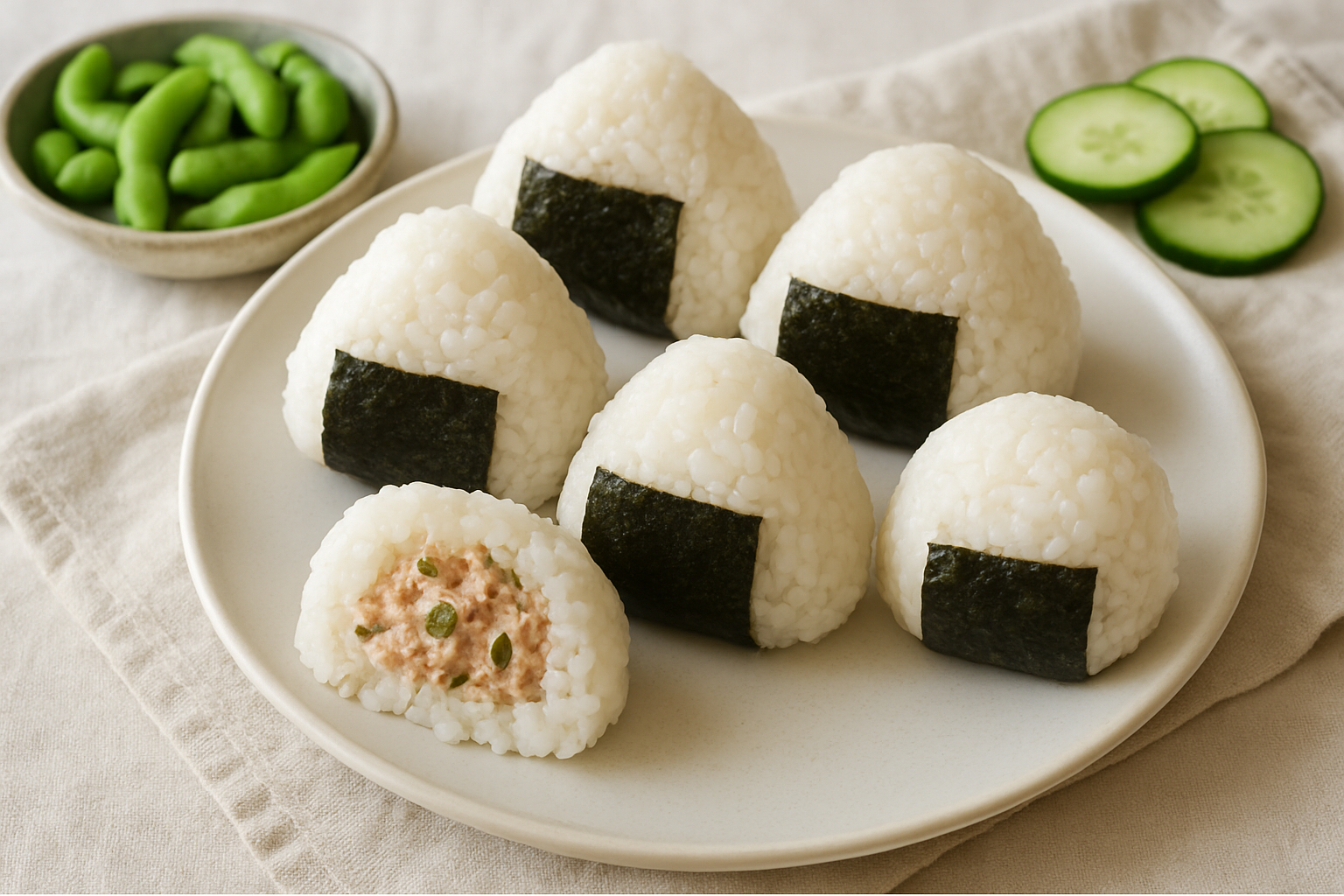
View ProductWhen sandwiches start to feel repetitive, this easy japanese onigiri tuna recipe is a comforting, handheld lunch that feels special without asking for complicated skills. Onigiri are Japanese rice balls, often shaped into rounds or triangles and filled with savory ingredients. This version uses familiar canned tuna and mayonnaise, then adds a strip of nori for a portable meal that works for school lunches, work-from-home breaks, or a quick family lunch.
The key is choosing Japanese short-grain rice, sometimes labeled sushi rice. Unlike long-grain rice, it becomes pleasantly sticky when cooked, so it holds around the filling naturally. The goal is not perfectly sculpted, restaurant-style triangles. A gently pressed shape that stays together and keeps the tuna tucked inside is exactly what a beginner needs.
Why this easy japanese onigiri tuna recipe works for busy lunches
These Japanese tuna rice balls use pantry-friendly tuna and a short ingredient list, but they still deliver a satisfying balance of tender rice, creamy savory filling, and lightly crisp seaweed. Each piece is individually portioned, which makes lunch feel easy to grab and eat. They are also easy to adapt: make neat triangles, simple rounds, or use a mold if you already have one.
Another advantage is that the filling is mild and familiar for many kids and adults. The mayonnaise softens the tuna while soy sauce adds depth without turning the mixture watery. Keeping the filling fairly thick matters; a wet filling can leak and make the rice difficult to shape. For another comforting Japanese-style meal with rice, try these easy Japanese chicken and egg rice bowls on a night when you want something warm and spoonable.
Helpful shaping tips and easy variations
The most useful trick for an easy japanese onigiri tuna recipe is to work with rice that is warm, not cold. Freshly cooked rice is soft and sticky enough to seal around the center. Keep a small bowl of water nearby to prevent sticking, and lightly salt damp hands before forming each piece. Salt seasons the outside of the rice and makes shaping much more manageable.
Use a gentle but confident touch. Put rice in your palm, create a small hollow, add a modest amount of filling, and cover it completely before pressing. Overfilling is the most common reason rice balls split. Rather than packing the rice tightly, press just enough to make the shape hold. Rotate the onigiri as you work so the pressure stays even. If a little tuna peeks out, patch it with a small pinch of rice.
Wait to add the nori until just before serving or packing. This keeps it pleasantly crisp instead of soft. For a lunchbox, tuck the nori into a small separate bag or wrap each rice ball just before leaving home. If you enjoy bolder flavors, add a small spoonful of finely chopped pickled vegetables to the tuna, or use furikake seasoning on the outside. Check furikake labels, since many blends contain fish or other allergens.
You can also make the format fit your family. Smaller round onigiri are especially convenient for younger eaters, while larger triangles make a more filling adult lunch. Serve them with cucumber sticks, edamame, orange slices, or a small bowl of soup. A light bowl of Japanese miso soup with tofu and wakame is a particularly easy partner for a simple onigiri lunch.
Storage and lunchbox advice
Rice balls have their best soft, tender texture on the day they are made. For this easy japanese onigiri tuna recipe, refrigerate leftovers promptly in a covered container and keep the nori separate. Cold rice naturally firms up, so allowing chilled onigiri to sit briefly before eating can improve the texture. They are generally best enjoyed cool or near room temperature rather than reheated, because the tuna-mayonnaise filling is intended to be served cold.
For packed lunches, place the chilled onigiri in an insulated lunch bag with an ice pack. Add the nori at lunchtime if possible. This small detail makes a big difference in texture and helps the seaweed stay crisp instead of becoming chewy.
Food safety for tuna-filled rice balls
Tuna filling and cooked rice both need sensible handling. Refrigerate assembled rice balls promptly, use clean hands and utensils, and avoid leaving them on a counter for extended periods. Perishable food should not sit at room temperature for more than 2 hours, or more than 1 hour in temperatures above 90°F. When in doubt, keep the lunch cold and discard food that has been left out too long.
Frequently asked questions
Do I need a special mold to make onigiri?
No. A mold is convenient but entirely optional. Damp, lightly salted hands are enough to make appealing rounds or triangles. Focus on sealing the filling inside rather than making every piece identical.
Can I use regular long-grain rice?
Long-grain rice is less sticky, so it is much harder to shape into sturdy rice balls. Japanese short-grain rice is strongly recommended for the classic texture and the easiest results.
What can I serve alongside onigiri?
Keep the meal simple with fruit, crunchy vegetables, edamame, or soup. If you need another family-friendly rice option for later in the week, these easy Japanese teriyaki chicken bowls make a filling dinner with similarly approachable flavors.
Can children help make these?
Yes. Adults should handle the hot rice and refrigeration, but children can stir the cooled filling, help place nori around finished rice balls, and choose simple lunchbox sides. Shaping may be messy at first, but it is part of the fun.