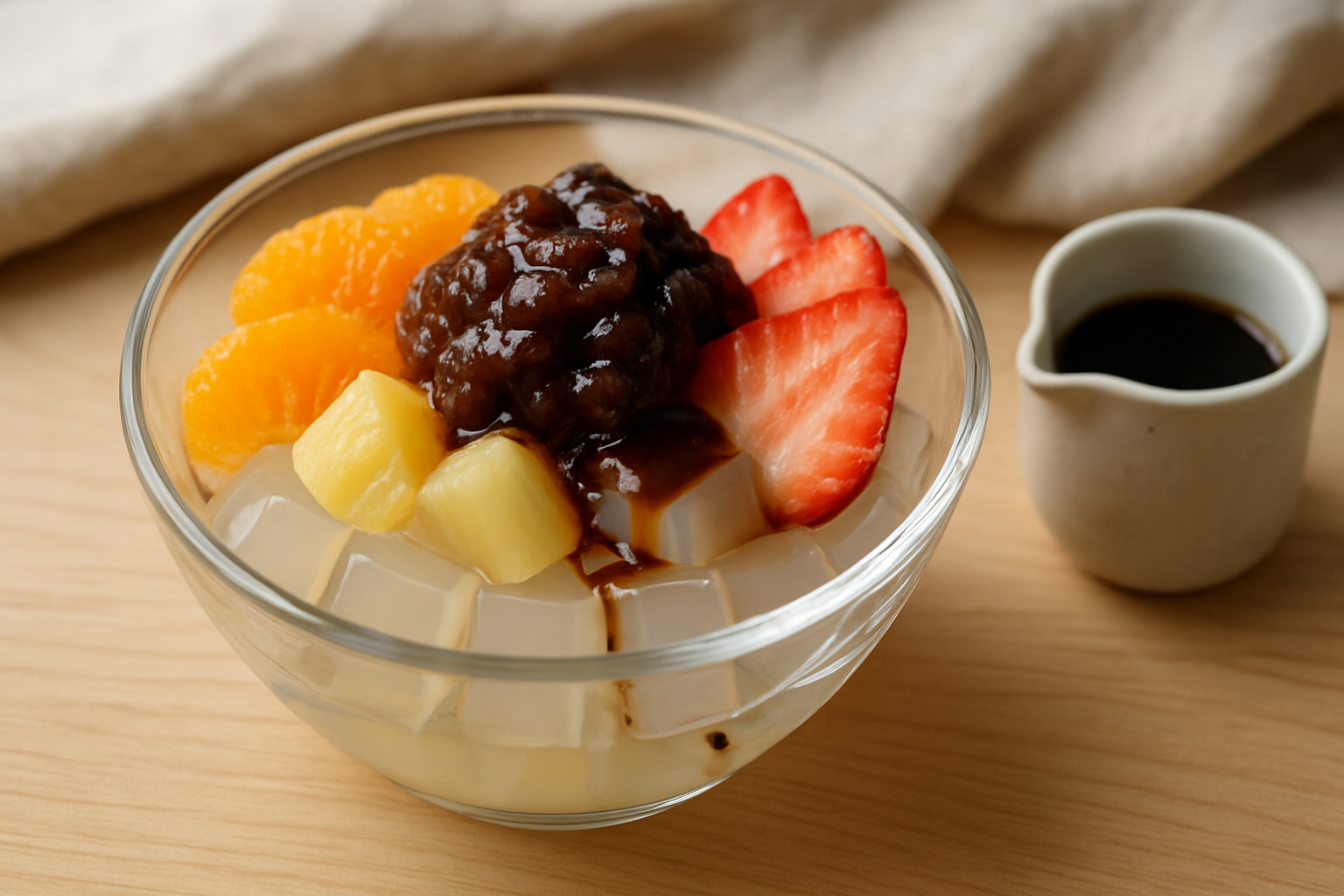
Easy Japanese Anmitsu with Agar Jelly, Fruit, and Kuromitsu
Easy Japanese Anmitsu with Agar Jelly, Fruit, and Kuromitsu
Ingredients
- 2 cups water 480 ml, divided
- 2 teaspoons agar agar powder 4 g
- 1/3 cup packed dark brown sugar 70 g, or Japanese kurozato black sugar if available
- Pinch of fine salt
- 3/4 cup sweet red bean paste anko (180 g)
- 1 cup canned mandarin orange segments well drained (170 g)
- 1 cup pineapple chunks well drained (165 g)
- 1 cup sliced strawberries 150 g
- 4 maraschino cherries optional, for garnish
Instructions
- Lightly rinse an 8-inch square pan or similar shallow dish with water; do not dry it. Set it near the stove.
- Pour 1 3/4 cups water (420 ml) into a small saucepan. Whisk in the agar powder while the water is cold, then bring the mixture to a full boil over medium-high heat, whisking often.
- Once boiling, reduce the heat and simmer for 1 minute, whisking until the agar is completely dissolved. Pour the mixture into the prepared pan. Let it cool at room temperature for about 15 minutes, then refrigerate until firm, about 45 minutes.
- Meanwhile, make the kuromitsu-style syrup. Combine the brown sugar, remaining 1/4 cup water (60 ml), and salt in a small saucepan. Bring to a gentle simmer over medium heat and stir until the sugar dissolves, about 2 to 3 minutes. Transfer to a heat-safe bowl and cool to room temperature.
- Cut the chilled agar jelly into small cubes. Divide the cubes among four dessert bowls.
- Add a spoonful of red bean paste and portions of the mandarin oranges, pineapple, and strawberries to each bowl. Garnish with a cherry if using.
- Drizzle each bowl with the cooled black sugar syrup and serve immediately. Let everyone add extra syrup to taste.
 Sale!
The Sweet Atlas: 20 International Dessert Recipes – Collection I
Discover 20 easy international dessert recipes from 12 countries in The Sweet Atlas — Collection I. This beautifully designed 50-page digital cookbook takes you from Filipino…
View ProductThis easy japanese anmitsu recipe brings a cool, colorful Japanese dessert to the table without turning on the oven. Each bowl combines springy cubes of agar jelly with juicy fruit, sweet red bean paste, and a pour of dark kuromitsu-style syrup. The flavors are gentle rather than heavy, making anmitsu especially welcome after a rich dinner or on a hot afternoon when the family wants something refreshing.
Anmitsu is a traditional Japanese sweet that celebrates contrast: clear jelly against bright fruit, creamy bean paste against a deep brown sugar syrup, and a tidy bowl that guests can customize with an extra drizzle. This approachable version uses ingredients that are increasingly easy to find in U.S. supermarkets and Asian markets, while keeping the character of the classic dessert intact.
Why This Easy Japanese Anmitsu Recipe Works
The main component is kanten, the Japanese name for agar jelly. Agar comes from seaweed and creates a clean-tasting, pleasantly firm jelly that holds its shape well in a dessert bowl. Unlike a custard or cake, it feels light and cool, and it has no dairy or animal-derived gelatin. That makes this easy japanese anmitsu recipe a practical vegetarian dessert to share with a range of guests.
For busy households, the most helpful feature is that the components can be prepared ahead and assembled at the last minute. Keep the jelly cubes cold, drain the fruit well, and place the syrup on the table so everyone can add as much as they like. Children often enjoy arranging their own colorful bowls, while adults will appreciate the balance of fruity brightness and mellow red bean sweetness.
Understanding the Traditional Components
Authentic anmitsu varies by shop and season, but the essential idea remains the same: agar jelly, fruit, anko, and kuromitsu. Anko is sweet red bean paste made from azuki beans. It has a mild, earthy sweetness and is not meant to taste like chocolate or peanut butter. Kuromitsu is a dark syrup traditionally made with Japanese black sugar, called kurozato. Dark brown sugar is a convenient substitute that gives a similarly rich, caramel-like note.
The fruit can change with what is ripe and available. Mandarin oranges and pineapple are familiar choices because their sweet-tart flavor pairs well with the syrup. Strawberries add color and freshness. If you are introducing Japanese desserts to younger eaters, serving the bean paste and syrup in small spoonfuls lets everyone find their favorite balance.
Helpful Tips for Clear, Firm Agar Jelly
Read the package on your agar powder before starting, as brands can differ slightly in strength. The most important point is to whisk the powder into cool water first, then bring it to a full boil. Agar must boil to dissolve and set correctly. A jelly that remains soft or grainy usually means the mixture was not heated long enough or the powder was not fully incorporated.
Use a shallow dish for the jelly rather than a deep container. A thin layer chills more evenly and is easy to cut into neat cubes. There is no need to oil the pan; a quick rinse with water helps the set jelly release cleanly. Let the jelly cool before chilling so it does not raise the refrigerator temperature, then cut it with a sharp knife dipped in water for tidy edges.
Drain canned fruit very thoroughly and pat especially juicy fruit dry when needed. Excess liquid can dilute the syrup and make the finished bowl watery. For the prettiest presentation, keep a few strawberry slices or bright citrus segments aside to place on top just before serving.
Simple Variations for Your Dessert Bowls
Once you know the basic format, this easy no bake japanese anmitsu recipe is flexible. Use ripe mango, kiwi, blueberries, seedless grapes, or canned peach slices in place of the suggested fruit. A small scoop of vanilla or matcha ice cream turns the dessert into cream anmitsu, a popular variation with an extra-indulgent finish. Add the ice cream immediately before serving so the jelly stays cold and distinct.
For a more traditional Japanese dessert spread, serve anmitsu after a light meal and pair it with hot green tea. You can also explore more Japanese favorites in our guide to Japanese food culture and everyday dishes. If your family enjoys the bright, mix-and-match format of chilled desserts, these Filipino halo-halo inspired dessert cups are another fun warm-weather option.
Serving, Storage, and Food Safety
For the best texture, serve anmitsu cold but not frozen. Assemble the bowls shortly before eating, since the fruit is freshest and the agar cubes look clearest when they have not been sitting in syrup. Leftover jelly, syrup, fruit, and bean paste keep best in separate covered containers in the refrigerator for up to two days. This dessert is served chilled, so reheating is not needed.
Refrigerate cut fruit and any assembled portions promptly. Do not leave the dessert at room temperature for more than two hours, or more than one hour on very hot days above 90°F. When packing leftovers, use clean containers and discard fruit that develops an off smell, unusual softness, or visible mold.
Frequently Asked Questions
Can I use gelatin instead of agar?
Gelatin and agar do not behave the same way, so they are not a direct swap. Agar produces the characteristic firm, clean bite of anmitsu and keeps this dessert vegetarian. If you only have gelatin, choose a gelatin jelly recipe rather than changing the quantity here.
What if I cannot find red bean paste?
Look for anko at an Asian grocery store, Japanese market, or online retailer. It may be labeled sweet red bean paste, koshi-an for smooth paste, or tsubu-an for a chunkier version. For an authentic anmitsu dessert experience, it is worth seeking out rather than replacing it with a different spread.
Can I prepare this for a party?
Yes. Make the jelly and syrup a day ahead, then arrange a small build-your-own dessert station with chilled fruit, anko, and small bowls. This approach makes the easy japanese anmitsu recipe particularly convenient for casual summer gatherings. For another Japanese-inspired sweet to bake on a different day, try these buttery Japanese matcha cookies.