easy taiwanese pineapple cake recipe for Beginner Cooks
easy taiwanese pineapple cake recipe for Beginner Cooks
Ingredients
- For the pineapple filling: 1 can 20 ounces/567 grams crushed pineapple in juice, undrained
- For the pineapple filling: 1/3 cup 67 grams granulated sugar
- For the pineapple filling: 1 tablespoon 15 milliliters fresh lemon juice
- For the pineapple filling: 1 tablespoon 8 grams cornstarch
- For the shortcake dough: 1/2 cup 113 grams unsalted butter, softened
- For the shortcake dough: 1/3 cup 40 grams powdered sugar
- For the shortcake dough: 1 large egg yolk about 18 grams
- For the shortcake dough: 1 teaspoon 5 milliliters vanilla extract
- For the shortcake dough: 1 1/2 cups 188 grams all-purpose flour
- For the shortcake dough: 1/4 cup 32 grams cornstarch
- For the shortcake dough: 1/8 teaspoon 0.75 gram fine salt
- Optional if dough is very crumbly: 1 teaspoon (5 milliliters) milk
Instructions
- Make the filling first. Add the crushed pineapple with its juice, sugar, and lemon juice to a medium saucepan. Bring to a gentle simmer over medium heat, stirring often. Cook for 25 to 35 minutes, until most of the liquid has evaporated and the pineapple looks like a thick, spreadable jam.
- Whisk the cornstarch with 1 tablespoon (15 milliliters) water in a small bowl. Stir it into the pineapple mixture and cook for 1 to 2 minutes, until very thick. Scrape the filling into a shallow bowl and cool completely. For easier shaping, refrigerate the filling for 20 minutes after it has cooled.
- Heat the oven to 325°F (165°C). Lightly grease a 12-cavity mini loaf pan or 12 rectangular financier molds. If using a dark metal pan, line the cavities with narrow strips of parchment paper to make the cakes easier to lift out.
- For the dough, beat the softened butter and powdered sugar in a medium bowl until smooth and creamy. Mix in the egg yolk and vanilla. Add the flour, cornstarch, and salt. Mix just until a soft dough forms; do not overmix. If the dough will not hold together when pressed, mix in the optional milk.
- Divide the cooled filling into 12 portions, about 1 tablespoon (15 grams) each. Divide the dough into 12 portions, about 2 tablespoons (30 grams) each. Keep the portions covered with a clean kitchen towel while you work so the dough does not dry out.
- Flatten one dough portion into a 3-inch (7.5-centimeter) round in your palm. Place one portion of filling in the center. Bring the dough up and around the filling, pinch the seam closed, and gently roll it into a short log. Place it seam-side down in a prepared mold. Repeat with the remaining dough and filling.
- Bake for 18 to 22 minutes, until the edges are lightly golden and the tops look dry. The cakes should remain fairly pale. Let them cool in the pan for 10 minutes, then carefully lift them out and cool completely on a wire rack.
- For the best tender texture, store the cooled cakes in an airtight container overnight before serving. They are also enjoyable once fully cooled on baking day.
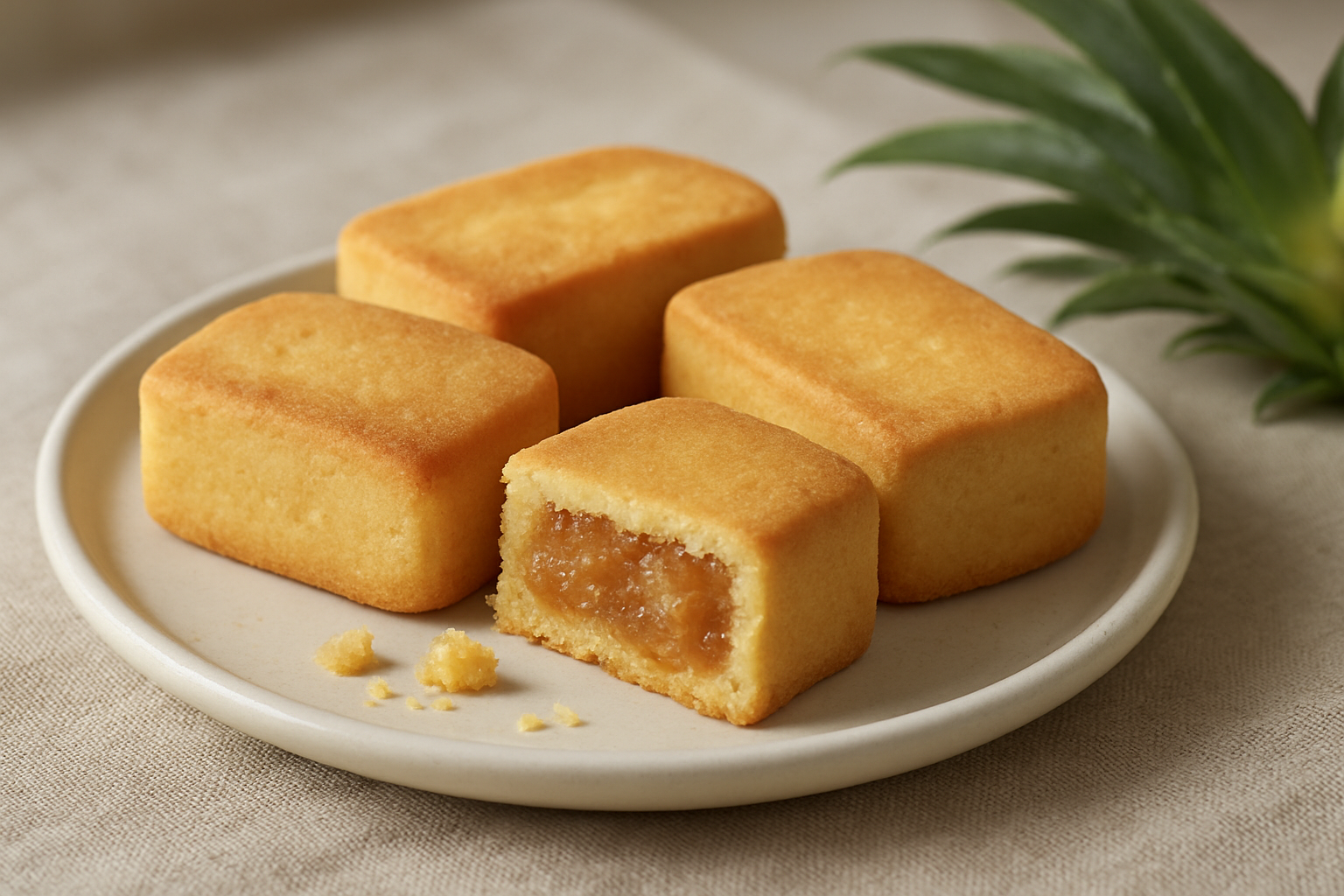
This easy taiwanese pineapple cake recipe brings the cheerful, buttery appeal of one of Taiwan’s best-known treats to a manageable home-baking project. Each little pastry has a tender, shortbread-like shell and a bright pineapple center that is sweet, tangy, and pleasantly jammy. While traditional versions are often made with specialized rectangular molds and pineapple-winter melon filling, this beginner-focused approach uses readily available canned pineapple and simple mini loaf molds.
These small cakes are lovely with afternoon tea, tucked into a lunchbox, or arranged on a dessert platter for a family gathering. The finished pastries look special, but the method is forgiving: cook the fruit until thick, wrap it in soft dough, and bake until the edges are lightly golden.
Why this easy Taiwanese pineapple cake recipe works for beginners
Unlike flaky pastries that require laminating or elaborate shaping, pineapple cakes use a press-in-style dough that is easy to handle. Butter, powdered sugar, flour, and cornstarch create a delicate crust with the familiar texture of a soft, crumbly cookie. The cornstarch is particularly helpful because it keeps the dough tender rather than tough.
The filling is also practical. Canned crushed pineapple saves peeling and chopping time, while a brief stovetop reduction concentrates its flavor. The key visual cue is thickness: once the filling clumps together when stirred and leaves a clear trail across the bottom of the pan, it is ready. A loose filling can leak through the dough, so give it time to cook down and cool fully.
This is a great make-ahead Taiwanese dessert. Like many butter-rich cookies, the flavor and texture become even more cohesive after the pastries rest in a sealed container overnight. That makes them a useful choice when you want a homemade dessert without last-minute assembly.
Helpful shaping tips for neat pineapple shortcakes
Work with completely cool filling. Warm filling softens the butter in the dough, making the pastry harder to seal. If your kitchen is warm, refrigerate the filling until firm enough to scoop, and keep the dough covered between portions. You do not need picture-perfect circles; press each dough portion flat in your palm, place the filling in the center, and gently pinch the edges over it.
Check the seal before putting a cake into its mold. Any visible opening can allow sticky fruit filling to bubble out during baking. Place the seam on the bottom, then use the mold to help create a tidy rectangle. Avoid packing the dough too firmly, which can make the crust dense. A gentle press into the corners is enough.
For consistent results, use a small cookie scoop or measuring spoon to portion both dough and filling. Equal portions help all the cakes bake at the same rate. Since oven temperatures vary, start checking early: the goal is a pale golden edge, not a deeply browned cookie. Overbaking can make the shell dry and less delicate.
Easy variations for family baking
For a little extra citrus brightness, add finely grated lemon zest to the pineapple filling. A pinch of cinnamon is another easy option, though it shifts the flavor away from the classic clean pineapple profile. If you enjoy a less sweet pastry, reduce the sugar in the filling slightly, but keep enough to help the fruit reduce into a cohesive paste.
No rectangular molds? A standard muffin pan works well and creates round pineapple shortcake bites. The traditional rectangular silhouette is charming, but the buttery crust and concentrated fruit center are what matter most. These easy fruit pastries can also be made in advance for bake sales, potlucks, or a homemade gift box.
Storage and serving ideas
Let the pastries cool completely before sealing them in a container; trapped steam can soften the crust. Store them at room temperature for short-term serving, or refrigerate them for longer storage. Chilled cakes taste best after they lose their refrigerator chill, so set them out briefly before serving. For a just-baked feel, warm them very gently in a low oven rather than microwaving, which can make the crust soft.
Serve pineapple cakes with black tea, jasmine tea, or coffee. For a small international dessert spread, pair them with this creamy easy Filipino leche flan or a chilled slice of Filipino mango float. The contrasting creamy and fruity desserts make an inviting option for guests.
Food safety notes
Cooked pineapple filling should be cooled promptly in a shallow container before it is portioned or refrigerated. Keep the work surface and hands clean while enclosing the filling, especially because the dough contains egg yolk. If the cakes are stored in a very warm kitchen, move them to the refrigerator rather than leaving them out for an extended period.
Frequently asked questions
Can I use fresh pineapple?
Yes. Finely chop or pulse ripe fresh pineapple, then cook it down just as you would canned pineapple. Fresh fruit often contains more moisture, so it may need additional simmering time before it becomes thick enough to shape.
Why did my filling leak out?
The filling was likely too wet, the dough seam was not fully closed, or the pastries were overfilled. For the next batch, cook the fruit until it is very thick, use level portions, and pinch any cracks closed before placing each cake in the mold.
Can I freeze this easy taiwanese pineapple cake recipe?
Yes. Freeze completely cooled cakes in a tightly sealed container, ideally with parchment between layers. Thaw them at room temperature or overnight in the refrigerator, then warm briefly in a low oven if you prefer a fresher, crisper shell.