
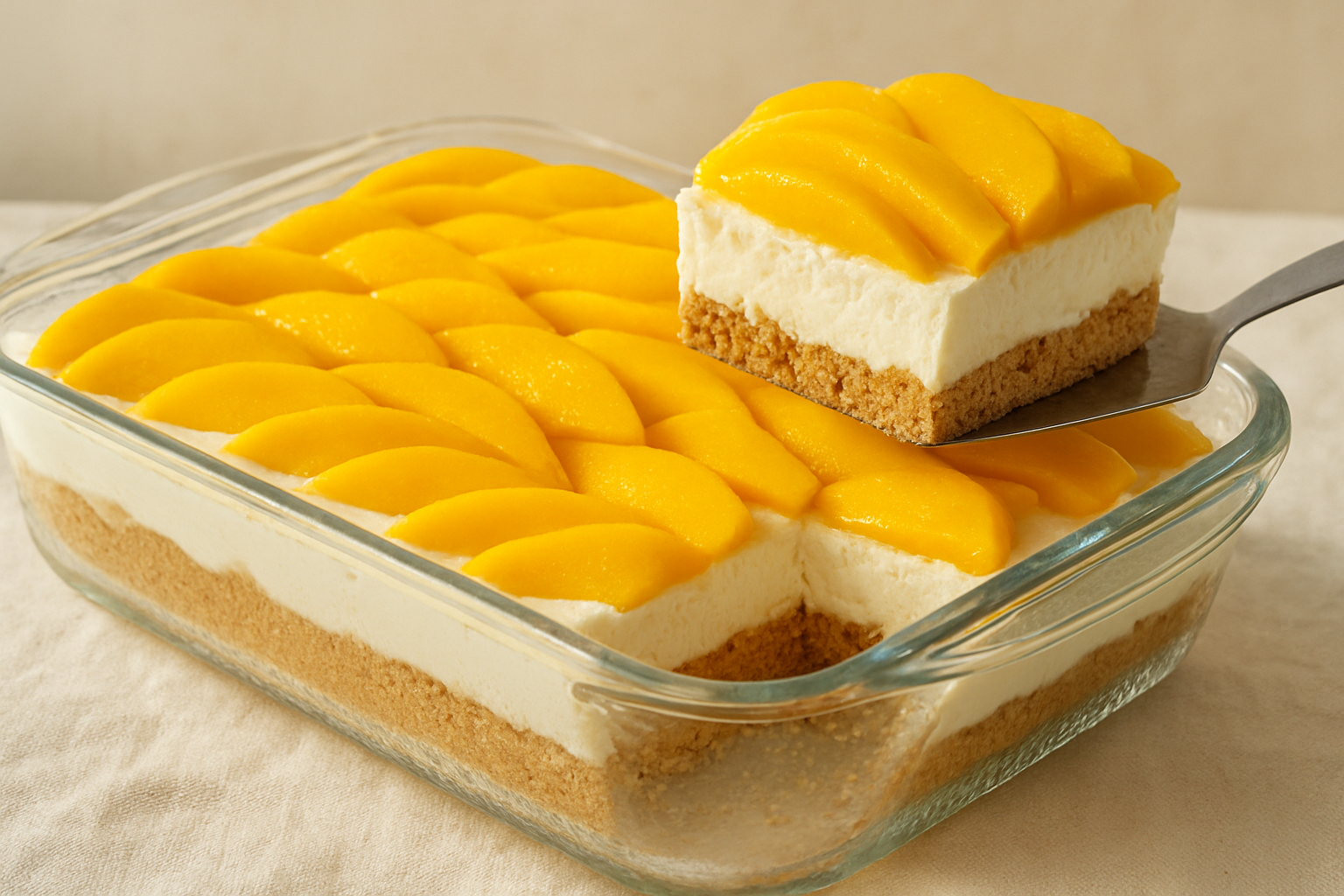
easy filipino mango float recipe: A No-Bake Family Dessert

easy filipino mango float recipe: A No-Bake Family Dessert
Ingredients
- 2 cups cold heavy whipping cream 480 ml
- 1 can sweetened condensed milk 14 ounces (396 g)
- 1 teaspoon vanilla extract 5 ml
- 18 full-sheet graham crackers about 9 ounces (255 g)
- 3 large ripe mangoes peeled and thinly sliced or diced, about 4 cups (600 g)
Instructions
- Chill a 9-by-13-inch (23-by-33-cm) baking dish and a large mixing bowl for 10 minutes if time allows. This helps the cream whip more easily.
- Beat the cold heavy cream in the chilled bowl with an electric mixer on medium-high speed until soft peaks form, about 2 to 3 minutes. Do not overbeat.
- With the mixer on low speed, gradually add the sweetened condensed milk and vanilla. Beat just until the filling is smooth and holds medium peaks.
- Arrange a single layer of graham crackers over the bottom of the baking dish, breaking a few crackers as needed to cover gaps.
- Spread about one-third of the cream filling over the crackers. Add about one-third of the mango pieces in an even layer.
- Repeat with two more layers of graham crackers, cream filling, and mangoes. Finish with mangoes on top. Cover the dish tightly.
- Refrigerate for at least 6 hours, or preferably overnight, so the graham crackers soften into cake-like layers. Slice cold and serve.
This easy filipino mango float recipe brings a much-loved Filipino-style refrigerator dessert to the table without turning on the oven. Cool cream, sunny ripe mangoes, and graham crackers become soft, sliceable layers after a long chill in the refrigerator. It is a welcome treat on hot American summer days, but it is equally useful for birthday parties, weekend potlucks, and any evening when a make-ahead dessert makes family dinner feel special.
Mango float is often called a refrigerator cake because time in the fridge transforms the cracker layers into something tender and cake-like. The contrast is the appeal: sweet, fragrant fruit brightens the rich creamy layer, while the softened crackers give every square structure. Even beginner cooks can make this no bake mango dessert with confidence because the most important step is simply allowing enough time for it to chill.
Why This Easy Filipino Mango Float Recipe Works for Families
There is no baking, stovetop work, or complicated decorating involved. The components are easy to find in most U.S. supermarkets, and the finished dessert can be assembled well before guests arrive. That makes this filipino easy dessert especially practical when the kitchen is already busy with dinner or when children want to help with a supervised, low-stress project.
The dessert also serves neatly once it has chilled thoroughly. Make it in a rectangular dish, cut it into modest squares, and bring the whole pan to the table. A spoonful of extra mango on the side is lovely, but it is not necessary; the top already gives guests a clear preview of the fruity layers underneath. For a Filipino-inspired menu, the sweet, chilled finish is particularly nice after savory noodles such as easy Filipino pancit canton noodles.
Choosing Mangoes and Getting the Best Texture
Use mangoes that are ripe enough to smell sweet and tropical but firm enough to cut cleanly. Very soft mangoes can be delicious, yet they tend to release more juice and may make the layers slippery. If your mangoes are not quite ripe, leave them at room temperature for a day or two, checking them daily. Once ripe, refrigerate them until you are ready to assemble the dessert.
For the smoothest cream layer, keep the dairy very cold before mixing. Stop whipping as soon as the mixture is thick, smooth, and able to hold its shape. Overmixing can make the filling grainy, while underwhipping can lead to a softer slice. Once chilled, this mango graham refrigerator cake should be creamy and tender rather than stiff or frozen-solid.
Do not worry if the crackers need to be broken to fit the dish. The pieces disappear into the finished layers after chilling, so a snug, mostly even base matters more than perfectly whole crackers. Cover the dish tightly so the dessert does not pick up refrigerator odors or dry out around the edges.
Simple Variations for Busy Cooks
The classic combination needs little embellishment, but small changes can help you use what is available. Well-drained frozen mango is a sensible option when fresh mangoes are expensive or out of season. It will create a softer fruit layer, so blot excess moisture before using it. A scattering of toasted unsweetened coconut adds a gentle nutty note, while cinnamon graham crackers offer a warmer, slightly spiced flavor.
If you need a shortcut, a prepared whipped topping can stand in for whipped cream. The texture will be fluffier and the dessert will be a little sweeter, but it remains an easy option for a family gathering. For another cool, refreshing contrast on a warm-weather table, serve fruit alongside a simple salad or make a light dinner first, such as this Peruvian quinoa salad with fresh vegetables.
This easy filipino mango float recipe is also flexible in presentation. Assemble it in a larger dish for casual scooping, or use small clear cups for individual portions. Cups are handy for picnics or parties because guests can eat directly from them, although the layers will be more rustic than a neatly cut square.
Storage and Serving Advice
Mango float is meant to be served cold, straight from the refrigerator. Plan for an extended chill, preferably overnight, because this gives the crackers time to soften evenly and makes portions easier to cut. Use a sharp knife, wiping it clean between slices, and a small spatula to lift each square.
Keep leftovers tightly covered in the refrigerator. The dessert is at its best during the first two days, when the mango is fresh and the layers still have a pleasing balance of softness and structure. It can be kept a little longer, but juicy fruit gradually makes the base softer. Reheating is not appropriate for this chilled dessert.
Food Safety for a Chilled Dessert
Because mango float contains dairy and cut fresh fruit, keep it refrigerated at 40°F (4°C) or below until serving time. Do not leave the pan on a buffet or counter for more than two hours. If you are taking it to a party, transport it in a cooler with ice packs and return any remaining portions to the refrigerator promptly.
Frequently Asked Questions
Can I make this dessert the day before?
Yes. Making it the day before is often the best approach because a long chill creates the soft, cake-like texture that makes mango float so appealing.
Can I use other fruit?
Mango gives this dessert its signature flavor, so it is the best choice. Peaches or well-drained berries can work as a variation, but their moisture level and flavor will change the result.
Why do the cracker layers need time in the refrigerator?
The cream gently softens the crackers while the dessert rests. That resting period is what turns separate layers into a cohesive, sliceable refrigerator cake.
Is this easy filipino mango float recipe suitable for kids to help make?
Yes. Children can help arrange crackers, spread the filling with supervision, and add fruit. An adult should handle peeling and cutting mangoes, as well as operating an electric mixer.


5 Comments