
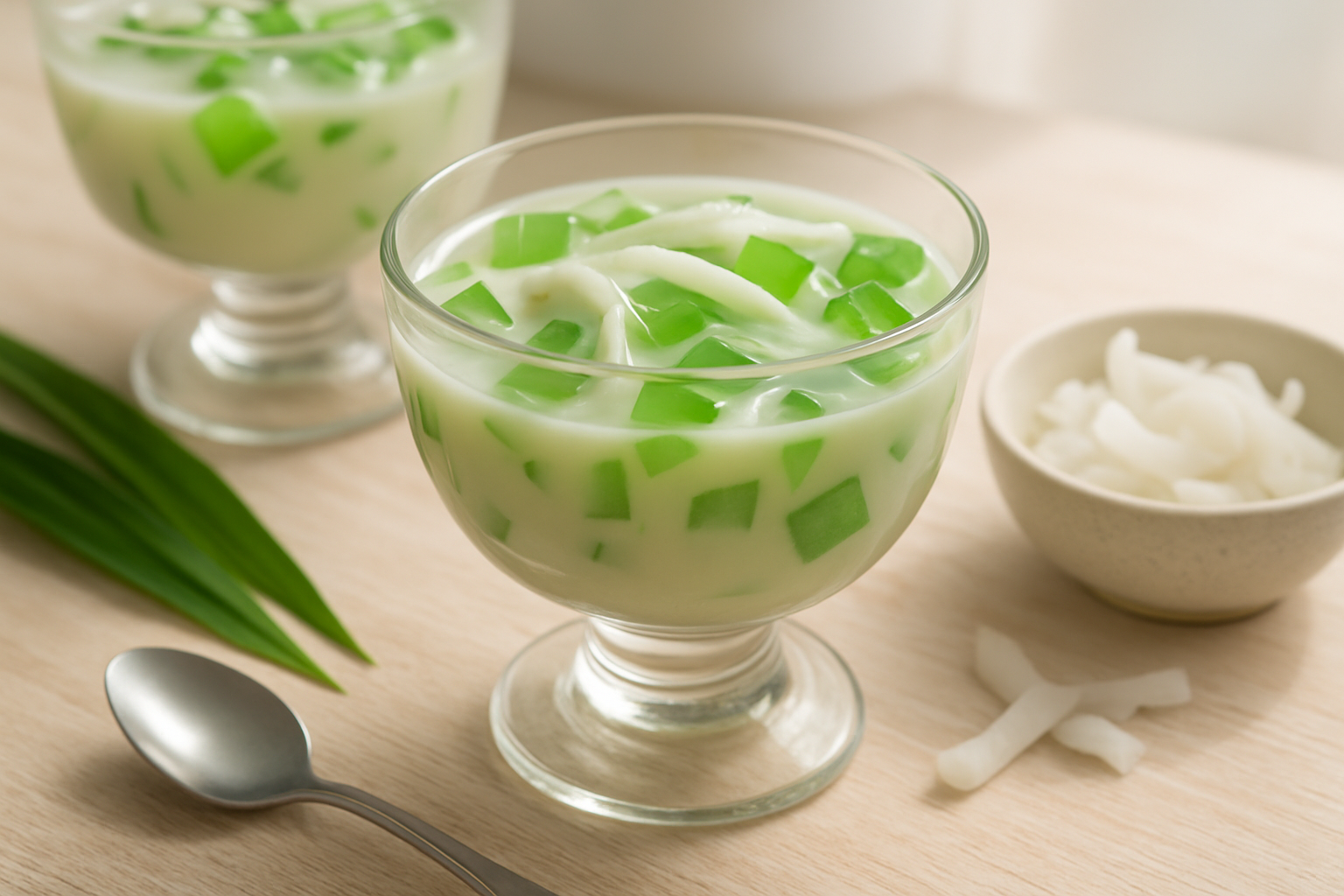
Easy No Bake Filipino Buko Pandan Recipe for Families
Easy No Bake Filipino Buko Pandan Recipe for Families
Ingredients
- 4 cups water 946 mL
- 1 tablespoon agar-agar powder 9 g
- 1/2 cup granulated sugar 100 g
- 1 teaspoon pandan extract 5 mL
- 2 to 3 drops green food coloring optional
- 2 jars young coconut strips in syrup 10 ounces each (2 x 283 g), drained well; reserve 1/2 cup (120 mL) syrup if desired
- 2 cartons media crema or other shelf-stable table cream 7.6 ounces each (2 x 225 mL), chilled
- 1 can sweetened condensed milk 14 ounces (396 g)
- 1/2 cup reserved young coconut syrup 120 mL, optional, for a looser and sweeter sauce
Instructions
- Lightly rinse an 8-inch square baking dish or similar shallow dish with water. Do not dry it completely; the slight moisture helps release the set jelly later.
- In a medium saucepan, whisk the water, agar-agar powder, and sugar together while the pan is still cool. Bring to a full boil over medium heat, whisking often so the agar does not settle on the bottom.
- Once boiling, continue to boil for 2 minutes while whisking. Remove the pan from the heat, then stir in the pandan extract and optional green food coloring.
- Pour the hot pandan mixture into the prepared dish. Let it cool at room temperature until firm, about 30 to 45 minutes, then refrigerate until fully chilled, about 1 hour.
- Cut the chilled pandan jelly into small cubes, about 1/2 inch (1.25 cm).
- In a large bowl, gently stir together the chilled media crema, sweetened condensed milk, and optional reserved coconut syrup until smooth. Fold in the drained young coconut strips and pandan jelly cubes.
- Cover and refrigerate for at least 2 hours so the flavors meld and the dessert is thoroughly cold. Stir gently before serving and spoon into small bowls or cups.
If you need a cool, cheerful dessert for a busy weekend, this easy no bake filipino buko pandan recipe delivers a lovely mix of creamy, tropical, and lightly floral flavors without turning on the oven. Buko means young coconut, while pandan is a fragrant tropical leaf often used in Southeast Asian sweets. Here, tender coconut strips and green pandan jelly are folded into a chilled creamy mixture for a dessert that feels festive but remains very manageable for beginner cooks.
This Filipino favorite is especially welcome after a warm-weather meal, at potlucks, or when children want a colorful treat. Although the jelly needs a few minutes on the stovetop so the agar can dissolve and set, the dessert is truly no-bake: there is no oven work, no complicated decorating, and no last-minute assembly pressure. Make it ahead, let it chill, and serve it cold in small bowls or clear cups.
Why families love this buko pandan jelly dessert
The appeal of this buko pandan jelly dessert is all about contrast. The jelly cubes are bouncy and refreshing, the young coconut has a soft, pleasantly chewy bite, and the creamy sauce rounds everything out with gentle sweetness. Pandan extract gives the dessert its signature aroma, often described as grassy, floral, and a little like vanilla with toasted rice. A few drops of green coloring are optional, but they give the jelly the familiar bright look many people associate with buko pandan.
It is also a practical dessert for gatherings. The components can be prepared in advance, the finished dish travels well in a cooler, and you can portion it easily for kids and adults. Since it is served chilled, it is a refreshing alternative to heavier cakes or baked custards. For another classic Filipino sweet with a completely different texture, try this easy Filipino leche flan recipe.
Tips for an easy no bake Filipino buko pandan recipe
For the best result, use agar-agar powder rather than assuming it works exactly like unflavored gelatin. Agar must reach a full boil to activate, and it sets into a clean-cut jelly that holds up nicely when stirred with the cream and coconut. Whisk it into cool water before heating to minimize clumps, and keep stirring as it comes to a boil. Once set, the jelly should be cold before cutting so the cubes stay neat.
Drain jarred or canned young coconut well before adding it. Too much syrup can make the creamy mixture thin and overly sweet. Save a little syrup separately, though: it is useful if you want a looser consistency after chilling. Start with the recipe amount of condensed milk, then taste the cream mixture before adding any reserved syrup. Brands of coconut and cream vary in sweetness, so this small adjustment keeps the dessert balanced.
Chill the table cream before mixing. Cold cream helps the finished dessert stay thick and pleasantly creamy. Fold the jelly cubes in gently with a large spoon or flexible spatula instead of vigorously stirring; this prevents the cubes from breaking apart. If possible, allow at least a couple of hours of chilling after assembly. That rest gives the pandan, coconut, and cream flavors time to come together.
Easy variations and serving ideas
This simple tropical jelly recipe is flexible without losing its character. For a fruitier version, fold in well-drained canned lychees or diced ripe mango just before serving. Keep additions modest so the pandan and buko remain the main flavors. A spoonful of toasted, unsweetened coconut flakes makes a nice garnish, adding aroma and a little crunch. For a dairy-free option, use chilled full-fat coconut cream in place of table cream, but expect a more pronounced coconut flavor.
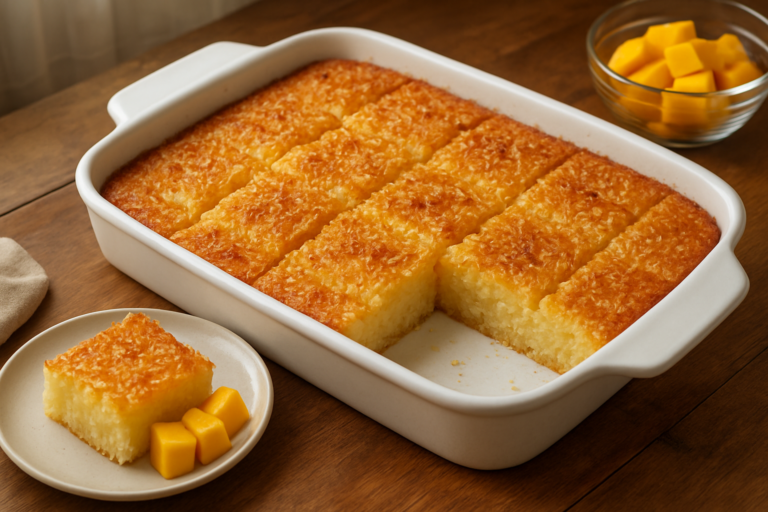
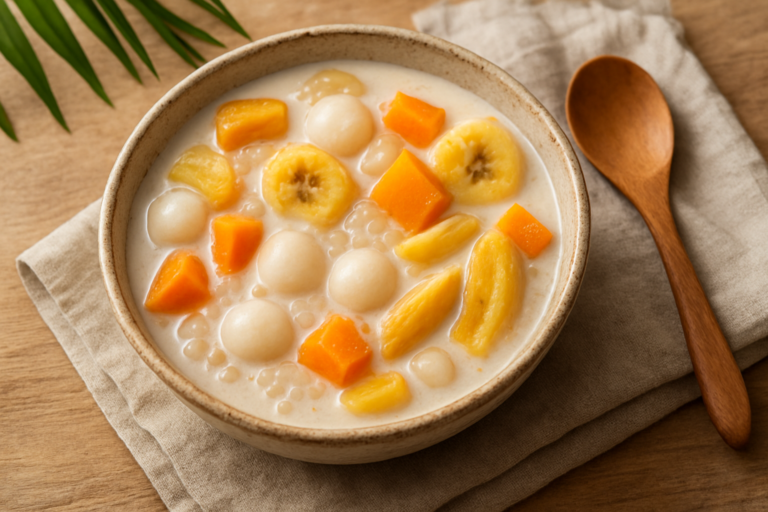
Serve this easy no bake filipino buko pandan recipe after grilled food, noodle dishes, or a festive Filipino-style spread. Small clear cups show off the green jelly and make serving simple at parties. If your family enjoys breezy, chilled desserts from around the world, the colorful fruit-and-ice combination in this Indonesian es campur dessert drink is another refreshing choice. For an equally convenient layered Filipino sweet, save this no-bake Filipino mango float recipe for your next gathering.
Storage and food safety
Keep buko pandan covered in the refrigerator and serve it cold. It is at its best within two days, when the jelly is still springy and the cream mixture is fresh, though properly refrigerated leftovers can be kept for up to three days. A little liquid separation after chilling is normal; give the dessert one gentle stir before portioning. Freezing is not recommended because the jelly can become watery and lose its pleasant texture after thawing.
Because this dessert contains cream, refrigerate it as soon as it is assembled. Do not leave it on a buffet or counter for longer than two hours, or one hour when outdoor temperatures are above 90°F. Use clean serving spoons, return leftovers to the refrigerator promptly, and discard any portion that has been held at room temperature too long.
Frequently asked questions
What does pandan taste like?
Pandan has a distinctive sweet, floral aroma that is difficult to duplicate exactly. Many people notice notes similar to vanilla, nuts, fresh grass, or toasted rice. It pairs especially well with coconut and condensed milk.
Can I use gelatin instead of agar-agar?
You can, but the result will be softer and more delicate than traditional agar jelly. Gelatin also needs a different blooming and dissolving method, so use a recipe specifically developed for gelatin rather than making a direct one-for-one swap.
Can I make this easy no bake Filipino buko pandan recipe a day ahead?
Yes. Making it the day before is a smart option for parties because the dessert needs time to get thoroughly cold. Cover it tightly and keep it refrigerated until serving.
Where can I find young coconut?
Look for young coconut strips, often labeled buko, in jars or cans at Asian markets. Some larger supermarkets carry frozen young coconut in the international freezer section. Drain it well before using it in the dessert.

4 Comments