Quick easy filipino tortang talong recipe for Weeknight Dinner
Quick easy filipino tortang talong recipe for Weeknight Dinner
Ingredients
- 4 medium Asian or Chinese eggplants about 1 1/2 lb (680 g) total
- 4 large eggs
- 1/2 tsp fine salt 3 g, divided
- 1/4 tsp ground black pepper 0.5 g
- 2 tbsp neutral cooking oil such as canola, avocado, or vegetable oil (30 mL), divided
Instructions
- Position an oven rack about 4 inches (10 cm) below the broiler and line a rimmed baking sheet with foil. Prick each eggplant a few times with a fork and place on the sheet.
- Broil the eggplants, turning them every few minutes with tongs, until the skins are deeply blistered and the flesh is very soft, about 10 to 15 minutes. Transfer to a plate and let stand until cool enough to handle.
- Peel away and discard the charred skins, leaving the stems attached if possible. Place each peeled eggplant on a cutting board or plate and gently flatten it lengthwise with a fork. Do not mash it completely; keep the flesh in one piece.
- In a shallow bowl, beat the eggs with 1/4 teaspoon salt (1.5 g) and the black pepper. Sprinkle the flattened eggplants with the remaining 1/4 teaspoon salt (1.5 g).
- Heat 1 tablespoon oil (15 mL) in a large nonstick skillet over medium heat. Dip 2 eggplants into the beaten egg, coating both sides and letting excess egg fall back into the bowl. Lay them in the skillet, then spoon a little of the remaining egg over any bare spots.
- Cook until the underside is golden and the egg is set, about 2 to 3 minutes. Carefully flip with a wide spatula and cook the second side until golden and fully set, about 2 minutes more. Transfer to a plate.
- Add the remaining 1 tablespoon oil (15 mL) and repeat with the remaining eggplants and egg mixture. Serve hot with steamed rice, ketchup, banana ketchup, or a vinegar dipping sauce, if desired.
 Sale!
The Dinner Atlas – Collection II: 31 International Dinner Recipes
Continue your journey around the dinner table with 31 international recipes from 22 countries. The Dinner Atlas – Collection II brings together comforting family meals, curries,…
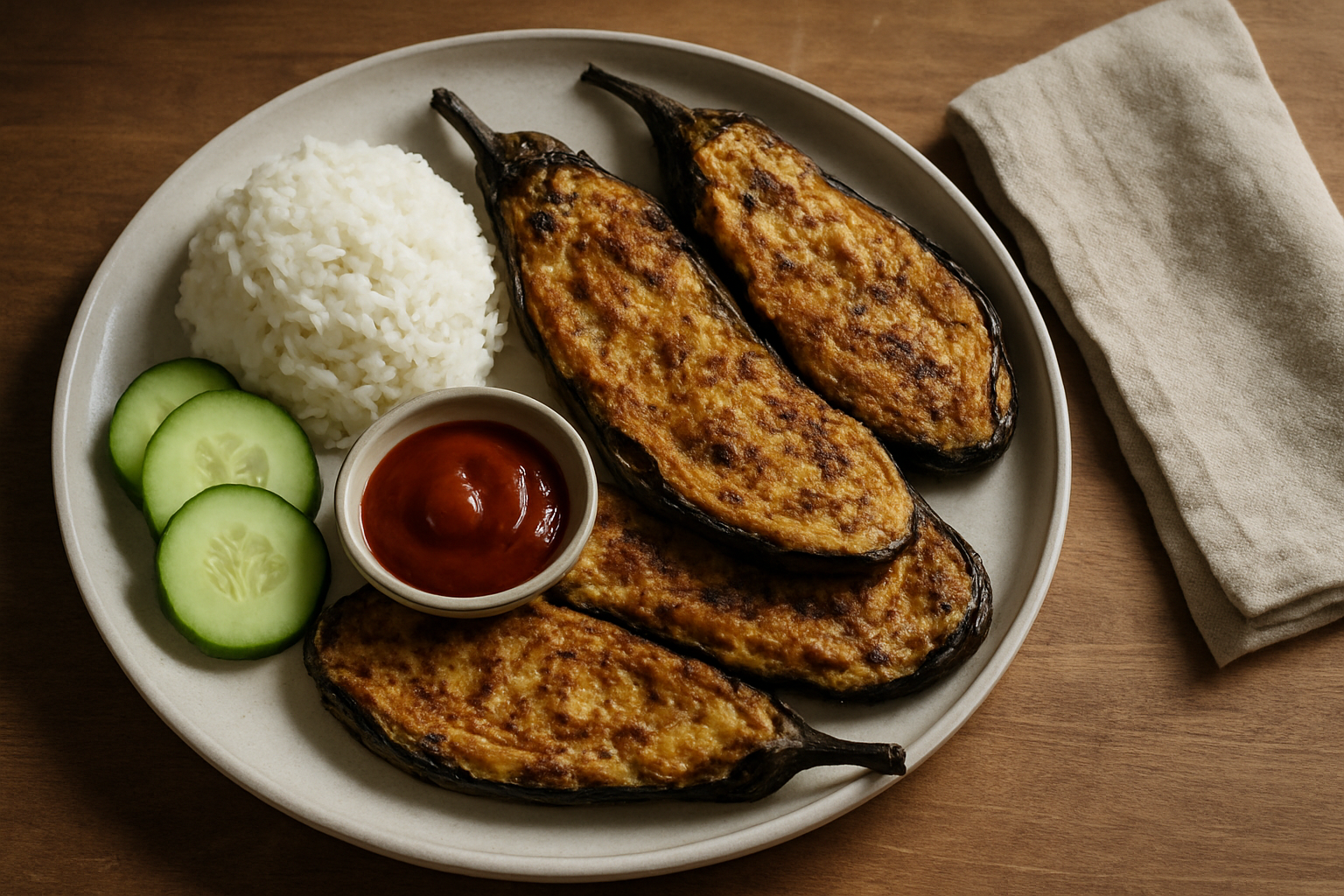
View ProductThis easy filipino tortang talong recipe turns a handful of familiar staples into a comforting, vegetarian-friendly dinner that feels special without making a busy evening harder. Tortang talong is a Filipino eggplant omelette: tender eggplant is cooked until smoky and soft, then held together with a savory egg coating and pan-fried until golden. Serve it with warm rice for a simple eggplant dinner that is satisfying, flexible, and especially welcoming for beginner cooks.
Why this Filipino eggplant omelette works for weeknights
One of the best things about tortang talong is its contrast of textures. The eggplant becomes silky and almost creamy inside, while the egg on the outside forms a lightly crisp, browned edge. Charring the skin also adds depth without relying on a long ingredient list or a complicated sauce. The result is mild enough for kids and easy to pair with whatever you have on the table.
This dish is also naturally adaptable. Keep it meatless for a quick vegetarian meal, or make it more filling with a small amount of cooked protein. A bowl of rice, sliced cucumbers, tomatoes, or a simple green salad rounds out the plate. If you enjoy comforting Filipino meals, pair this lighter dinner idea with easy Filipino arroz caldo chicken rice porridge on another evening when you want something warm and soothing.
The technique is approachable because the eggplant does most of the work as it softens. There is no need to create perfect rounds or worry about an elaborate omelette fold. Each portion is meant to look rustic, with the softened eggplant spread gently beneath its golden egg layer.
Tips for an easy filipino tortang talong recipe
Choose eggplants that feel firm for their size, have smooth shiny skin, and do not have soft brown spots. Long Asian eggplants are convenient because they cook quickly and make individual portions that are easier to turn. Globe eggplants are completely workable, too; they simply make broader, more delicate omelettes.
Cook the eggplant until the flesh is truly soft before peeling it. Undercooked eggplant can be spongy and difficult to flatten, while fully softened eggplant spreads easily and develops the tender texture that makes this easy filipino tortang talong recipe so appealing. A blistered, darkened skin is expected and contributes a pleasant smoky note. Let the eggplant cool just enough to handle comfortably, then peel it carefully while leaving the stem on when possible. The stem gives you a useful handle while dipping and flipping.
Use a nonstick skillet and moderate heat. Heat that is too high can brown the egg before the center sets, while very low heat may leave the coating pale and oily. Wait until the first side is golden and the egg looks set around the edges before attempting to turn it. A wide fish spatula or thin, flexible turner offers the most support. If an omelette tears, do not worry: slide the pieces together in the pan and let the egg finish setting. It will still taste great.
Easy variations and serving ideas
The basic version is intentionally simple, but tortang talong welcomes additions. For a heartier family dinner, add cooked crumbled pork, turkey, or a plant-based ground-meat alternative. Keep additions modest so the egg coating can still hold the eggplant together. Chopped scallions, a little chopped tomato, or fresh herbs can add color and brightness after cooking.
For a classic Filipino-style sweet-tangy contrast, serve the omelette with banana ketchup. Regular tomato ketchup, a vinegar dipping sauce, or a little hot sauce are all good alternatives for a U.S. pantry. Plain steamed rice is the easiest side, but leftovers are also excellent tucked into a rice bowl with crunchy vegetables. For another fast egg-centered meal, try this easy Turkish menemen recipe, which uses softly cooked eggs in a flavorful vegetable base.
If you are planning a Filipino-inspired menu, a fresh noodle dish such as Filipino pancit canton noodles with chicken can make a nice companion for a larger family gathering. For an ordinary weeknight, though, rice and a crisp vegetable side are all this simple eggplant dinner needs.
Storage and reheating
Tortang talong is best just after cooking, when the outside is at its most golden. Still, leftovers make a convenient lunch. Let them cool promptly, store them covered in the refrigerator, and enjoy within three days. Reheat gently in a lightly oiled nonstick skillet over medium-low heat until warmed through, turning once. Microwaving is faster but softens the exterior. Freezing is not ideal because cooked eggplant can release water and lose its tender texture after thawing.
Food safety notes
Because this Filipino eggplant omelette contains eggs, cook it until the coating is fully set and no raw egg remains. Keep cooked portions out of the refrigerator for no more than two hours, or one hour in very hot conditions. Use clean utensils and plates for the finished omelettes rather than returning them to anything that touched the raw egg mixture.
Frequently asked questions
Do I need a gas flame for tortang talong?
No. A broiler is a practical, beginner-friendly way to soften and char the eggplant. A gas flame creates a more pronounced smoky flavor, but the broiler version is still delicious and reliable.
Can I use large globe eggplants?
Yes. Split and flatten them gently after cooking. Their wider shape can make them more fragile, so use a broad spatula and cook one at a time if your skillet is not large enough to give each omelette room.
Is this easy filipino tortang talong recipe vegetarian?
Yes, the basic recipe is vegetarian because it relies on eggplant and eggs. Add cooked meat only if your family wants a more substantial variation.
What should I do if the omelette breaks when I flip it?
Simply nudge the pieces back together and continue cooking until the egg is set. Tortang talong is a homey dish, and an imperfect shape does not affect its flavor or its ability to make a satisfying meal.