easy egyptian koshari recipe: Hearty Lentil and Rice Street Food for Family Meals
easy egyptian koshari recipe: Hearty Lentil and Rice Street Food for Family Meals
Ingredients
- 3/4 cup brown or green lentils 145 g, picked over and rinsed
- 3 cups water 720 ml, for cooking the lentils
- 1 teaspoon kosher salt 6 g, divided
- 1 cup long-grain white rice 185 g, rinsed
- 2 cups water 480 ml, for cooking the rice
- 8 ounces elbow macaroni or ditalini pasta 227 g
- 2 large yellow onions thinly sliced (about 1 pound/450 g)
- 1/3 cup neutral cooking oil such as vegetable or canola oil (80 ml)
- 4 garlic cloves minced (about 12 g)
- 1 teaspoon ground cumin 2 g
- 1/4 teaspoon cayenne pepper 0.5 g, plus more to taste if desired
- 1 can crushed tomatoes 28 ounces (794 g)
- 2 tablespoons white vinegar 30 ml
- 1 can chickpeas 15 ounces (425 g), drained and rinsed (about 1 1/2 cups/250 g)
- 1/4 cup water 60 ml, as needed to loosen the tomato sauce
- 1/4 teaspoon black pepper 0.5 g
Instructions
- Place the lentils, 3 cups (720 ml) water, and 1/2 teaspoon salt in a medium saucepan. Bring to a boil, then reduce to a steady simmer. Cook until the lentils are tender but still holding their shape, about 20 to 25 minutes. Drain any excess water and set aside.
- Meanwhile, place the rice, 2 cups (480 ml) water, and 1/4 teaspoon salt in another saucepan. Bring to a boil, cover, reduce the heat to low, and cook until the water is absorbed and the rice is tender, about 15 to 18 minutes. Remove from the heat and let stand, covered, for 5 minutes before fluffing.
- Bring a pot of generously salted water to a boil. Cook the pasta according to the package directions until tender. Drain well and set aside.
- While the pasta cooks, heat the oil in a large skillet over medium-high heat. Add the sliced onions and cook, stirring often, until deep golden brown and crisp at the edges, about 12 to 16 minutes. Watch closely near the end because onions can darken quickly. Transfer the onions to a paper towel-lined plate. Reserve 1 tablespoon of the oil in the skillet and carefully discard or save the remaining oil for another use.
- Reduce the skillet heat to medium. Add the garlic, cumin, cayenne, remaining 1/4 teaspoon salt, and black pepper to the reserved oil. Stir for about 30 seconds, just until fragrant. Add the crushed tomatoes and vinegar. Simmer, stirring occasionally, until slightly thickened, about 10 minutes. Stir in up to 1/4 cup (60 ml) water if the sauce becomes too thick.
- Warm the chickpeas in the tomato sauce for 2 to 3 minutes. Taste the sauce and add more cayenne if your family likes heat.
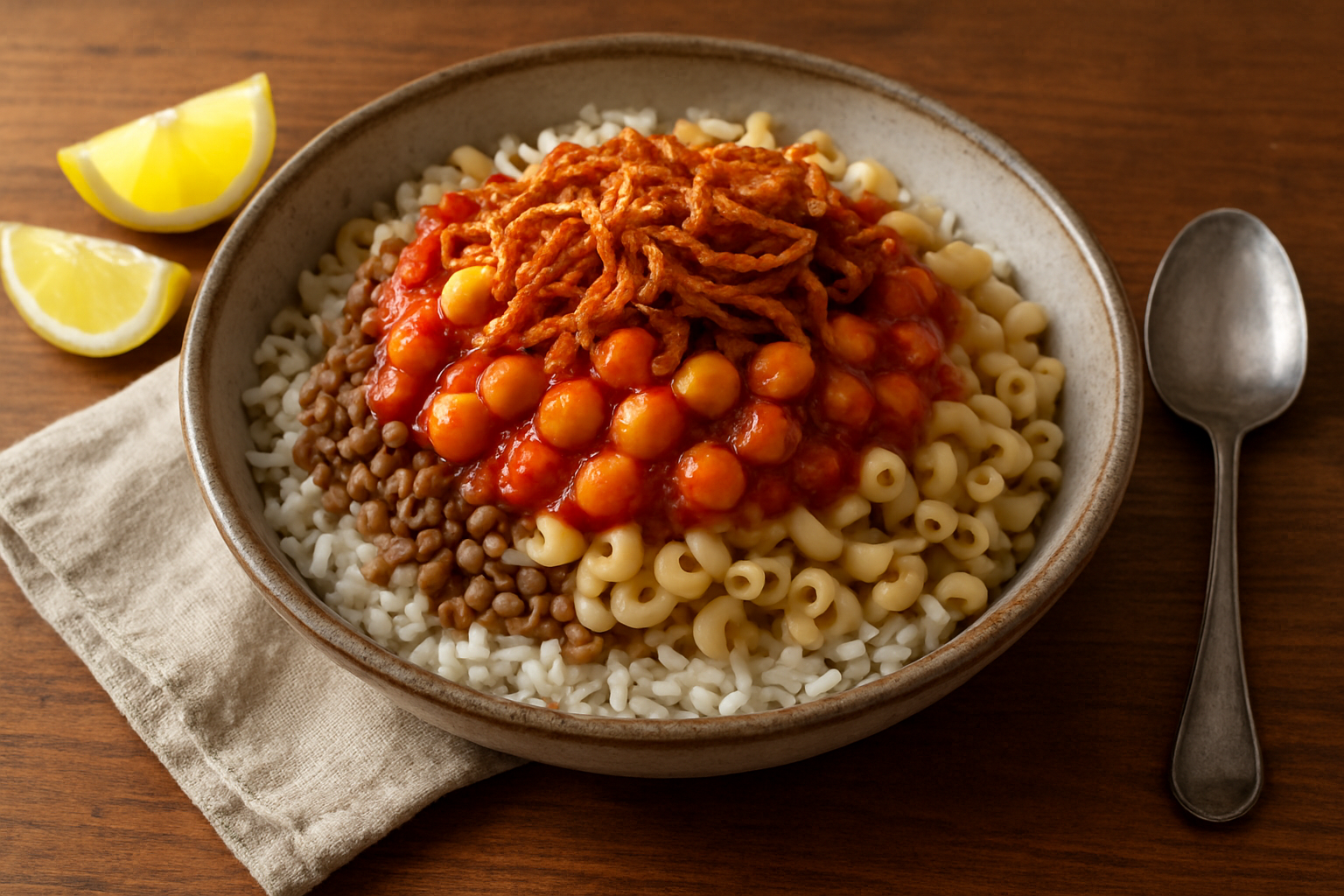
- To serve, layer rice, lentils, and pasta in individual bowls or on a large platter. Spoon the chickpea tomato sauce over the top and finish with the crispy onions. Let everyone mix the layers together as they eat.
This easy egyptian koshari recipe turns a beloved Egyptian street-food classic into a practical family dinner. It brings together cozy pantry staples in one generous bowl: tender legumes, grains, pasta, a bright tomato topping, and crisp onions. Each person can build a bowl with more or less sauce and onions, which makes it especially useful when family members like different textures or levels of spice.
Koshari is satisfying without relying on meat, and its layers make an ordinary weeknight meal feel a little more special. The dish is also forgiving for newer cooks. You do not need fancy equipment or hard-to-find groceries; the key is keeping the components separate until serving so the textures stay distinct.
Why this easy egyptian koshari recipe works for family dinner
This meal has the comfort of a rice-and-beans supper, but the pasta, tangy sauce, and crackly onion topping make every bite more interesting. The lentils and chickpeas give the meal staying power, while the tomato sauce brings acidity that balances the mild rice and pasta. It is an approachable way to introduce an Egyptian street food recipe at home.
- Pantry-friendly: Most of the building blocks are shelf-stable and easy to keep on hand.
- Flexible for families: Put the sauce and onions on the table separately for selective eaters.
- Budget-conscious: Lentils, rice, pasta, and canned chickpeas stretch into a filling dinner.
- Naturally plant-based: It is an easy vegan koshari option that does not feel like a compromise.
Tips for great koshari layers
The biggest tip for a successful koshari lentil rice dish is to treat it as a collection of components rather than a one-pot mixture. Cook the lentils until tender but not mushy, and drain them well if any water remains. Fluff the rice before assembling, and do not overcook the pasta. Keeping the textures separate prevents the finished bowls from becoming heavy or soft all over.
Give the tomato sauce a taste before serving. It should be savory, gently spiced, and noticeably tangy from the vinegar. If it tastes flat, a small additional splash of vinegar can wake it up. If it seems overly sharp, let it simmer a little longer so the flavors round out. For younger children, keep the cayenne mild and offer extra heat separately.
Do not rush the onions
Golden onions are more than a garnish here: they add sweetness, crunch, and the signature contrast that makes the bowl memorable. Slice them as evenly as possible so they brown at a similar pace. Stir often, especially once they begin to color, and move them to a paper towel-lined plate when they are deep golden. They continue to darken briefly after leaving the pan, so remove them before they look very dark brown.
Easy variations
Use a different small pasta shape if that is what your pantry has, or use gluten-free pasta when needed. Canned lentils can shorten the process on a busy evening; rinse them well and warm them gently so they do not break apart. For a more substantial spread, add a crisp, lemony salad alongside the bowls, such as this Lebanese fattoush salad with sumac dressing. If your family enjoys another hearty plant-forward dinner, this Jamaican curry chickpea stew is another flavorful option for the weekly rotation.
Make-ahead, storage, and reheating
For the best texture, store the rice, lentils, pasta, sauce, and onions separately. The sauce is particularly convenient to make ahead because its flavors settle nicely in the refrigerator. When dinner is ready, warm the soft components together with a small splash of water to loosen them, then add the onions at the end. The onions are crispiest on the day they are made, but leftover onions can still add welcome flavor even if they soften.
Leftovers work well for lunch, too. Pack the onion topping in a small separate container rather than scattering it over the saucy components before refrigerating. This small step keeps the contrast that makes the dish appealing.
Food safety for leftovers
Promptly refrigerate leftovers in shallow containers rather than leaving a large bowl on the counter. Keep refrigerated leftovers for no more than four days, and reheat only the portion you plan to eat until it is steaming hot. If food has sat at room temperature for more than two hours, discard it. When packing lunches, keep the food cold with an ice pack until it can be refrigerated.
Frequently asked questions
What does koshari taste like?
It tastes savory, comforting, and pleasantly tangy. Mild rice, pasta, lentils, and chickpeas are balanced by spiced tomato sauce, vinegar, cumin, and sweet-crisp onions.
Can I serve this easy egyptian koshari recipe without spice?
Absolutely. Omit the cayenne from the main sauce, then place cayenne or your favorite hot sauce on the table so everyone can season their own bowl.
Why are rice and pasta used together?
The combination is traditional to koshari and gives the dish its wonderfully hearty character. Rice offers a fluffy base, while pasta adds a pleasantly chewy bite that holds onto the tomato sauce.
What should I serve with koshari?
Koshari is substantial enough to stand alone, but a chopped salad, warm pita, or simple cucumbers make fresh and easy companions. For an extra-filling table, offer lemon wedges and a peppery condiment on the side.