
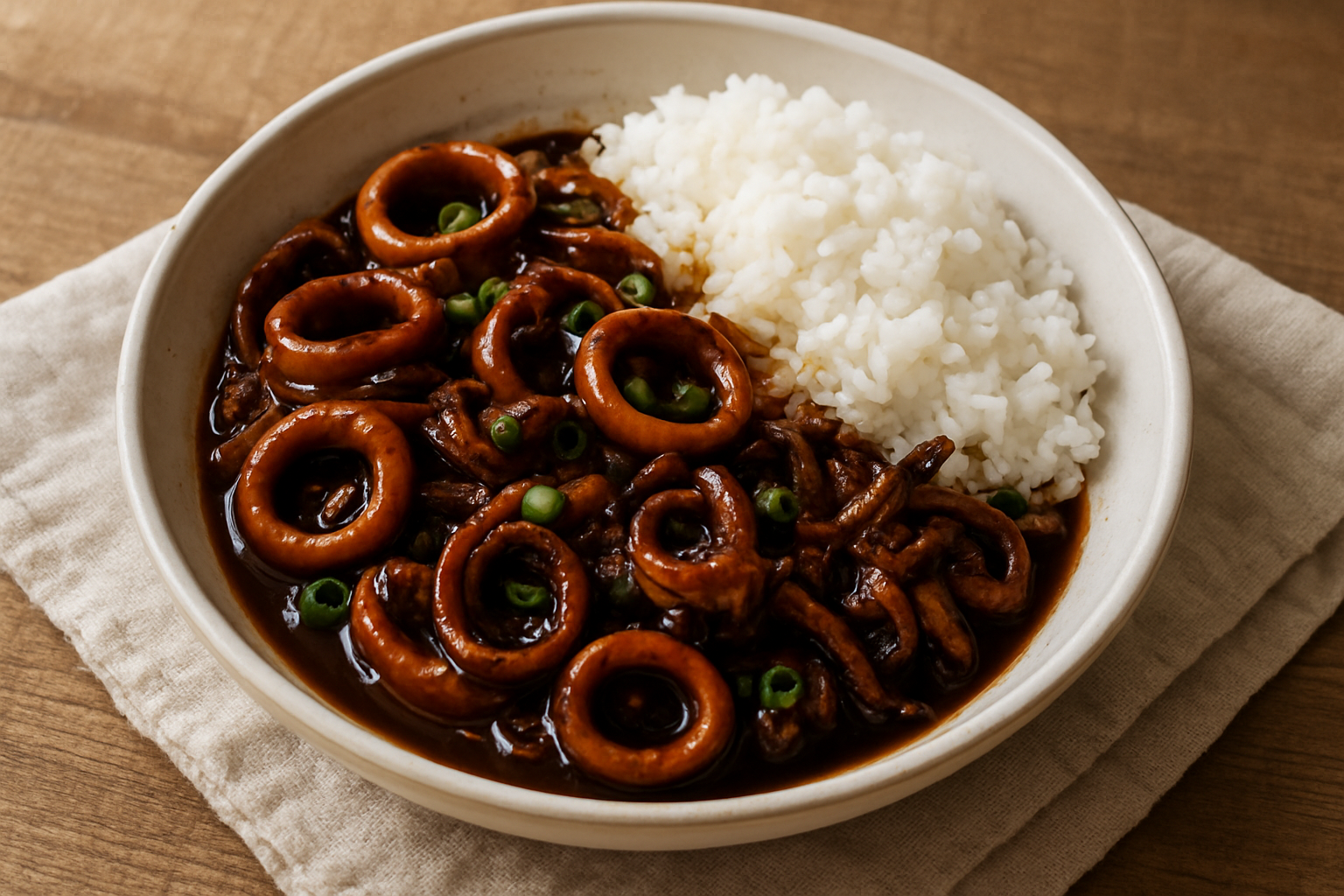
Quick easy filipino adobong pusit recipe: Easy Squid Adobo for Dinner
Quick easy filipino adobong pusit recipe: Easy Squid Adobo for Dinner
Ingredients
- 1 1/2 pounds cleaned squid cut into 1/2-inch rings with tentacles left whole if small (680 g)
- 1 tablespoon neutral cooking oil 15 mL
- 6 garlic cloves minced
- 1/4 cup low-sodium soy sauce 60 mL
- 1/3 cup cane vinegar or unseasoned rice vinegar 80 mL
- 1/4 cup water 60 mL
- 2 dried bay leaves
- 1/2 teaspoon freshly ground black pepper 1 g
- 1 teaspoon brown sugar optional (4 g)
- 2 green onions thinly sliced, optional, for serving (about 1/4 cup / 15 g)
- Cooked white rice for serving, optional
Instructions
- Pat the cleaned squid very dry with paper towels. Cut the squid bodies into 1/2-inch rings and leave small tentacles whole; halve larger tentacles if desired.
- Heat the oil in a wide skillet or sauté pan over medium heat. Add the garlic and cook for 20 to 30 seconds, just until fragrant; do not let it brown deeply.
- Add the squid, soy sauce, vinegar, water, bay leaves, black pepper, and optional brown sugar. Bring the liquid to a gentle simmer. Once it simmers, cook for 2 minutes, stirring once or twice.
- Use tongs or a slotted spoon to transfer the squid to a clean bowl. Leave the sauce in the skillet.
- Increase the heat to medium-high and simmer the sauce for 5 to 7 minutes, or until it reduces slightly and tastes balanced. Remove and discard the bay leaves.
- Return the squid and any juices in the bowl to the skillet. Toss for 30 to 60 seconds, only until the squid is heated through and coated. Serve right away over hot rice, topped with green onions if desired.
This easy filipino adobong pusit recipe brings a beloved Filipino-style seafood dinner to the table with a short ingredient list and one especially useful lesson for new cooks: squid needs a quick cook. The finished dish has tender rings and tentacles in a punchy sauce that is salty, garlicky, pleasantly tangy, and made for spooning over hot rice. It is a practical choice for a busy night when you want to change up the usual chicken or ground beef routine without taking on a complicated project.
Adobong pusit is Filipino squid adobo. Like other adobo-style dishes, it draws its familiar flavor from the balance of vinegar, soy sauce, garlic, pepper, and bay. Squid also releases some liquid as it cooks, which becomes part of the sauce. Rather than rushing to add extra liquid, give the pan a chance to reduce after the squid comes out. That small detail concentrates the flavor while protecting the seafood’s tender texture.
Why This Easy Filipino Adobong Pusit Recipe Works for Weeknights
This is an approachable seafood recipe because most U.S. grocery stores sell cleaned fresh or frozen squid. Buying it already cleaned saves considerable time; you only need to rinse it if necessary, dry it well, and cut the tubes into rings. The tentacles are completely edible and add appealing texture, so there is no need to discard them.
The technique is equally simple. The squid cooks briefly, then rests while the cooking liquid turns into a more flavorful sauce. This avoids the most common problem with Filipino squid adobo: overcooked, rubbery squid. Keep the heat at a gentle simmer rather than a hard boil, and have a bowl ready before you start so you can remove the squid promptly.
The flavor is bold enough for adults but easy to adjust for families. The standard sauce is savory and tangy, not spicy. If your household enjoys heat, serve sliced fresh chile or a favorite chile sauce on the side instead of adding it directly to the pan. That way everyone can choose their own level of spice.
Helpful Squid Shopping and Cooking Tips
Look for squid that smells clean and mild, never sharply fishy. For frozen squid, thaw it overnight in the refrigerator instead of on the counter. Whether you start with fresh or thawed squid, draining and patting it very dry is worthwhile. Less surface moisture helps the sauce stay glossy and concentrated.
Use a wide skillet or sauté pan rather than a small saucepan. A broad cooking surface lets moisture evaporate efficiently when the sauce is reducing. If your pan is crowded, the squid will steam more heavily and may release enough liquid to slow down the process. A wide pan also makes it easy to lift out the squid without losing too much sauce.
Taste the reduced sauce before returning the squid. Soy sauces vary widely in saltiness, and vinegars differ in sharpness. If it tastes too intense, add a small splash of water. If it needs a rounder edge, the optional touch of brown sugar is useful, but the dish should still taste savory and tangy rather than sweet. This attention to balance is what makes an easy adobong pusit taste satisfying with simple steamed rice.
Easy Variations and Serving Ideas
For a darker, more traditional-looking version, some cooks add squid ink. It gives the sauce an inky black color and a deeper briny flavor, but it is not required for a delicious meal. This beginner-friendly approach intentionally skips it because squid ink can be difficult to find and it requires a bit more care when handling. The clear brown sauce still delivers the characteristic adobo profile.
Serve the squid with warm jasmine rice, long-grain white rice, or brown rice. For freshness, add a simple cucumber salad, steamed green beans, or sautéed bok choy. If you are building a Filipino-inspired dinner spread, this dish pairs nicely with Filipino pancit canton noodles with chicken for a celebratory family meal. For another comforting, saucy main dish to rotate into the week, try this easy Filipino beef mechado.
Leftovers are best treated as a next-day lunch rather than a make-ahead dinner. The flavor holds well, but squid becomes firmer each time it is heated. Warm it gently in a skillet over low heat with a spoonful of water, just until hot. Avoid microwaving it for several minutes at high power, which can make the texture tough. If you want a cool finish after a seafood dinner, consider this easy no-bake Filipino buko pandan dessert.
Storage and Food Safety
Refrigerate cooked squid adobo promptly in a covered container and plan to eat it within two days for the best quality. Do not leave raw or cooked seafood at room temperature for more than two hours, or one hour when the temperature is above 90°F. Keep raw squid separate from produce and ready-to-eat foods, and wash hands, cutting boards, knives, and counters thoroughly after preparation. When reheating leftovers, bring them to 165°F and stop heating as soon as they are hot.
Frequently Asked Questions
Can I make this with frozen squid?
Yes. Frozen squid is often convenient and can be excellent for this dish. Thaw it safely in the refrigerator, drain any liquid, and dry it thoroughly before it goes into the pan.
How do I know when squid is cooked?
The squid should look opaque and feel firm but still tender. In this recipe, it gets only a brief simmer before being removed, then returns to the sauce for less than a minute at the end.
Can I make Filipino squid adobo ahead?
You can prepare it a day ahead, but it is at its most tender immediately after cooking. Reheat it gently and briefly, and expect the sauce to taste even more developed the next day.
What if my sauce is too sour or too salty?
Let it reduce only until balanced, then taste. A splash of water can soften an overly salty or sharp sauce. For a little sweetness, add a very small amount of brown sugar, tasting again before adding more.