
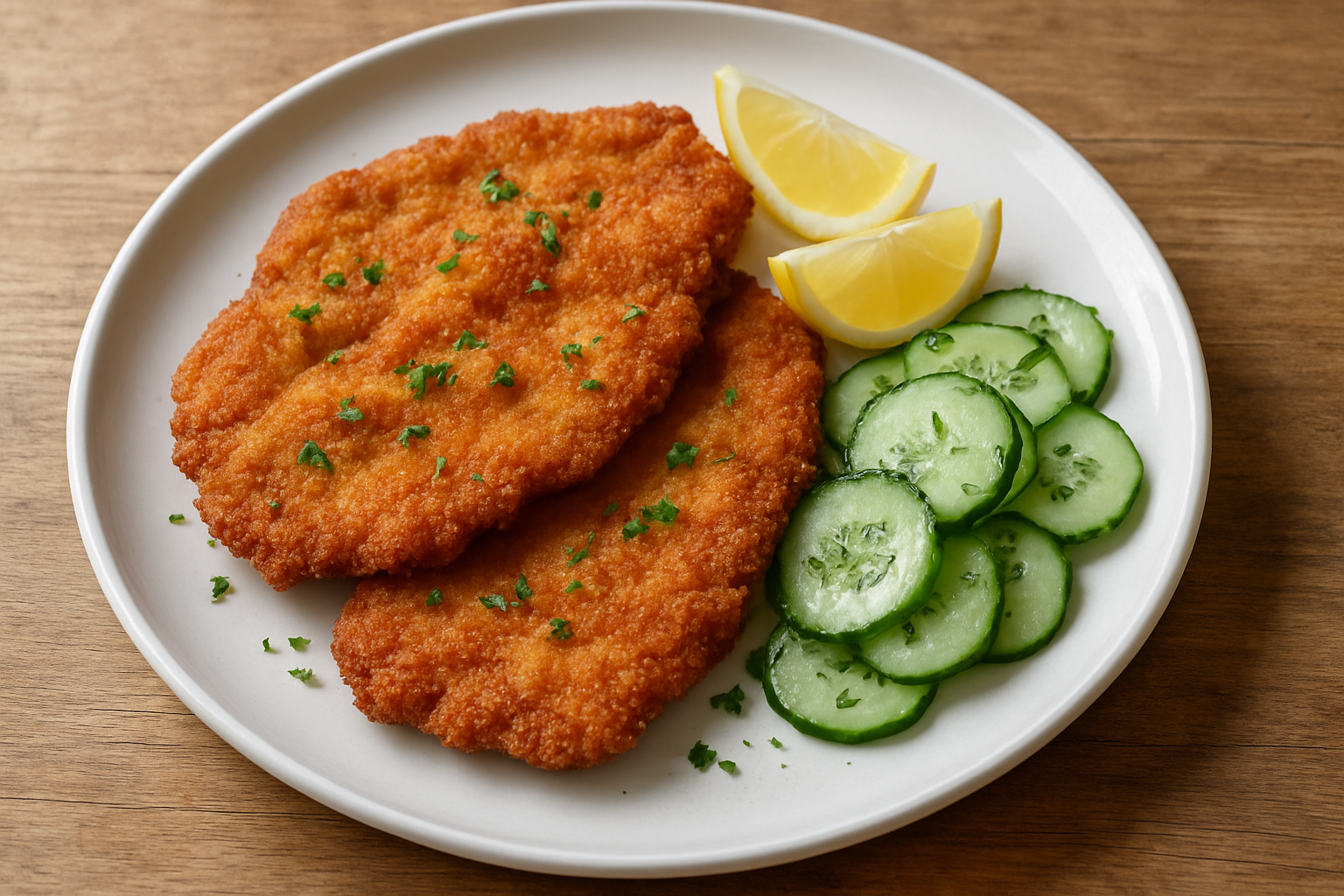
Easy Austrian Schnitzel Recipe with Lemon and Parsley
Easy Austrian Schnitzel Recipe with Lemon and Parsley
Ingredients
- 4 thin boneless pork cutlets about 4 ounces each (1 pound / 450 g total)
- 1 teaspoon kosher salt 6 g, plus more to taste
- 1/2 teaspoon ground black pepper 1 g
- 1/2 cup all-purpose flour 60 g
- 2 large eggs
- 1 tablespoon milk 15 ml
- 1 cup plain fine dry breadcrumbs 100 g
- 1/2 cup neutral frying oil such as canola or avocado oil (120 ml), plus more as needed
- 2 tablespoons unsalted butter 28 g
- 1 lemon cut into wedges
- 2 tablespoons finely chopped fresh parsley 8 g
Instructions
- Place each pork cutlet between sheets of plastic wrap or parchment paper. Gently pound with the flat side of a meat mallet or a heavy skillet until each piece is about 1/4 inch (6 mm) thick. Season both sides with salt and pepper.
- Set up three shallow bowls. Put the flour in the first bowl. Whisk the eggs and milk in the second bowl. Put the breadcrumbs in the third bowl.
- Coat one cutlet in flour and shake off the excess. Dip it into the egg mixture, letting excess drip away, then press it into the breadcrumbs until evenly coated. Do not pack the crumbs on heavily. Transfer to a plate and repeat with the remaining cutlets.
- Heat the oil and butter in a large skillet over medium to medium-high heat. The fat should shimmer but not smoke. Fry two cutlets at a time, gently moving the pan occasionally so hot fat washes over the edges, until deeply golden and cooked through, about 2 to 3 minutes per side. Add a little more oil between batches if the skillet looks dry.
- Transfer the cooked cutlets to a paper towel-lined plate or wire rack. Sprinkle lightly with salt. Serve right away with lemon wedges and parsley.
This easy austrian schnitzel recipe brings a classic Central European-style dinner to the table with a crisp golden coating, tender thin cutlets, fresh parsley, and a squeeze of lemon. It is an especially good choice when your family wants something comforting but you do not want a complicated project. The technique is simple: keep the meat thin, set up an orderly breading station, and fry in hot fat until the outside is beautifully crisp.
Why This Easy Austrian Schnitzel Recipe Works for Busy Families
An Austrian breaded cutlet looks special on the plate, yet it relies on familiar grocery-store basics and a dependable cooking method. Thin cutlets cook quickly and evenly, while the flour, egg, and breadcrumb layers give each piece a satisfying crunch. Lemon is not just a garnish here. Its clean acidity cuts through the richness of the fried coating and makes every bite taste lighter. Parsley adds a fresh finish without asking you to prepare a sauce.
This is also an easy meal to adapt to family preferences. The recipe card uses pork cutlets because they are widely available and budget-conscious in the United States. Traditional Wiener Schnitzel is made with veal, so using pork makes this an Austrian-style schnitzel rather than a strict traditional Wiener Schnitzel. That distinction is useful because schnitzel appears in several Central European cuisines, including German cooking, where the meat and accompaniments can vary. The bright lemon-and-parsley presentation keeps this version focused on the clean, classic Austrian approach.
For a complete plate, serve the cutlets with simply dressed greens, cucumber salad, roasted green beans, or potatoes. If you would like a potato side with a similarly comforting European feel, try these crisp German potato pancakes. A refreshing salad such as this bright fattoush salad with sumac dressing can also provide a lively, crunchy contrast.
Helpful Tips for a Crisp Austrian Breaded Cutlet
The most important step is making the cutlets evenly thin. A thin piece of meat cooks before the breadcrumbs get too dark, and it stays tender rather than chewy. Cover the cutlet before pounding so it does not tear or make a mess. Work from the center outward with gentle, even taps; forceful pounding can create holes that make the coating less neat.
Before breading, arrange the flour, egg, and crumbs in that order. Use one hand for dry ingredients and the other for egg to keep your fingers from becoming heavily coated. Shake away excess flour, then let extra egg drip off before adding crumbs. A light, even breadcrumb layer is better than a thick packed crust. It fries more evenly and has the delicate, slightly rippled look associated with schnitzel.
Pay attention to the skillet instead of relying only on the clock. The oil should shimmer and sizzle promptly when a few breadcrumbs are dropped in, but it should not smoke. If the fat is too cool, the coating absorbs more oil and can turn greasy. If it is too hot, the crumbs brown before the center is cooked. Fry in batches with space around every cutlet. Crowding lowers the temperature and traps steam, which softens the crust. A small swirl of the skillet during frying helps hot fat reach the upper edges of the coating.
Serve this easy austrian schnitzel recipe immediately after frying. Add lemon just before eating rather than during cooking, since juice applied too early will soften the crisp exterior. For a slightly different flavor, use chicken cutlets, or add a small amount of finely grated lemon zest to the breadcrumbs. Keep the seasoning restrained; schnitzel is meant to highlight the meat, crunchy coating, lemon, and parsley rather than a long list of spices.
Storage and Reheating
Schnitzel is at its crunchiest straight from the skillet, but leftovers can still make a good next-day lunch. Let them cool, then store them in a covered container in the refrigerator for up to three days. For the best texture, reheat on a wire rack over a baking sheet in a hot oven. Air circulation helps revive the coating on both sides. The microwave is convenient, but it tends to make breading soft.
If you want to prepare ahead, bread the cutlets earlier in the day and refrigerate them in a single layer, covered loosely. Fry them close to mealtime. This simple schnitzel recipe is not ideal for holding for a long time after cooking, so treat frying as the final dinner step. Leftover cutlets can also be sliced cold and tucked into a sandwich with lettuce and a lemony mayonnaise.
Food Safety for Fried Cutlets
Keep raw pork and its juices away from salad ingredients, lemon wedges, and other ready-to-eat foods. Wash hands, cutting boards, and utensils after handling the raw cutlets. Use an instant-read thermometer if you are unsure: pork should reach 145°F (63°C) and rest for three minutes. Refrigerate cooked leftovers within two hours, and discard any food left at room temperature longer than that.
Easy Austrian Schnitzel Recipe FAQ
Can I use chicken instead of pork?
Yes. Thin chicken cutlets work well and keep the same crisp, lemon parsley schnitzel character. For safety, cook chicken to 165°F (74°C) in the thickest part.
Why is my breading not staying crisp?
Usually the skillet was overcrowded, the oil was not hot enough, or the cooked cutlets were stacked while they rested. Fry in batches and place finished cutlets in a single layer on a wire rack whenever possible.
What makes this different from a sauced cutlet dinner?
This easy austrian schnitzel recipe is served plainly with lemon and parsley, allowing the delicate breaded crust to stay crisp. Sauces can be delicious, but they change the texture and move the dish away from this straightforward Austrian-style presentation.
What dessert goes well after schnitzel?
A light dessert is a nice finish after a rich cutlet. Consider making Hungarian Somlói galuska for a special occasion, or keep the meal simple with fresh seasonal fruit.

One Comment