easy filipino pork sinigang recipe: Simple Tamarind Pork Soup
easy filipino pork sinigang recipe: Simple Tamarind Pork Soup
Ingredients
- 2 pounds boneless pork shoulder trimmed and cut into 1 1/2-inch pieces (907 g)
- 8 cups water 1.9 L
- 1 medium yellow onion peeled and quartered, about 6 ounces (170 g)
- 2 medium Roma tomatoes quartered, about 8 ounces (225 g)
- 2 tablespoons fish sauce 30 mL, plus more to taste
- 1 packet tamarind soup base mix about 1.4 ounces (40 g)
- 1 small daikon radish peeled and cut into 1/2-inch half-moons, about 8 ounces (225 g)
- 8 ounces fresh green beans trimmed and cut into 2-inch pieces (225 g)
- 1 medium Japanese or Chinese eggplant cut into 1-inch pieces, about 8 ounces (225 g)
- 4 cups baby spinach lightly packed, about 4 ounces (115 g)
- Cooked white rice for serving (optional)
Instructions
- Place the pork, water, onion, tomatoes, and fish sauce in a large soup pot or Dutch oven. Bring to a boil over high heat. Skim off any gray foam that rises to the surface for a clearer broth.
- Reduce the heat to maintain a gentle simmer. Cover partially and cook for 40 to 45 minutes, or until the pork is becoming tender. Stir occasionally and add a splash of water if the liquid level drops too much.
- Stir in the tamarind soup base mix until dissolved. Taste the broth carefully; different brands vary in saltiness and sourness.
- Add the daikon and cook for 8 minutes. Add the green beans and eggplant, then simmer for 7 to 10 minutes more, until the vegetables are tender and the pork is very tender.
- Turn off the heat and stir in the spinach just until wilted, about 1 minute. Taste and add more fish sauce if needed. For a more sour broth, add a little more tamarind mix according to the package directions.
- Ladle the soup, pork, and vegetables into bowls. Serve hot with steamed white rice, if desired.
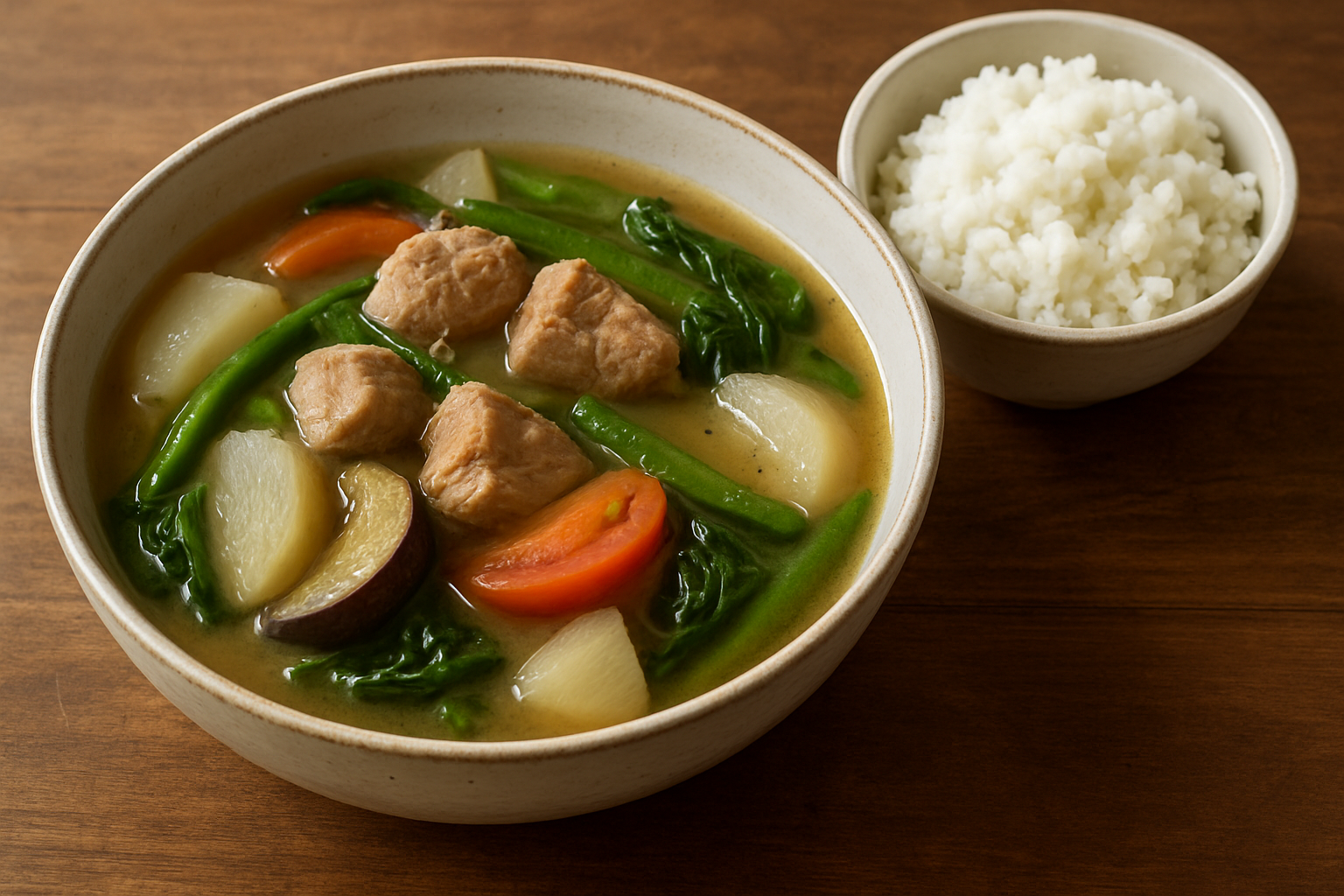
This easy filipino pork sinigang recipe brings one of the Philippines’ most beloved comfort foods to a busy weeknight table. Sinigang is a savory, tangy soup in which tender pork and vegetables simmer in a lively tamarind broth. The flavor is distinctly sour rather than spicy, deeply comforting rather than heavy, and especially satisfying with a bowl of hot white rice. Using a convenient tamarind soup base makes this version approachable for beginner cooks while preserving the bright, mouthwatering character that makes sinigang so memorable.
Why this easy filipino pork sinigang recipe works
This is an excellent dinner for families because the pot does much of the work. Pork shoulder gently simmers until tender, while the onion and tomatoes create a savory foundation for the broth. The vegetables are added near the end, so they stay colorful and pleasantly tender instead of turning mushy. You do not need special equipment: a large, heavy soup pot and a spoon for skimming the surface are enough.
The real signature of this tamarind pork soup is balance. Tamarind provides a clean, fruity tang, fish sauce supplies savory depth, and pork gives the broth richness. A packaged tamarind soup base is widely available in many Asian grocery stores and online, and it is useful for first-time cooks because it makes seasoning predictable. Since brands differ in tartness and salt, it is smart to dissolve the mix, taste the broth, and adjust gradually rather than adding extra seasoning all at once.
Although it is a Filipino sour soup, the finished dish does not need to be aggressively tart. A milder bowl can be more appealing for children or anyone new to sour broths. Begin with the stated amount of tamarind mix, then add a little more only if you want a sharper finish. Serve extra rice at the table; it is the classic partner for soaking up the flavorful broth and softening the tang in each bite.
Helpful tips for tender pork and bright flavor
Keep the pot at a gentle simmer after it comes to a boil. A hard, rolling boil can make the broth cloudy and can cause the pork to tighten before it has time to become tender. If foam collects on top during the first part of cooking, skim it away with a spoon. This quick step is optional, but it gives the broth a cleaner look and taste.
Add vegetables in stages according to how quickly they cook. Firmer vegetables, such as daikon or taro, need a head start. Green beans and eggplant cook more quickly, while spinach needs only the residual heat at the end. This timing is a small but important beginner tip: it gives you a bowl with tender pork and vegetables that still have shape and color.
For an even more traditional market-style vegetable mix, use long beans in place of regular green beans and water spinach, often labeled kangkong, in place of baby spinach. Bok choy and Swiss chard are practical supermarket alternatives. If you prefer a richer broth, pork belly works beautifully, though it produces more fat. Ribs are another flavorful choice, but plan for a longer simmer until the meat is tender.
This easy filipino pork sinigang recipe is naturally flexible, so treat the sourness as the main flavor to protect. Lemon juice or vinegar can add acidity in a pinch, but neither has tamarind’s rounded, fruity character. If using frozen tamarind pulp instead of a soup-base packet, add the strained tamarind liquid gradually and season the broth separately with fish sauce and salt.
Serving ideas for a family dinner
Set the pot in the center of the table with steamed jasmine or long-grain white rice and let everyone build a bowl with plenty of broth. A small dish of fish sauce on the side is traditional for diners who enjoy an extra savory touch. For a larger Filipino-inspired spread, pair the soup with easy Filipino pancit canton noodles or a vegetable-forward dish such as Filipino ginataang langka coconut stew.
The soup is substantial enough to stand alone, but fresh fruit makes an easy, refreshing finish. For a simple make-ahead dinner plan, cook the pork and broth earlier in the day, then reheat it and add the vegetables shortly before serving. That approach keeps the flavors developed without sacrificing the vegetables’ texture.
Storage and reheating advice
Leftover sinigang is often even more flavorful after a night in the refrigerator because the pork and tamarind broth have more time to mingle. Cool the soup promptly, divide it into shallow containers, and refrigerate it within two hours. It keeps well for three to four days. If possible, store leafy greens separately or expect them to become softer as they sit.
Reheat only the portion you plan to serve in a saucepan over medium heat until the broth is steaming hot throughout. Add a splash of water if the broth has concentrated in the refrigerator, then taste before adding any more tamarind mix or fish sauce. For longer storage, freeze the pork and broth without spinach; thaw it in the refrigerator overnight and add fresh greens during reheating.
Food safety for pork soup
Handle raw pork carefully by keeping it away from ready-to-eat foods and washing hands, knives, boards, and counters after preparation. Simmer the pork until it is fully cooked and fork-tender. Refrigerate leftovers promptly, and heat leftovers to 165°F before eating. Avoid leaving the soup at room temperature for extended periods, especially when serving a crowd.
Frequently asked questions
What is the sour flavor in sinigang?
Tamarind is the classic souring ingredient in this Filipino soup. It gives the broth its distinctive fruity tartness. Some regional versions use other sour fruits, but tamarind is an easy, reliable choice for a first homemade batch.
Can I make this easy filipino pork sinigang recipe less salty?
Yes. Use low-sodium broth only if you are replacing part of the water, and add fish sauce sparingly because tamarind soup packets also contain salt. Taste near the end, after the broth has reduced slightly, before adding more seasoning.
Is sinigang supposed to be spicy?
No. Sinigang is known for sourness, not heat. You can serve sliced fresh chiles on the side for adults who want spice, while keeping the main pot mild and family-friendly.