Khanom Krok Coconut Rice Pancakes, a Sweet Thai Treat
Khanom Krok Coconut Rice Pancakes, a Sweet Thai Treat
Ingredients
- For the rice pancake batter: 3/4 cup rice flour 120 g
- For the rice pancake batter: 2 tablespoons tapioca starch 16 g
- For the rice pancake batter: 2 tablespoons granulated sugar 25 g
- For the rice pancake batter: 1/4 teaspoon fine salt 1.5 g
- For the rice pancake batter: 1 cup canned full-fat coconut milk well stirred (240 ml)
- For the rice pancake batter: 1/4 cup water 60 ml
- For the coconut topping: 1/2 cup canned coconut cream 120 ml
- For the coconut topping: 1 tablespoon rice flour 8 g
- For the coconut topping: 1 tablespoon granulated sugar 13 g
- For the coconut topping: 1/8 teaspoon fine salt 0.75 g
- For topping: 1/3 cup canned or thawed frozen corn kernels well drained (55 g)
- For topping: 2 tablespoons thinly sliced scallions green parts only (12 g), optional
- For the pan: 1 teaspoon neutral oil such as avocado or canola oil (5 ml), plus more as needed
Instructions
- In a medium bowl, whisk the rice flour, tapioca starch, sugar, and salt for the batter. Whisk in the coconut milk and water until smooth. Let the batter stand while you prepare the topping.
- In a small bowl, whisk the coconut cream, rice flour, sugar, and salt until smooth. Stir the corn and scallions together in a separate small bowl.
- Heat a khanom krok pan, takoyaki pan, or other shallow well pan over medium-low heat. Brush each well lightly with oil. The pan is ready when a small drop of batter sizzles gently rather than browns immediately.
- Whisk the batter again, then fill each well about two-thirds full. Cover the pan and cook until the batter begins to look set around the edges and bottom.
- Stir the coconut topping and spoon a small amount over each pancake. Sprinkle with a few corn kernels and, if using, scallions. Cover again and cook until the topping is set and the bottoms are lightly golden.
- Use a small spoon or thin skewer to loosen the pancakes. Traditionally, two pancakes are gently pressed together with their creamy sides facing inward. Serve warm, with the crisp sides on the outside.
 Sale!
The Sweet Atlas: 20 International Dessert Recipes – Collection I
Discover 20 easy international dessert recipes from 12 countries in The Sweet Atlas — Collection I. This beautifully designed 50-page digital cookbook takes you from Filipino…
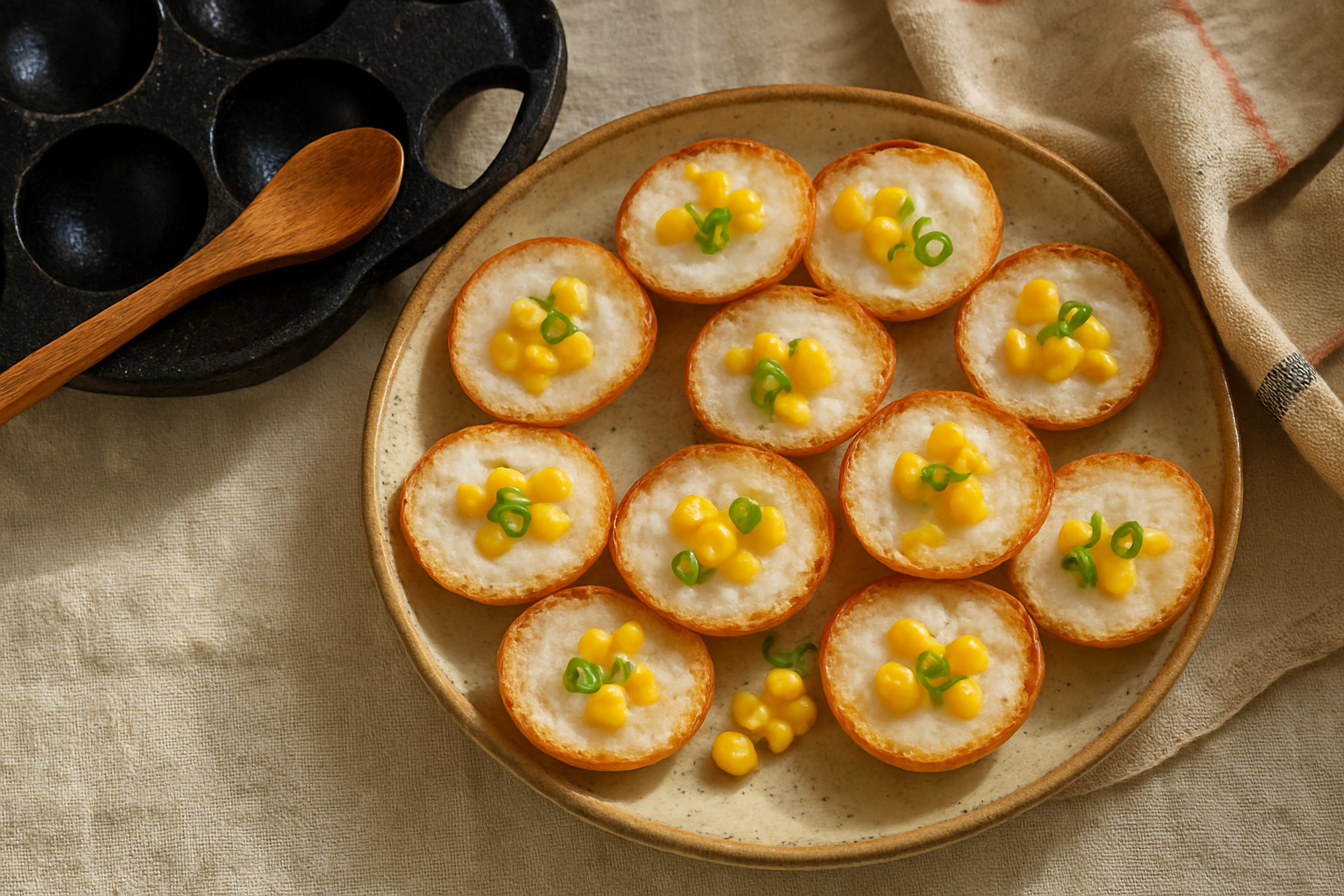
View ProductBring a little Thai street-food magic to dessert with this easy thai khanom krok recipe. Khanom krok are petite coconut rice pancakes with a delicately crisp outside and a soft, rich center. Their sweet-and-salty flavor is gentle enough for kids, while the contrast of creamy coconut, toasted rice flour, corn, and optional scallions gives adults plenty to love. They are especially fun for a family dessert because everyone can help add the tiny toppings before the pancakes are served warm.
Although khanom krok are often sold from specialized pans at markets in Thailand, the ingredients are straightforward and the process is approachable at home. Rice flour gives these pancakes their characteristic tender bite, while coconut milk and coconut cream create the velvety center. A well pan is the key tool: a traditional khanom krok pan is ideal, but a takoyaki pan or another shallow, round well pan is a practical substitute.
Why You’ll Love This Easy Thai Khanom Krok Recipe
This dessert is a lovely choice when you want something different from cookies, cake, or ice cream without taking on a complicated project. Each pancake is small and easy to share, so it works well after a casual family meal, at a potluck, or as a hands-on weekend cooking activity. The batter is mixed by hand, and there is no yeast, rolling, or oven baking involved.
- Memorable texture: Crisp edges give way to a creamy, pudding-like coconut center.
- Flexible toppings: Sweet corn is classic, but tender cooked taro or pumpkin also work beautifully.
- Naturally vegetarian: The recipe contains no meat, seafood, or gelatin.
- Easy to share: The small pancakes are made for passing around a plate while still warm.
Khanom krok are sometimes called Thai coconut rice pancakes, but they are not quite like fluffy American breakfast pancakes. Think of them as a tiny two-layer coconut cake with a soft custardy top. Traditionally, two pieces are paired together, creamy sides facing inward, which makes a neat little sandwich with golden edges on the outside.
Helpful Tips for Thai Coconut Rice Pancakes
For the best texture, keep the heat at medium-low rather than turning it up to rush the process. The bottoms should develop a light golden color while the center becomes set and creamy. High heat can brown the base before the coconut topping has time to cook. A covered pan traps gentle heat, helping the top layer firm up without drying out.
- Whisk before pouring: Rice flour settles quickly, so give both mixtures a quick whisk whenever they have been sitting.
- Oil lightly but thoroughly: A thin coating in every well helps the pancakes release and encourages crisp edges.
- Drain corn well: Excess moisture can make the creamy topping loose and slow to set.
- Use small toppings: Finely diced add-ins sit neatly on the surface and are easier to eat in one bite.
- Loosen gently: A slim spoon, bamboo skewer, or chopstick works well for lifting the pancakes once the edges release.
For a sweeter variation, leave out the scallions and use only corn. You can also replace the corn with tiny cubes of cooked kabocha squash, cooked taro, or tender sweet potato. If your family enjoys a savory-sweet contrast, keep the scallions; their mild onion flavor is a traditional-style complement to rich coconut. Serve the pancakes as they are rather than adding syrup, since the coconut mixture is already lightly sweetened.
Serving Ideas for a Thai-Inspired Dessert Night
These coconut rice pancakes are most enjoyable warm, when their edges are lightly crisp and their centers are silky. Arrange the paired pancakes on a platter and let everyone take a few. For a Thai-inspired meal, they make a cheerful finish after Thai pineapple fried rice or a comforting bowl of Thai tom yum soup with shrimp. If your family loves coconut-based sweets, the chewy rice balls in this Filipino ginataan bilo bilo dessert are another fun dessert to explore.
Storage and Reheating
Khanom krok have their best texture straight from the pan, but leftovers can still be enjoyable. Cool them completely, then refrigerate them in a sealed container. To bring back some crispness, warm them in a lightly oiled well pan or nonstick skillet over low heat. The microwave is convenient but tends to make the rice-flour exterior soft, so use it only if a softer texture is acceptable. Avoid stacking the pancakes while they are steaming hot, as trapped moisture can soften their golden edges.
Food Safety Notes
The coconut milk and coconut cream in this dessert are perishable after opening and cooking. Refrigerate any leftover pancakes promptly once they have cooled, and do not leave them at room temperature for extended serving periods. Reheat only the portion you plan to eat, and discard leftovers that have been held out too long.
Frequently Asked Questions
Are khanom krok sweet or savory?
They are primarily sweet and coconut-forward, but the small amount of salt and the optional scallions create a balanced sweet-savory flavor. Corn adds a gentle sweetness that makes them especially family-friendly.
Can I make this easy thai khanom krok recipe in advance?
You can mix the batter and topping shortly before cooking, but the finished pancakes are best fresh. If needed, make them ahead, refrigerate them, and reheat gently in a pan to restore their crisp exterior.
What if I cannot find rice flour?
Rice flour is important for the classic texture and is easy to find in many Asian grocery stores or online. Regular wheat flour will make a tasty pancake, but it will not have the light, tender character associated with khanom krok.