Easy Filipino Ginataan Bilo Bilo Recipe: Sweet Coconut Rice Ball Dessert
Easy Filipino Ginataan Bilo-Bilo Recipe: Sweet Coconut Rice Ball Dessert
Ingredients
- 1 cup glutinous rice flour 5.6 oz/160 g
- 1/2 cup warm water 4 fl oz/120 ml, plus more as needed
- 2 cups water 16 fl oz/475 ml
- 1 small orange-fleshed sweet potato peeled and cut into 1/2-inch cubes (8 oz/225 g)
- 1/3 cup small tapioca pearls 2 oz/60 g
- 2 cans full-fat coconut milk 13.5 ounces each (27 fl oz/800 ml total)
- 1/2 cup packed light brown sugar 3.5 oz/100 g, plus more to taste
- 1/4 teaspoon fine salt 1.5 g
- 2 ripe saba bananas or 2 small ripe regular bananas sliced (7 oz/200 g)
- 1/2 cup drained ripe jackfruit strips cut into bite-size pieces (2.8 oz/80 g), optional
Instructions
- Make the bilo-bilo dough: Place the glutinous rice flour in a medium bowl. Add the warm water gradually, mixing until a soft, smooth dough forms. It should feel pliable and not sticky. Add a few drops of water if crumbly, or a little more flour if sticky.
- Roll the dough into small balls about 3/4 inch wide (roughly the size of a marble). Keep the finished balls on a plate while you prepare the coconut dessert base.
- Bring the 2 cups water to a boil in a medium-heavy pot over medium-high heat. Add the sweet potato and cook until it is beginning to soften, about 6 to 8 minutes.
- Add the tapioca pearls. Reduce the heat to maintain a steady simmer and cook, stirring often so the pearls do not settle on the bottom. Cook according to the package directions, until the pearls are mostly translucent.
- Add the rice balls to the pot and stir gently. Simmer until the balls float and are cooked through, about 4 to 5 minutes.
- Turn the heat to low. Stir in the coconut milk, brown sugar, and salt. Warm gently without allowing the mixture to boil hard, stirring until the sugar dissolves.
- Add the sliced banana and optional jackfruit. Cook gently just until the banana is heated and tender, about 2 minutes. Taste and add a little more brown sugar if desired.
- Serve warm in small bowls. The dessert will thicken as it stands; loosen leftovers with a small splash of water or coconut milk when reheating.
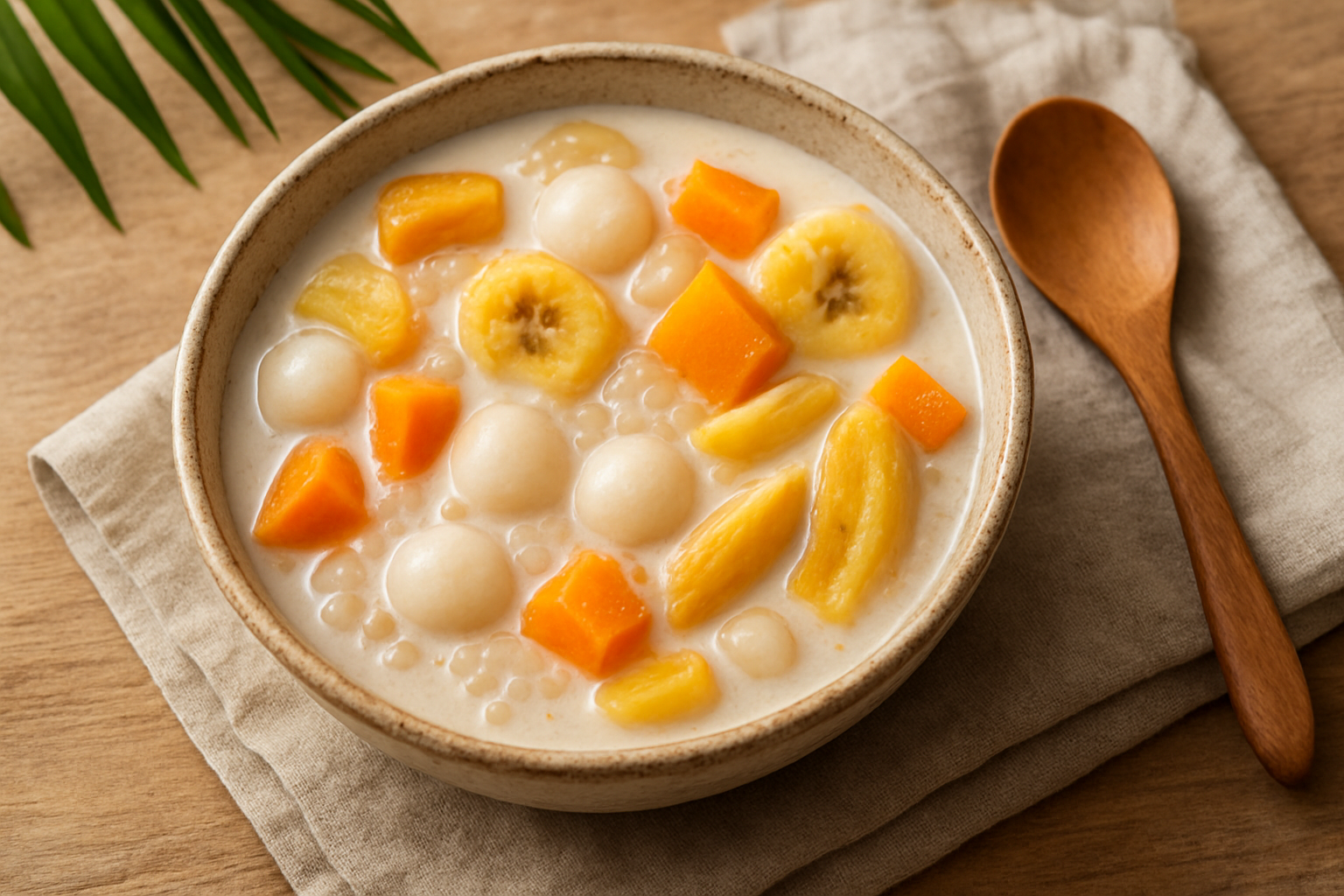
If you are looking for a cozy dessert that feels special without requiring advanced baking skills, this easy filipino ginataan bilo bilo recipe is a wonderful place to start. Ginataan means a dish made with coconut milk, while bilo-bilo refers to the soft, chewy rice balls floating in the creamy dessert. Sweet potato, banana, tapioca pearls, and optional jackfruit make every spoonful colorful, comforting, and fun for families to share.
Why Families Love This Easy Filipino Ginataan Bilo-Bilo Recipe
This is the kind of warm dessert that is easy to adjust to your household’s preferences. It is naturally dairy-free when made with coconut milk, has a gently sweet flavor rather than an intensely sugary one, and offers several appealing textures in one bowl. Kids often enjoy the bouncy tapioca and chewy Filipino rice balls, while adults appreciate the fragrant coconut broth and tender fruit.
It is also a welcoming introduction to Filipino sweets for cooks in the United States. Many of the key items are sold at Asian grocery stores, and several are increasingly available in larger supermarkets. Look for glutinous rice flour, sometimes labeled sweet rice flour, rather than ordinary rice flour. Despite the name, glutinous rice flour does not contain wheat gluten; it simply becomes pleasantly stretchy after cooking.
What Makes This Coconut Milk Dessert Special
Ginataan bilo-bilo is usually enjoyed warm, when the coconut milk is silky and the rice balls are at their softest. The key is gentle heat after the coconut milk goes into the pot. A hard boil can make coconut milk look oily or separated, while a low simmer keeps the broth smooth and inviting. The finished dessert should be loose enough to spoon, not as thick as pudding, though it will naturally thicken as it cools.
This easy filipino ginataan bilo bilo recipe keeps the process manageable by using a small number of familiar add-ins. It still has the layered texture that makes the dessert memorable: soft vegetables and fruit, slippery pearls, and tender-chewy rice balls in a sweet coconut base.
Helpful Tips for Beginner Cooks
Make the rice balls roughly the same size so they cook evenly. Marble-size pieces are ideal because they are easy to eat and cook through quickly. If the dough cracks while you roll it, it needs a tiny bit more water. If it clings to your hands, dust your palms lightly with glutinous rice flour rather than adding a large amount to the dough.
Stir the tapioca regularly, especially early in cooking. This prevents it from gathering at the bottom of the pot. Different brands of small tapioca pearls can cook at slightly different rates, so use the package guidance as your visual backup. They are ready when they look mostly clear, with little or no opaque white center.
Choose bananas that are ripe enough to taste sweet but firm enough to remain in slices. Overripe bananas can melt into the broth, which is still delicious but gives the dessert a softer, cloudier texture. For a more fragrant finish, add jackfruit near the end so its flavor stays bright.
Easy Variations to Try
Once you feel comfortable with the basic method, this simple ginataan recipe is flexible. Add a little more brown sugar for a sweeter dessert, or keep it lightly sweet and let the fruit shine. Some families enjoy extra sweet potato, while others prefer more fruit. Cubes of cooked taro or a few pieces of ripe plantain can be used when available, but avoid crowding the pot so the coconut broth remains easy to spoon.
For another chilled Filipino treat with a tropical flavor, try this easy no-bake Filipino buko pandan dessert. If creamy custards are more your style, this easy Filipino leche flan recipe makes a lovely companion for a dessert table.
Storage and Gentle Reheating
Leftover ginataan bilo-bilo becomes noticeably thicker in the refrigerator because the rice balls and tapioca absorb some of the coconut liquid. That is normal. Warm it slowly with a small splash of water or coconut milk, stirring gently until it is creamy and spoonable again. Reheat only what your family plans to eat, since repeated warming and chilling can affect both the texture and freshness.
Food Safety Note
Because this coconut milk dessert is perishable, refrigerate it promptly after serving rather than leaving it on the counter. Keep leftovers covered, use clean utensils when serving, and discard the dessert if it develops an unusual odor, visible mold, or other signs of spoilage.
Frequently Asked Questions
Can I serve this dessert cold?
Yes, it can be eaten chilled, especially on a warm day. The texture will be thicker and the rice balls firmer than when warm. If you prefer a softer, more traditional spoonable texture, gently warm your portion first.
Can I freeze leftover ginataan bilo-bilo?
Freezing is not the best choice. The coconut broth, tapioca, fruit, and rice balls can all change texture after thawing. Refrigerated leftovers are the better option for this dessert.
Why is my coconut broth too thick?
The starch from the tapioca and rice balls continues to thicken the liquid as it sits. Stir in a small amount of water or coconut milk while warming until the consistency suits your preference.
Can I make the rice balls in advance?
You can roll them ahead and keep them covered briefly so they do not dry out. For the best chewy texture, cook them the same day. This easy filipino ginataan bilo bilo recipe is especially enjoyable when the rice balls are freshly cooked and tender.
You May Also Like
For another approachable Filipino dessert with a creamy, cassava-based texture, save this easy Filipino cassava cake recipe for your next family gathering.