Easy Caribbean Cassava Pone Recipe: Spiced Coconut and Cassava Cake
Easy Caribbean Cassava Pone Recipe: Spiced Coconut and Cassava Cake
Ingredients
- 2 pounds frozen grated cassava thawed (907 g)
- 1 can full-fat coconut milk 13.5 ounces (400 mL; about 1 2/3 cups)
- 1 cup packed light brown sugar 200 g
- 1 cup sweetened shredded coconut 85 g
- 4 tablespoons unsalted butter melted, plus more for the pan (57 g)
- 1 teaspoon vanilla extract 5 mL
- 1 teaspoon ground cinnamon 2.6 g
- 1/2 teaspoon freshly grated or ground nutmeg 1 g
- 1/2 teaspoon fine salt 3 g
- 1 tablespoon dark rum optional (15 mL)
Instructions
- Heat the oven to 350°F (175°C). Generously butter a 9-inch square baking pan, then line it with parchment paper, leaving an overhang on two sides for easy lifting.
- Place the thawed grated cassava in a clean kitchen towel or several layers of paper towel and squeeze out excess liquid. It does not need to be completely dry, but it should not be dripping wet.
- In a large bowl, stir together the squeezed cassava, coconut milk, brown sugar, shredded coconut, melted butter, vanilla, cinnamon, nutmeg, salt, and optional rum until the sugar is evenly distributed and no dry pockets remain.
- Scrape the thick batter into the prepared pan and level the surface. Bake for 55 to 65 minutes, until the top is deep golden brown and the center feels firm when gently pressed. A toothpick may not come out completely clean because pone is moist and dense.
- Set the pan on a wire rack and cool completely, at least 2 hours. For the neatest slices, refrigerate the cooled pone for 1 hour before lifting it from the pan and cutting into 12 squares. Serve at room temperature or lightly warmed.
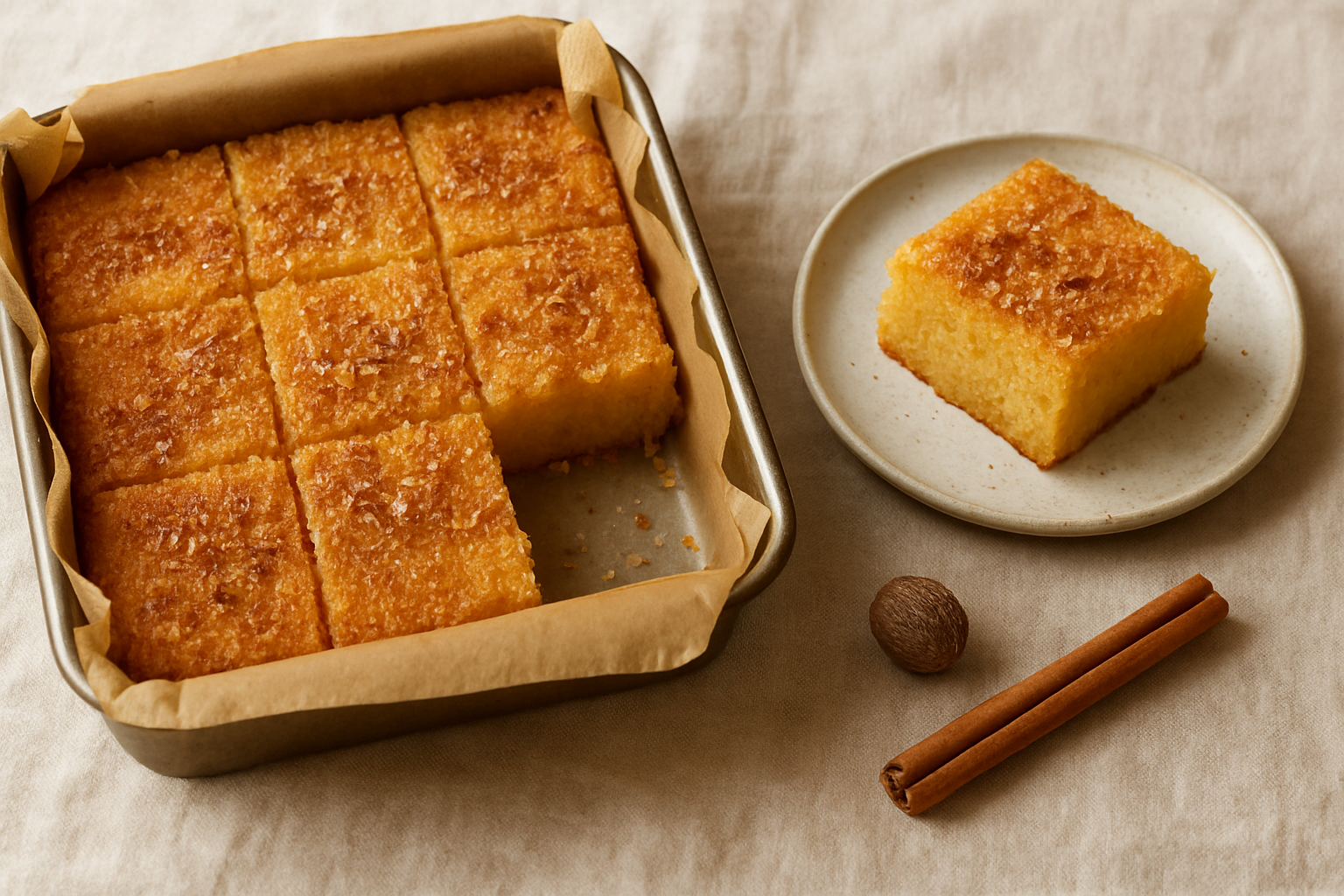
This easy caribbean cassava pone recipe brings a beloved Caribbean-style dessert to a busy home kitchen without complicated techniques. Cassava pone is not a fluffy layer cake; it is a rich, dense, gently chewy baked sweet with coconut, brown sugar, and warming spices throughout. Using packaged frozen grated cassava makes this version approachable for beginners while keeping the distinctive root-vegetable texture that makes pone so memorable.
Plan to let the baked dessert cool completely before cutting it. That short wait is part of what gives each square clean edges and a pleasantly firm, custardy-chewy bite. It is a lovely make-ahead option for weekend meals, potlucks, or an after-dinner treat when you want something a little different from ordinary cake.
Why this easy Caribbean cassava pone recipe works for families
The ingredient list is straightforward, and the batter comes together in one bowl. There is no need to make frosting, whip egg whites, or fuss with layers. Coconut milk adds creaminess, shredded coconut gives texture, and cinnamon and nutmeg create the familiar warm aroma that makes this a comforting spiced coconut dessert.
Frozen grated cassava is the key convenience ingredient. Look for it in the freezer section of Caribbean, Latin American, Asian, or well-stocked international grocery stores. It is often labeled yuca or grated cassava. Thaw it in the refrigerator, then squeeze away the excess liquid as directed in the recipe card. This helps the pone bake evenly rather than turning overly soft in the middle.
The result is naturally egg-free and has no wheat flour. That said, always check packaged ingredients, including shredded coconut and flavorings, if you need to avoid gluten. Its hearty texture also means small squares go a long way, which is useful when serving a crowd or packing dessert for several days.
Tips for a golden, sliceable Caribbean cassava cake
A 9-inch square metal pan is ideal because it encourages even browning and creates generous but manageable squares. Line the pan with parchment paper so you can lift the cooled pone out easily. The surface should be a deep golden brown when it is ready, and the center should feel set when gently pressed. Because this is a moist cassava dessert, a toothpick will not behave exactly as it does in a conventional butter cake. Look for a firm center rather than a perfectly dry toothpick.
Do not skip the cooling time. Fresh from the oven, the center is tender and the slices can crumble. At room temperature, the starches settle and the flavor becomes more rounded. If you prefer very tidy squares, chill the fully cooled pan briefly before slicing with a sharp knife wiped clean between cuts.
The exact easy caribbean cassava pone recipe is flexible enough for a few simple changes. Use dark brown sugar for a more pronounced caramel note, or choose unsweetened coconut and slightly increase the sugar if your family likes a sweeter dessert. A small splash of dark rum is optional but adds a traditional-style depth; vanilla is a fine alcohol-free choice. For a brighter finish, stir a little finely grated lime zest into the batter. Keep additions modest so the cassava remains the main flavor and the center still sets properly.
For a dessert table with a coconut theme, pair these squares with an easy no-bake Filipino buko pandan dessert. If cassava becomes a new pantry favorite, compare its texture with this easy Filipino cassava cake, another comforting baked treat that highlights the versatile root.
Serving ideas for this simple cassava pone recipe
Serve pone at room temperature with coffee, tea, or a cold glass of milk. Its caramelized top and coconut-rich interior need no topping, but a spoonful of lightly sweetened whipped cream or a few slices of ripe mango make it feel especially festive. For a Caribbean-inspired gathering, offer it after a savory meal alongside Jamaican rice and peas with coconut milk.
This dessert is also a practical lunchbox or road-trip sweet because it holds together well once cooled. Pack individual squares in a small container rather than stacking them while they are still warm. The spices become even more fragrant the next day, so leftovers are a genuine bonus.
Storage, reheating, and food safety
After the pone has cooled, cover it tightly and refrigerate it. It keeps well for up to four days, making the easy caribbean cassava pone recipe a smart option when you want dessert ready ahead of time. Eat slices cold, let them stand briefly at room temperature, or warm one gently in short microwave bursts. Avoid overheating, which can make the cassava texture tough. For longer storage, freeze individual wrapped portions and thaw them overnight in the refrigerator.
Cassava deserves one important safety reminder: it must be cooked thoroughly before eating. Choose commercially packaged frozen grated cassava, keep it cold while thawing, and never sample raw batter. Bake until the center is firm and fully set, then refrigerate leftovers within two hours. These simple steps make this traditional-style treat both manageable and enjoyable for home cooks.
Frequently asked questions
What does cassava pone taste like?
It has a mellow, lightly sweet cassava flavor balanced by rich coconut, brown sugar, cinnamon, and nutmeg. The texture is dense and moist, with a gentle chew that is quite different from a light flour cake.
Can I make the easy caribbean cassava pone recipe ahead?
Yes. Bake it a day ahead, cool it completely, and refrigerate it covered. Many people enjoy the firmer texture and more developed spice flavor the following day.
Can I use fresh yuca?
You can, but frozen grated cassava is much easier for a beginner. If using fresh yuca, peel and grate it carefully, remove any woody core, and make sure the finished pone is thoroughly baked before serving.
Why did my pone seem soft after baking?
Pone firms as it cools, so give it the full cooling time before judging the texture. Excess liquid left in thawed cassava can also cause softness, which is why squeezing it well is an important step.