easy portuguese pasteis de nata recipe: Quick Custard Tarts

easy portuguese pasteis de nata recipe: Quick Custard Tarts
Ingredients
- 1 package frozen puff pastry thawed according to package directions (17.3 ounces/490 g; 2 sheets)
- All-purpose flour for lightly dusting the work surface (about 1 tablespoon/8 g)
- 1 1/2 cups whole milk divided (360 ml)
- 1/2 cup heavy cream 120 ml
- 1/2 cup granulated sugar 100 g
- 1/4 cup all-purpose flour 30 g
- 6 large egg yolks about 110 g
- 1 teaspoon vanilla extract 5 ml
- 3 wide strips lemon peel removed with a vegetable peeler (about 4 g)
- 1 cinnamon stick about 3 inches long (1 stick/8 cm)
- 1/8 teaspoon fine salt 0.75 g
- 1/4 teaspoon ground cinnamon for serving, optional (0.7 g)
- 1 tablespoon powdered sugar for serving, optional (8 g)
Instructions
- Position an oven rack in the upper third of the oven and heat the oven to 450°F (230°C). Generously grease a standard 12-cup muffin pan with butter or nonstick cooking spray.
- On a lightly floured surface, unfold the thawed puff pastry sheets. Use a 4-inch (10-cm) round cutter to cut 12 circles, rerolling scraps as needed. Gently press one pastry circle into each muffin cup, allowing the pastry to come slightly above the rim. Chill the pan while preparing the custard.
- Pour 1/2 cup (120 ml) of the milk into a small bowl. Whisk in the flour until completely smooth, with no lumps.
- In a medium saucepan, combine the remaining 1 cup (240 ml) milk, heavy cream, sugar, lemon peel, cinnamon stick, and salt. Warm over medium heat, stirring occasionally, until steaming and the sugar has dissolved; do not let it boil rapidly.
- Remove the lemon peel and cinnamon stick. Whisk the flour-milk mixture once more, then slowly whisk it into the warm milk mixture. Cook over medium heat, whisking constantly, until the custard thickens enough to lightly coat the whisk, about 2 to 3 minutes. Remove from the heat.
- Let the custard cool for 5 minutes. In a separate bowl, whisk the egg yolks and vanilla. Slowly whisk about 1/2 cup (120 ml) of the warm custard into the yolks, then whisk the yolk mixture back into the saucepan. For the smoothest filling, strain the custard through a fine-mesh sieve into a measuring cup with a spout.
- Fill each pastry-lined muffin cup about three-quarters full. Bake until the pastry is deeply golden and the custard has browned spots and a gentle jiggle in the center, 15 to 18 minutes. If the pastry browns before the custard develops spots, move the pan one rack higher for the final few minutes.
- Cool the tarts in the pan for 10 minutes, then carefully loosen them with a thin knife and transfer to a rack. Serve warm or at room temperature, with a light dusting of ground cinnamon and powdered sugar if desired.
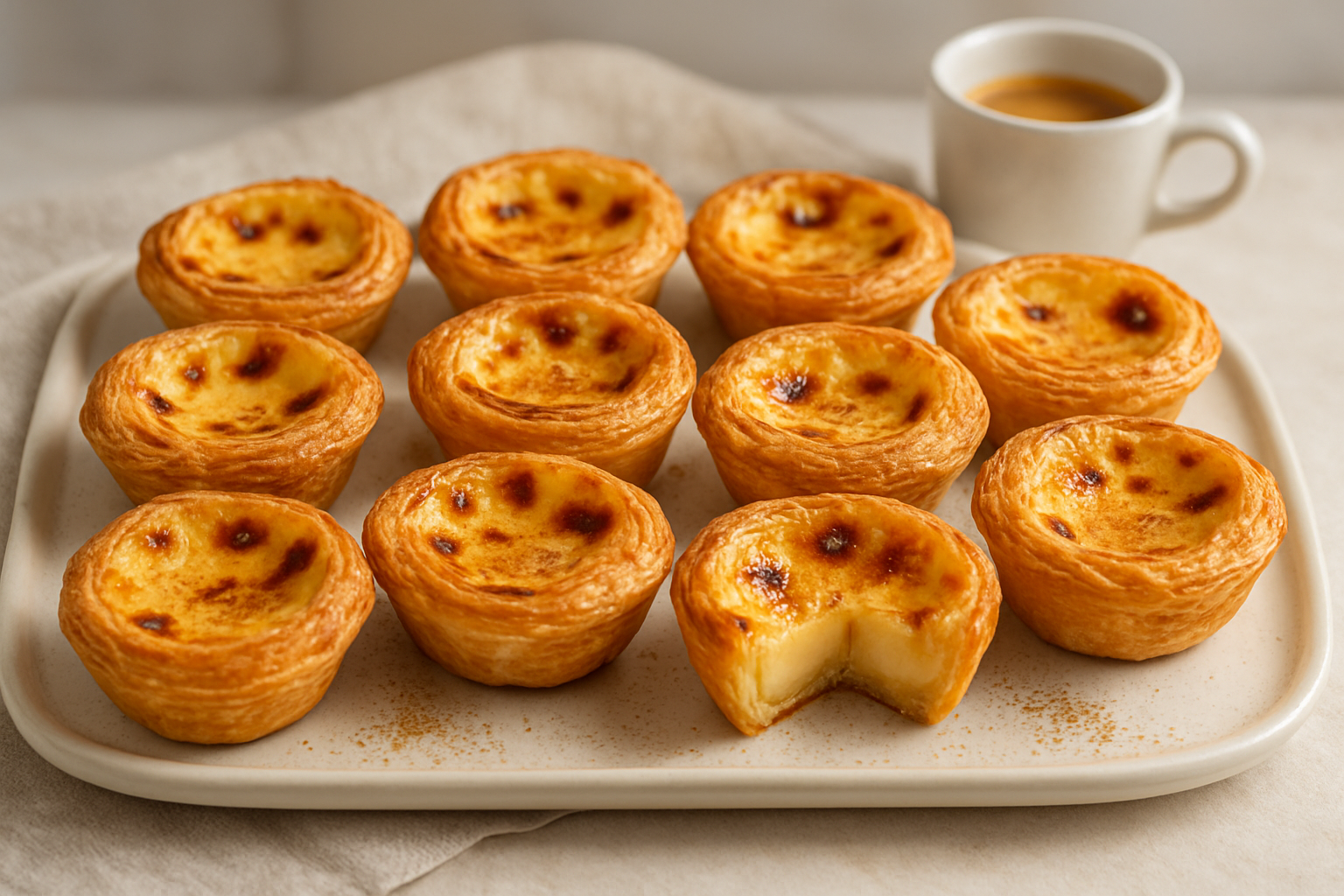
If you have been craving bakery-style custard tarts but do not want a complicated pastry project, this easy portuguese pasteis de nata recipe is designed for you. It uses convenient puff pastry to create crisp, flaky shells around a smooth, lightly citrusy custard. The high-heat bake gives these Portuguese-inspired tarts their recognizable golden, speckled tops, while the straightforward approach makes them a realistic dessert for busy family meals, weekend brunches, and last-minute guests.
Why Busy Families Will Love These Portuguese Custard Tarts
Classic pastéis de nata are treasured Portuguese pastries, but traditional laminated dough can take substantial time and practice. Here, store-bought puff pastry handles the flaky portion without taking away the fun of making a warm custard dessert at home. The result is elegant enough to set out for company, yet simple enough for a newer baker to manage with a standard muffin pan.
This easy portuguese pasteis de nata recipe also offers a helpful balance of familiar flavors. The custard is gently scented with lemon and cinnamon rather than being overly sweet, so it appeals to adults and children alike. Serve the tarts after dinner, add them to a holiday dessert tray, or enjoy one with coffee or tea during an unhurried afternoon.
- Shortcut puff pastry keeps the project approachable.
- A muffin pan creates neat, individual portions without specialty molds.
- The creamy filling needs only common dairy, eggs, and pantry staples.
- They are delicious warm, at room temperature, or briefly reheated the next day.
Tips for Easy Portuguese Pasteis de Nata
Keep the pastry cold while you work. Puff pastry gets sticky and difficult to shape once it warms up, and cold dough is more likely to bake into distinct flaky layers. If the pastry starts feeling soft, place the pan in the refrigerator briefly before filling it. Press the dough gently into the muffin cups rather than stretching it; stretching can make the shells pull back as they bake.
For a smooth filling, whisk the flour and cold milk until completely lump-free before it meets the warm dairy. Once the custard begins to thicken, steady whisking is your best friend. Straining the finished custard is optional, but it is an easy extra step that gives beginner cooks a polished, silky result.
Do not worry if the custard tops develop dark freckles or small bubbles. Those caramelized spots are a signature feature of pasteis de nata dessert pastries and add wonderful flavor. The filling should look set around the edges while retaining a slight wobble in the center. It continues to settle as the tarts cool, so overbaking can make the custard less tender.
Simple Flavor Variations
For a brighter citrus note, use orange peel instead of lemon peel. A pinch of nutmeg can be added with the cinnamon for a cozy fall version, although cinnamon alone is the more traditional finishing touch. If serving a crowd, offer powdered sugar and ground cinnamon at the table so everyone can add as much or as little as they prefer. These small touches make an easy custard tart recipe feel special without adding extra work.
Serving Ideas for a Portuguese-Inspired Meal
These tarts are especially good slightly warm, when the pastry is crisp and the custard is soft. Pair them with strong coffee, black tea, or decaf espresso for an easy dessert course. For a Portuguese-inspired family dinner, start with this comforting easy Portuguese caldo verde soup or serve them after flavorful Portuguese piri piri chicken. For a dessert table with another no-fuss option, this easy Filipino mango float brings a cool, fruity contrast.
Storage and Reheating Advice
Freshly baked tarts have the best contrast between crisp pastry and creamy filling, so they are most enjoyable on the day they are made. If you have leftovers, let them cool completely before transferring them to an airtight container and refrigerating. Keeping them uncovered or loosely covered while still warm can lead to condensation, which softens the pastry.
A short reheat in the oven restores much more crunch than a microwave. Place chilled tarts on a baking sheet and warm them just until the filling is heated through and the pastry feels crisp again. Avoid adding powdered sugar until right before serving, since moisture can cause it to disappear into the top. This easy portuguese pasteis de nata recipe is not the best candidate for freezing after baking because the custard and puff pastry lose some of their appealing texture.
Food Safety Notes
Because these Portuguese custard tarts contain egg yolks and dairy, do not leave them at room temperature for extended periods. Refrigerate leftovers within two hours, and use clean utensils when serving. If the tarts have been chilled, warm only the portion you plan to eat rather than reheating and cooling the same tarts repeatedly.
Frequently Asked Questions
Are pastéis de nata difficult for beginners?
Traditional versions can be challenging because of the handmade laminated dough. This shortcut version focuses on the recognizable flaky crust, creamy filling, and caramelized top while using prepared puff pastry, making it a manageable first project for beginner bakers.
Can I use tart pans instead of a muffin pan?
Yes, small tart pans work well if you have them. Watch the tarts closely because their shallower shape may affect how quickly the pastry and custard bake. A standard muffin pan remains the most convenient choice for most home kitchens.
Why is my custard not dark on top?
The browning comes from intense heat near the top of the oven. If your oven runs cool, the pastry may finish before the surface freckles develop. Baking in the upper third of the oven helps encourage the classic browned spots without changing the creamy center.