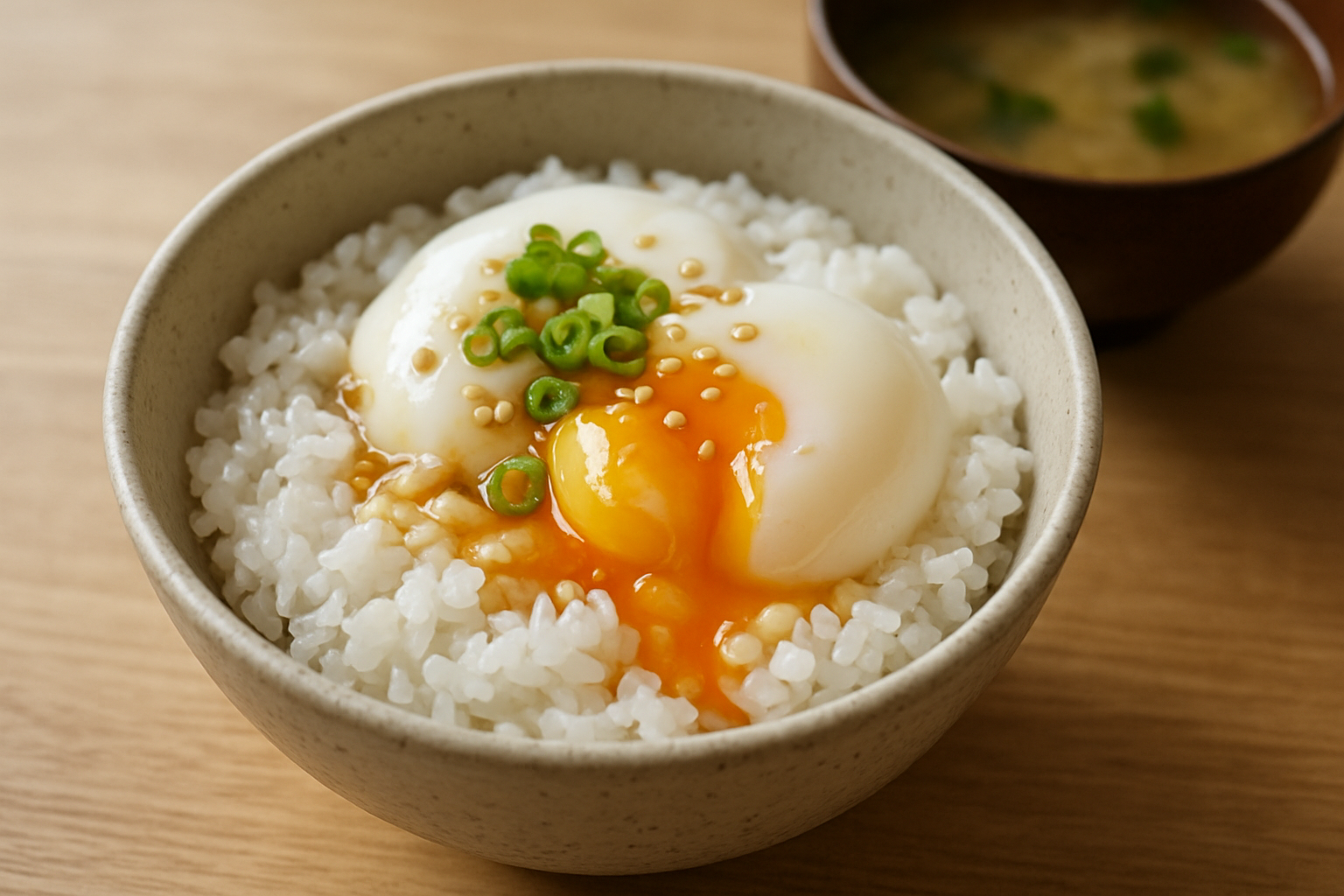
Simple Japanese Onsen Tamago for a Cozy Slow-Cooked Egg Breakfast
Simple Japanese Onsen Tamago for a Cozy Slow-Cooked Egg Breakfast
Ingredients
- 4 large pasteurized eggs in their shells about 7 ounces / 200 grams total
- 2 cups cooked Japanese short-grain rice warmed (12 ounces / 340 grams)
- 2 tablespoons soy sauce 30 milliliters
- 1 tablespoon mirin 15 milliliters
- 2 tablespoons water 30 milliliters
- 1/2 teaspoon granulated sugar 2 grams
- 2 scallions thinly sliced (about 2 tablespoons / 12 grams)
- 1/2 teaspoon toasted sesame seeds 2 grams, optional
Instructions
- Fill a large pot with enough water to cover the eggs by at least 1 inch (2.5 centimeters). Attach an immersion circulator and heat the water to 145°F (63°C).
- Gently lower the pasteurized eggs into the water bath. Cook at 145°F (63°C) for 45 minutes, keeping the eggs fully submerged.
- While the eggs cook, stir together the soy sauce, mirin, water, and sugar in a small bowl until the sugar dissolves. Set aside.
- Divide the warm rice between two bowls. When the eggs are ready, remove them from the water with a slotted spoon and gently crack two eggs over each bowl of rice.
- Spoon the soy sauce mixture over the eggs and rice. Finish with scallions and toasted sesame seeds, if using. Serve immediately.
 Sale!
Around the World, Around the Table — Collection I | 20 Easy International Recipes
Travel the world from your kitchen with 20 approachable international recipes from 14 countries. From comforting family dinners and vibrant breakfasts to desserts and easy lunches,…
View ProductAn easy japanese onsen tamago recipe brings one of Japan’s most comforting egg preparations to a relaxed home breakfast. Onsen tamago are gently slow-cooked eggs known for their tender, barely set whites and rich, spoonable yolks. Tucked into a bowl of warm rice with a light savory sauce, they feel special enough for a weekend morning yet need very little hands-on work.
The name translates to “hot spring egg.” It refers to the traditional practice of cooking eggs in the naturally warm mineral waters near Japanese hot springs. Home cooks can recreate that distinctive texture with a steady, low-temperature water bath. The result is different from ordinary soft boiled eggs: instead of a firm white around a runny center, both parts of the egg become wonderfully delicate and silky.
Why This Easy Japanese Onsen Tamago Recipe Works
This breakfast is wonderfully simple, but it delivers a lot of comfort. The mild egg, fluffy rice, and sweet-salty sauce create a balanced bowl without a long ingredient list. It is also flexible: keep it minimal for a quick morning meal, or add vegetables and crunchy toppings when you want something more filling.
The key is gentle, precise heat. A low-temperature water bath coaxes the yolk into a custardy texture while keeping the white soft rather than rubbery. Using pasteurized shell eggs is a practical choice for this easy japanese onsen tamago recipe, especially because the eggs are intentionally served soft. An immersion circulator takes out the guesswork and lets busy cooks focus on the simple toppings and sides.
Rice makes the eggs especially satisfying for breakfast, lunch, or a light dinner. As you break the eggs open, the yolks mingle with the sauce and coat each grain. That creamy combination is a familiar and comforting style of Japanese breakfast, where modest ingredients are allowed to shine.
Tips for Silky Slow-Cooked Eggs
Choose large eggs of a similar size so they warm at the same pace. Leave them in the shell until serving; cracking them directly over the rice preserves their soft shape and catches every bit of creamy yolk. A small bowl or ramekin can be helpful if you would like to check each egg before adding it to the finished bowl.
Temperature control matters more than rushing. A dependable immersion circulator gives the most repeatable result, while a pot of water heated on the stove can fluctuate enough to change the texture. If you use a stovetop setup, an accurate thermometer and patient adjustments are essential. Avoid boiling water, which will quickly turn this delicate dish into regular soft boiled eggs.
The sauce should support rather than overwhelm the eggs. Soy sauce brings salt and depth, mirin adds gentle sweetness, and water keeps the mixture light enough to drizzle. For a deeper, more traditional flavor, use prepared dashi in place of the water. If you prefer a little heat, add a few drops of chili oil or a small spoonful of Japanese chili crisp at the table.
Easy Serving Ideas for a Japanese Breakfast
A warm rice bowl is the classic base, but these slow cooked eggs also make a lovely topping for steamed greens, roasted mushrooms, or leftover rice from the night before. Sprinkle on sliced scallions and toasted sesame seeds for freshness and crunch. Crumbled nori adds a pleasant ocean-like savoriness without extra effort.
For a fuller morning spread, pair the bowl with a cup of Japanese miso soup with tofu and wakame. The savory broth complements the mild, creamy eggs beautifully. If you are packing a different Japanese-style meal later in the day, these tuna onigiri rice balls are another simple way to use cooked short-grain rice.
Variations to Make It Your Own
For a vegetable-forward bowl, add quickly wilted spinach, sautéed bok choy, or thinly sliced avocado. Leftover roasted sweet potato gives the meal a hearty, family-friendly twist. For an extra savory finish, a small spoonful of furikake or a drizzle of toasted sesame oil works well.
You can also serve onsen tamago as part of a simple dinner bowl. Spoon the egg over plain noodles or rice with sautéed vegetables, then let the yolk become a naturally creamy sauce. Although this easy japanese onsen tamago recipe is rooted in Japanese breakfast traditions, its quiet, savory flavor works at any time of day.
Storage, Reheating, and Food Safety
These eggs are best enjoyed as soon as they are cooked, when their texture is at its softest. If you have extras, refrigerate uncracked cooked eggs promptly and use them the next day. Rewarm them only gently; hotter water will firm the yolks. Keep leftover sauce covered in the refrigerator and use it within a few days.
Because onsen tamago are intentionally soft-cooked, pasteurized shell eggs are the safest choice for this preparation. Keep eggs cold before cooking, use clean hands and utensils, and do not leave finished egg bowls at room temperature for extended periods. Anyone who needs to avoid soft-cooked eggs should choose a fully cooked egg alternative.
Frequently Asked Questions
Are onsen tamago the same as poached eggs?
No. Poached eggs are cooked after being cracked into hot water, producing a defined white and a liquid or jammy yolk. Onsen tamago are cooked gently in their shells, so the white stays much softer and the yolk becomes creamy throughout.
Can I make this without rice?
Absolutely. Serve the eggs in a small bowl with the sauce and toppings as a light side dish, or spoon them over noodles, vegetables, or toast. Rice is traditional and especially good at soaking up the yolk, but it is not required.
Why did my egg white seem very soft?
That delicate white is part of the appeal of onsen tamago. Unlike standard soft boiled eggs, the whites are not meant to become firm. If you prefer a more set white, this style may not be your favorite, but the gentle texture is what makes the dish distinctive.
Can I prepare the sauce ahead?
Yes. Make the simple sauce ahead and refrigerate it in a covered container. Bring it close to room temperature before serving so it does not cool the eggs and rice too much.