
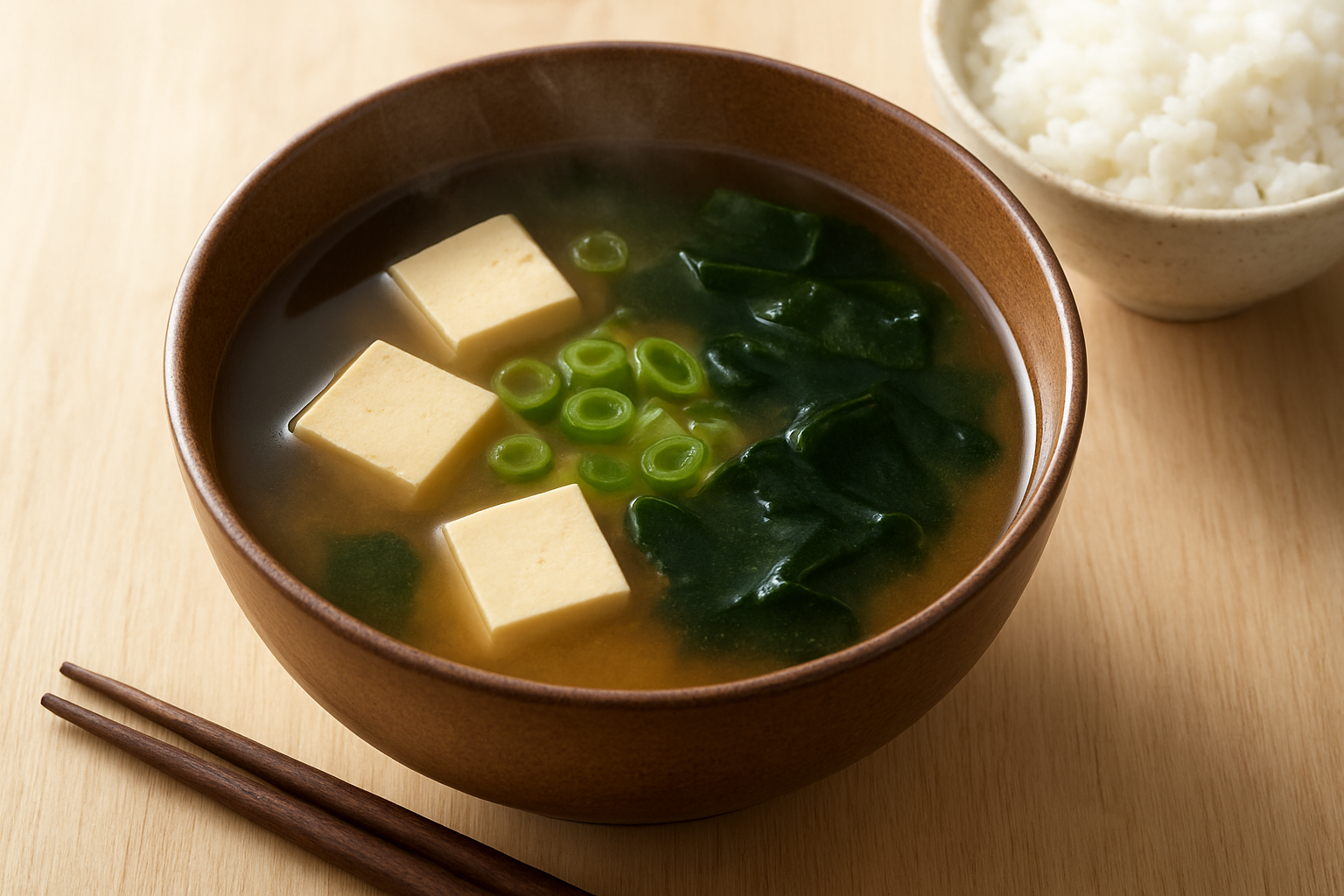
easy japanese miso soup recipe with Tofu and Wakame
easy japanese miso soup recipe with Tofu and Wakame
Ingredients
- 4 cups water 950 ml
- 1 teaspoon instant dashi granules about 3 g, preferably Japanese-style bonito dashi
- 1 tablespoon dried wakame seaweed about 2 g
- 8 ounces soft or medium-firm tofu cut into 1/2-inch cubes (225 g)
- 3 tablespoons white or yellow miso paste 45 g
- 2 scallions thinly sliced (about 1/4 cup / 15 g)
Instructions
- Pour the water into a medium saucepan and bring it just to a gentle simmer over medium heat. Stir in the instant dashi granules until dissolved.
- Add the dried wakame and let it rehydrate in the broth for about 2 minutes. The seaweed will expand significantly.
- Gently add the tofu cubes and warm them in the broth for 2 to 3 minutes. Avoid stirring vigorously so the tofu stays in neat pieces.
- Ladle about 1/2 cup (120 ml) of the hot broth into a small bowl. Add the miso paste and whisk or stir until smooth.
- Lower the heat so the soup is no longer boiling. Stir the dissolved miso mixture back into the saucepan, then warm gently for about 1 minute. Do not boil the soup after adding the miso.
- Remove from the heat, divide into bowls, and top with sliced scallions. Serve right away.
This easy japanese miso soup recipe brings a familiar Japanese home-style comfort to a busy lunch routine. Savory dashi, creamy-tender tofu, and delicate wakame come together in a light broth that feels soothing without being heavy. With a few pantry-friendly Japanese ingredients, beginner cooks can make a warm bowl that is simple enough for a weekday and satisfying enough to enjoy alongside rice, a sandwich, or a small plate of vegetables.
Why You’ll Love This Easy Japanese Miso Soup Recipe
Miso soup has a wonderfully balanced savory flavor, often described as umami, from its blend of dashi and fermented miso paste. It is also a practical recipe because it uses only a small number of ingredients and does not require special cooking skills. The key techniques are gentle ones: allow dried wakame to hydrate, warm the tofu carefully, and keep the soup from boiling once the miso is added.
This tofu miso soup is especially useful for flexible family lunches. Serve it in small bowls as a comforting starter, or make it part of a more filling meal with steamed rice and a simple protein. It is naturally easy to adapt according to what is in the refrigerator, and its mild, savory flavor is approachable for many eaters. The broth is also quick to customize with a handful of sliced mushrooms, tender spinach, or leftover cooked noodles.
Helpful Ingredient Tips for a Simple Japanese Soup
For the most classic flavor, look for instant dashi granules and miso paste in the international aisle of a larger grocery store, an Asian market, or online. Dashi is the foundational stock that gives the broth its deep savory character. Many instant versions contain bonito, a dried fish ingredient. For a vegetarian bowl, choose kombu, shiitake, or vegetable dashi and check the package label carefully.
White miso and yellow miso are excellent choices for new cooks because they tend to be mellow and lightly sweet. Red miso has a darker color and a stronger, saltier taste, so use less at first and add more only if needed. Miso brands vary in saltiness, which is why it is best to taste the broth after the miso has dissolved rather than automatically adding salt.
Wakame is a dried seaweed that expands dramatically in liquid. A small amount goes a long way, so resist adding an extra handful before it has hydrated. It should become soft and silky, not chewy. Wakame is different from the crisp nori sheets used around sushi. For tidy tofu cubes, use a gentle hand when moving them through the soup; soft tofu is delicate and can break apart with vigorous stirring.
Variations and Serving Ideas
Once you are comfortable with the basic easy japanese miso soup recipe, you can make it work for many lunches. Add thinly sliced shiitake mushrooms with the wakame for an earthier broth. Stir in baby spinach at the end just until wilted, or add a small portion of cooked soba or udon noodles for a heartier bowl. A few drops of toasted sesame oil can add a nutty aroma, but use it sparingly so it does not cover the clean flavor of the dashi.
For a satisfying Japanese-inspired lunch, pair a bowl with easy Japanese teriyaki chicken bowls with rice. If you would prefer a simple vegetarian-style side, the freshness and crunch of Indonesian gado gado salad with peanut sauce can create a colorful contrast to the warm broth.
Storage and Gentle Reheating
This wakame seaweed soup has its best texture right after it is made. If you have leftovers, cool them promptly and refrigerate them in a covered container. The wakame will keep absorbing broth as it sits, while the tofu may become more fragile, but the soup will still be enjoyable the next day. Reheat it slowly in a small saucepan over low heat until steaming. Avoid a hard boil, which can make the miso taste less fragrant and can cause the tofu to break apart.
If you anticipate leftovers, consider holding back a portion of the wakame and scallions and adding them only to the bowls you plan to eat immediately. This helps the stored soup keep a fresher texture. It is best not to freeze this simple Japanese soup, since both tofu and wakame can change texture after thawing.
Food Safety Notes
Keep the soup out of the temperature danger zone by refrigerating leftovers within two hours of cooking. Store it in a shallow container so it cools more quickly, and reheat only the portion you plan to eat. Discard soup that has been left out too long or that develops an unusual odor or appearance. Always use a clean spoon for tasting so bacteria are not introduced into the pot.
Frequently Asked Questions
Can I make this easy japanese miso soup recipe without dashi?
Yes, although dashi gives the broth its traditional depth. A kombu, shiitake, or vegetable dashi is the best substitute. Plain water is acceptable in a pinch, but the finished soup will taste less rounded and savory.
Why is my miso soup cloudy?
A lightly cloudy broth is normal. Miso is a fermented paste that is suspended in the liquid rather than fully disappearing like salt. Stirring the paste with a little hot broth before adding it to the pan helps it blend smoothly.
Can I use firm tofu?
Absolutely. Firm tofu stays in distinct cubes and is easier for beginners to handle. Soft or medium-firm tofu offers a more traditional delicate texture, so choose the one your family enjoys most.
How can I make the soup more filling?
Serve it with rice, add cooked noodles, or include vegetables such as mushrooms and spinach. Pairing it with a rice bowl or another protein-rich lunch item turns the light broth into a more substantial meal.







One Comment