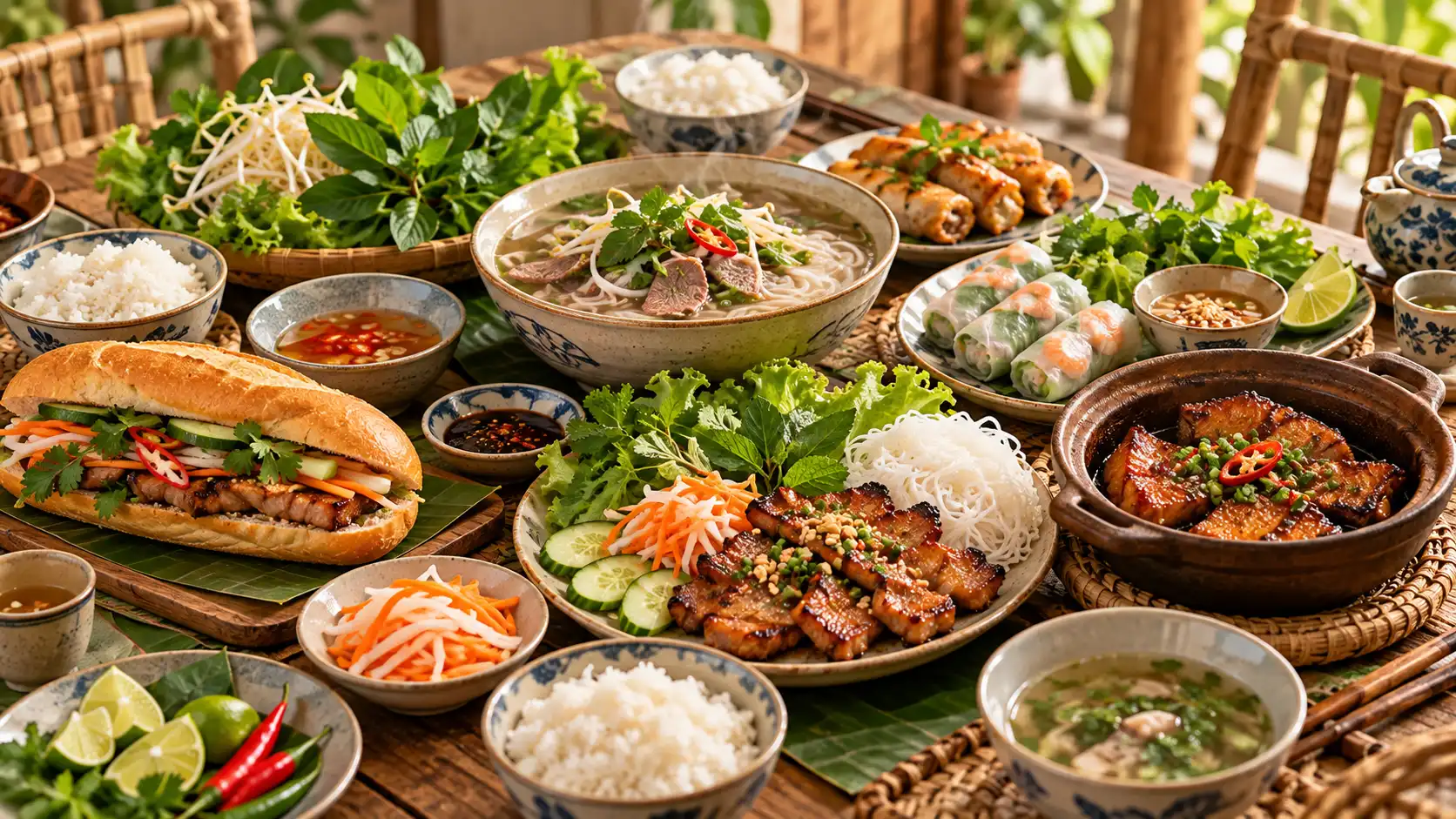
Vietnamese Food Culture: Traditions, Flavors, Everyday Meals and Iconic
Vietnamese food culture is much more than phở and bánh mì. Across Vietnam, food reflects geography, agriculture, regional identity, family life, street culture, history, migration, and a remarkable ability to create contrast from simple ingredients.
Rice can appear as steamed grains, broken rice, noodles, rice paper, sticky rice, cakes, and porridge. Fresh herbs may sit beside grilled meats and noodle soups. Fish sauce can season a broth, glaze a braised dish, or become the base of a dipping sauce. A single meal might balance something hot with something cool, something rich with something fresh, and something salty with sweetness or acidity.
To understand Vietnamese cuisine, it helps to move beyond individual dishes and look at the systems behind them: rice cultivation, regional ingredients, shared family meals, noodle traditions, fermentation, street food, and the different culinary identities of northern, central, and southern Vietnam.
What Is Vietnamese Food Culture?
Vietnamese food culture is the collection of ingredients, cooking techniques, regional cuisines, family traditions, street-food customs, celebrations, and everyday eating practices found across Vietnam.
Although some dishes are recognized throughout the country, there is no single Vietnamese flavor profile. The Vietnam Tourism Board emphasizes how strongly local ingredients, climate, history, and regional preferences shape the food of northern, central, and southern Vietnam.
What connects many Vietnamese meals is not one exact recipe but an approach to balance. Aromatic herbs can lighten grilled meat. Pickled vegetables can cut through richness. Broth can be delicate while condiments let each diner adjust the final flavor. Fish sauce adds savoriness, while lime, vinegar, tamarind, sugar, chile, garlic, and herbs create contrasting layers.
Vietnamese cuisine is therefore best understood as a living food culture shaped by both continuity and adaptation.
How Geography Shapes Vietnamese Food
Vietnam stretches a long distance from north to south, with mountains, river deltas, tropical coastlines, highlands, fertile agricultural regions, and major urban centers.
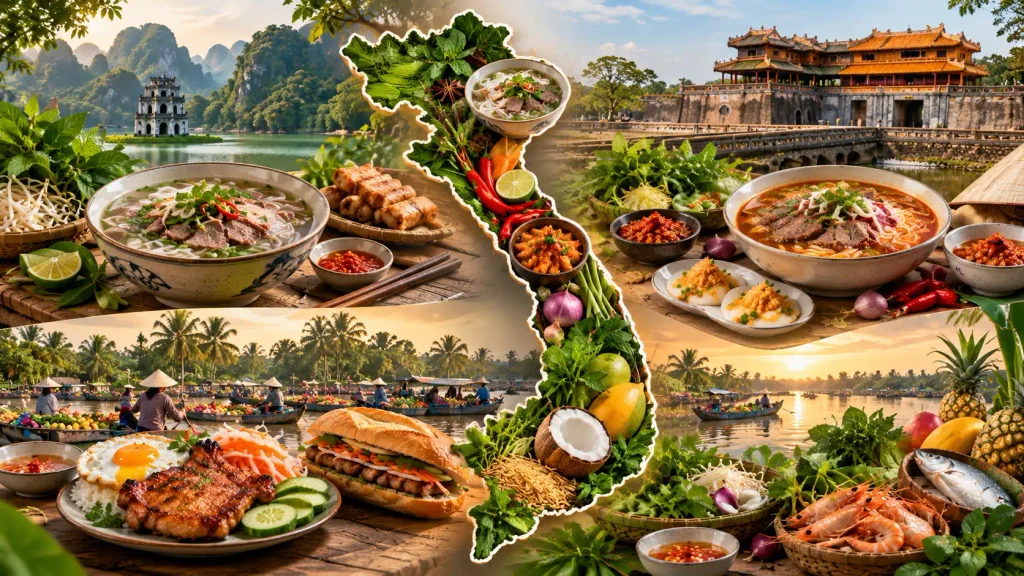
Those environments produce very different ingredients and eating traditions.
In the north, cooler seasons and longstanding culinary traditions have contributed to dishes often described as more restrained and delicate in seasoning. Central Vietnam is known for stronger heat, complex sauces, and the influential culinary heritage of Huế. The warmer south benefits from the Mekong Delta’s abundance of fruit, vegetables, freshwater fish, coconut, and other agricultural products.
The official Vietnam Tourism culinary guide describes these regional differences as one of the defining features of Vietnamese cuisine.
This means that a bowl of noodles, a dipping sauce, or even the balance of sweetness and saltiness may change considerably as you travel through the country.
Rice at the Center of Vietnamese Food Culture
Rice is one of the foundations of Vietnamese food culture.
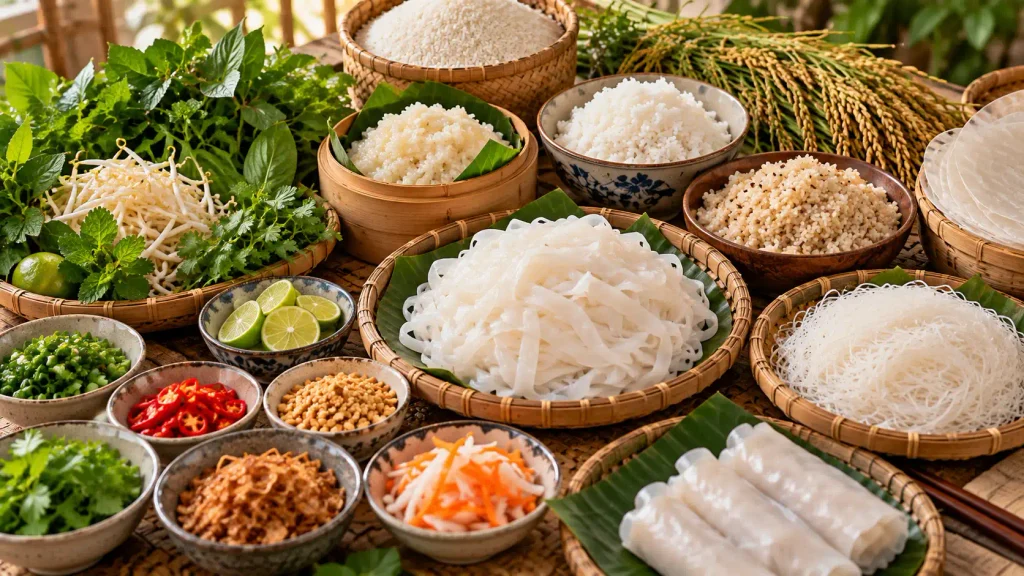
It appears not only as a bowl of steamed rice beside everyday dishes but in an extraordinary range of forms: rice noodles, sticky rice, broken rice, rice paper, steamed cakes, rolls, porridges, and festival foods.
The Vietnamese expression ăn cơm literally refers to eating rice, but it can also carry the broader everyday sense of eating a meal. That connection shows how deeply rice and daily food are intertwined.
A home-style meal may place a bowl of rice at each setting while several dishes are shared in the center: perhaps braised fish or pork, vegetables, soup, eggs, tofu, or another savory dish.
Rice also creates distinct regional specialties. In southern Vietnam, cơm tấm uses broken grains that became the foundation of one of Ho Chi Minh City’s most recognizable everyday meals.
Vietnam’s World of Noodles
Phở may be Vietnam’s best-known noodle dish internationally, but Vietnamese noodle culture is far larger.
Different dishes use flat rice noodles, thin rice vermicelli, thicker noodles, wheat noodles, and regionally specific varieties. Some noodles sit in clear broth; others accompany grilled meat, herbs, lettuce, pickles, and dipping sauce.
The Vietnam Tourism guide to Vietnamese noodles highlights noodle soups, dry noodle salads, and noodle-based rolls as distinct parts of the country’s food landscape.
This variety helps explain why two dishes based on rice vermicelli can feel completely different.
Bún chả, associated especially with Hanoi, combines grilled pork with rice vermicelli, herbs, and a fish-sauce-based dipping broth.
Bún thịt nướng also brings together grilled pork, noodles, fresh herbs, vegetables, and sauce, but typically in a composed noodle-bowl format.
Fish Sauce and Fermentation
Few ingredients illustrate Vietnamese seasoning as clearly as nước mắm, or fish sauce.
Fish and salt are fermented to create an amber-colored seasoning rich in savory depth. It can appear directly in cooking or be mixed with water, sugar, lime or vinegar, garlic, and chile to create dipping sauces and dressings.
The official Vietnam Tourism guide to nước mắm describes fish sauce as an essential part of Vietnamese cooking and notes that its use and preferred balance vary by region.
In the north, preparations may lean saltier and more restrained. Southern dipping sauces may contain more sweetness, while central Vietnamese cuisine has its own strong sauce traditions.
Fermentation also appears in other ingredients, including shrimp pastes and preserved foods.
These ingredients are not simply about saltiness. Used carefully, they create umami and depth that make vegetables, soups, grilled meats, and braised dishes taste more complete.
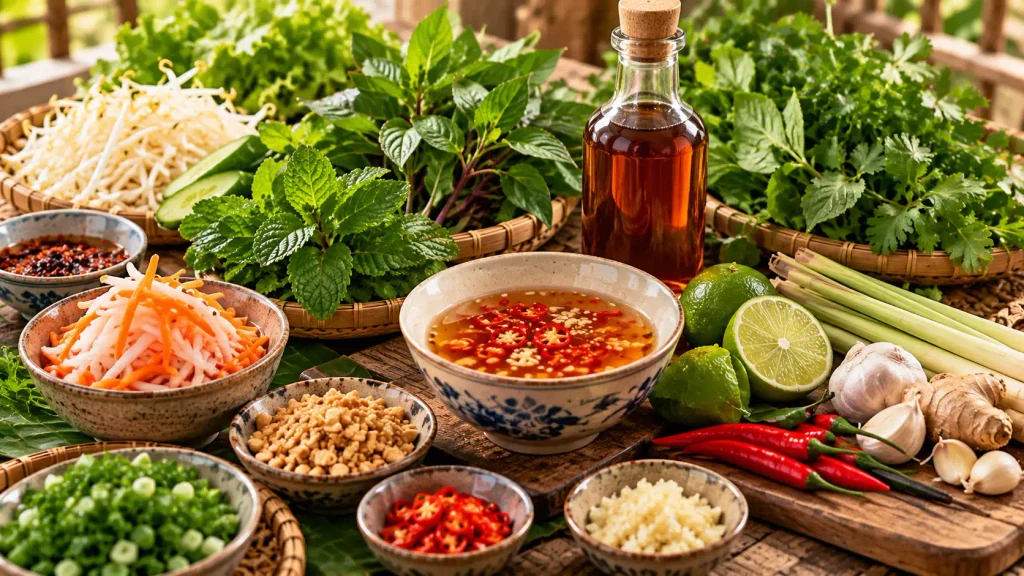
Fresh Herbs, Vegetables and the Art of Contrast
Fresh herbs and vegetables are another defining visual and sensory element of Vietnamese meals.
Mint, cilantro, Vietnamese coriander, Thai basil, lettuce, bean sprouts, cucumber, green onions, and other greens may accompany noodles, grilled meats, soups, rolls, and rice dishes.
The point is not simply decoration.
Fresh leaves create aroma, texture, temperature contrast, and a way for each diner to customize a dish.
A hot bowl of noodle soup can be brightened with herbs and lime. Smoky grilled pork can be paired with cool vermicelli, cucumber, lettuce, and mint. Rich meat can be balanced with quick-pickled carrot and daikon.
This relationship between cooked and raw components helps create the freshness often associated with Vietnamese cuisine.
Northern, Central and Southern Vietnamese Cuisine
Regional diversity is one of the most important ideas to understand about Vietnamese food.
Northern Vietnam
Northern cooking is often associated with more restrained seasoning and a focus on the natural character of ingredients.
Hanoi is closely connected with dishes including phở, bún chả, bánh cuốn, chả cá, and many other noodle and rice preparations.
Broths can be clear and aromatic rather than aggressively spicy, while fresh herbs, chile, lime, garlic vinegar, and condiments allow the diner to make adjustments at the table.
Central Vietnam
Central Vietnamese food is often associated with stronger spice, more intense seasoning, and highly distinctive regional specialties.
Huế, the former imperial capital, has an especially important culinary identity. Dishes such as bún bò Huế combine chile, lemongrass, fermented ingredients, and aromatic broth, while many small steamed rice cakes and dumplings show another side of the region’s food traditions.
Further south along the central coast, dishes such as mì Quảng and Hội An’s cao lầu reflect local ingredients and historical connections with trading communities.
Southern Vietnam
Southern Vietnamese food often makes greater use of sweetness, tropical produce, coconut, and the agricultural abundance of the Mekong Delta.
Ho Chi Minh City is also a major culinary crossroads, where people from many parts of Vietnam have brought regional cooking traditions together.
Cơm tấm and cá kho tộ are two excellent examples of southern food: one built around broken rice and grilled accompaniments, the other around fish braised with fish sauce and caramelized sweetness.
Phở and Vietnamese Soup Culture
Phở is the Vietnamese dish most familiar to many international diners, but treating it as the whole story of Vietnamese food would miss an enormous amount of culinary diversity.
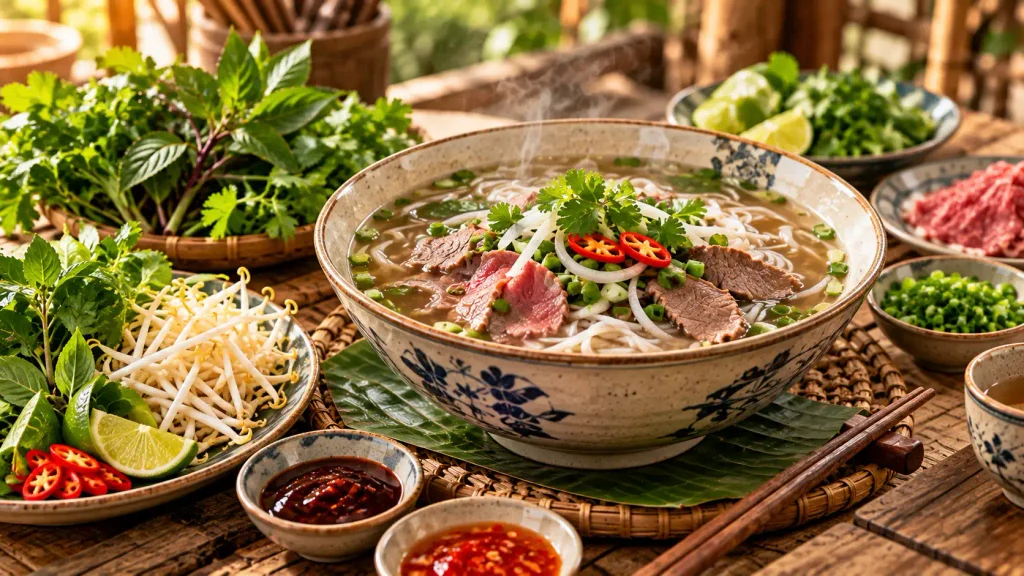
Phở is built around rice noodles and aromatic broth, commonly with beef or chicken. Star anise, cinnamon, ginger, onion, and other aromatics can contribute to the broth, while preparation and garnishes vary by region.
The Vietnam Tourism Board distinguishes Hanoi-style phở from southern versions, illustrating how even a national icon can carry strong regional identities.
Noodle soup itself is a broad category. Vietnam also has bún bò Huế, bún riêu, hủ tiếu, fish noodle soups, and many other regional bowls.
Explore at home: our Easy Vietnamese Pho with Beef Broth is intentionally a simplified family version rather than a replacement for the long-simmered traditional method.
Grilled Pork, Bún Chả and Vermicelli Bowls
Grilling creates another important family of Vietnamese flavors.
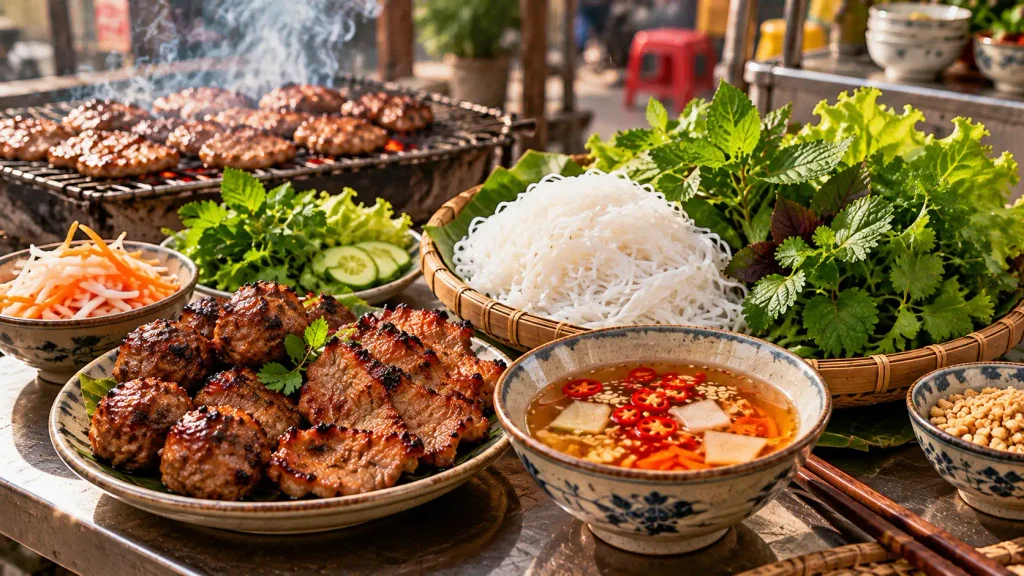
Meat may be seasoned with ingredients such as fish sauce, sugar, garlic, shallot, lemongrass, and pepper before meeting charcoal or high heat.
Bún chả is strongly associated with Hanoi and traditionally combines grilled pork with rice vermicelli, herbs, and a savory-tangy dipping broth.
Try our version: Vietnamese Bún Chả with Grilled Pork Meatballs.
Farther south, bún thịt nướng offers another way to combine noodles, grilled pork, fresh herbs, vegetables, peanuts, and fish-sauce dressing.
Explore it here: Vietnamese Grilled Pork Vermicelli Bowl.
These meals demonstrate an important characteristic of Vietnamese cooking: the final dish can feel light and fresh even when grilled meat provides deep caramelized flavor.
Cơm Tấm and Southern Rice Culture
Cơm tấm means broken rice and is particularly associated with southern Vietnam and Ho Chi Minh City.
The grains were historically less commercially valuable because they had broken during milling, yet they became the foundation of a meal that is now one of southern Vietnam’s best-known specialties.
Cơm tấm can be served with grilled pork, egg, pork skin, pickled vegetables, scallion oil, and fish-sauce dressing, although combinations vary.
The dish is an excellent example of how an ingredient once associated with economy and practicality can become part of a city’s culinary identity.
Try it at home: Vietnamese Cơm Tấm with Grilled Pork.
Cá Kho Tộ and the Vietnamese Family Table
Braised dishes are another essential part of everyday Vietnamese home cooking.
Cá kho tộ is a southern-style caramelized fish preparation traditionally associated with cooking in a clay pot. Fish sauce, sugar or caramel, pepper, aromatics, and fish cook together into a deeply savory-sweet sauce designed to be eaten with rice.
It is especially connected with the foodways of southern Vietnam and the Mekong Delta, where freshwater fish are abundant.
Explore our streamlined version: Vietnamese Cà Kho Tộ: Caramelized Fish.
This kind of braised dish is important because Vietnamese food is not only street food. Everyday home meals built around rice, vegetables, soup, and braised dishes are just as important to understanding the cuisine.
Bánh Mì and Cultural Exchange
Bánh mì is one of the clearest examples of Vietnamese cooks transforming an imported food into something distinctly local.
The baguette arrived through the period of French colonial rule, but Vietnamese sandwich culture adapted the bread to local ingredients, tastes, textures, and eating habits.
Today bánh mì can contain many fillings: pork, pâté, chicken, eggs, meatballs, cold cuts, tofu, or other ingredients, usually combined with elements such as pickled carrot and daikon, cucumber, chile, cilantro, sauces, or spreads.
The result is not simply a French sandwich eaten in Vietnam. It is a Vietnamese food form created through adaptation and cultural exchange.
Try our family adaptation: Vietnamese-Inspired Chicken Bánh Mì.
Lemongrass and Aromatic Cooking
Lemongrass is one of the aromas strongly associated with Vietnamese cooking, particularly in many central and southern preparations.
Its citrus-like fragrance can season grilled meat, chicken, soups, curries, marinades, and stir-fries.
Fresh lemongrass is often combined with garlic, chile, fish sauce, sugar, shallot, or other aromatics to produce food that is fragrant before it is necessarily spicy.
Explore an approachable dinner: Vietnamese Lemongrass Chicken Stir-Fry.
Vietnamese Family Meals and the Meaning of Sharing Food
Street food receives enormous international attention, but the shared family meal is equally important to Vietnamese food culture.
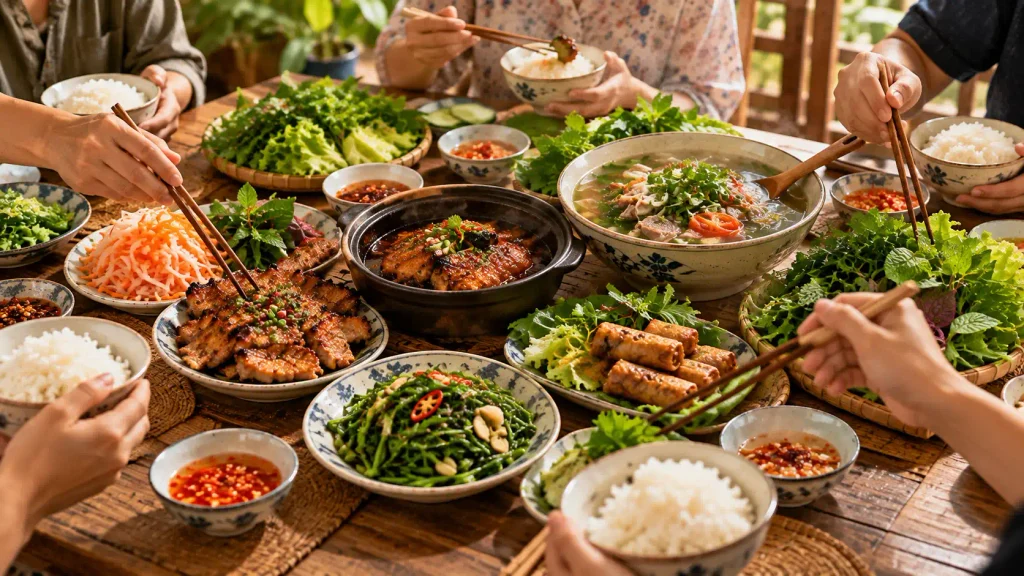
Instead of every diner receiving a separate entrée, a home meal often places several dishes in the center of the table with individual bowls of rice.
The Vietnam Tourism guide to dining etiquette describes Vietnamese meals as centered on shared dishes, rice bowls, and chopsticks.
A meal might include rice, a braised dish, vegetables, soup, fish, eggs, tofu, or meat. Each dish contributes something different to the table rather than needing to function as a complete meal on its own.
Food also expresses hospitality and care. Offering a guest food, putting a good piece into someone’s bowl, or inviting an unexpected visitor to stay for dinner are small actions that connect eating with relationships.
This makes the family table especially relevant to the philosophy behind Family Flavor Atlas: food is not only something people consume. It is something people share.
Street Food and Everyday Eating
Vietnam’s street-food culture is one of the most visible parts of everyday life.
Food stalls, markets, small shops, sidewalk kitchens, and casual restaurants can serve highly specialized dishes prepared repeatedly throughout the day.
Breakfast might mean a steaming bowl of noodles, sticky rice, rice porridge, or another quick meal. At lunchtime, diners may stop for rice plates or noodle dishes. In the evening, stools and tables appear along sidewalks as grilled foods, soups, seafood, snacks, and drinks take over.
The official Vietnam Tourism street-food guide describes how different vendors often specialize by meal period and dish.
Street food is therefore not simply a tourist attraction. It is part of the practical rhythm of eating in Vietnamese cities and towns.
Chè, Sweets and Vietnamese Drinks
Vietnamese desserts extend far beyond Western-style cakes and pastries.
Chè is a broad category of sweet soups, puddings, drinks, and layered desserts made with ingredients such as beans, mung beans, sticky rice, coconut milk, pandan, fruit, jellies, tapioca, and crushed ice.
Some chè are served warm; others are refreshing cold desserts for hot weather.
Chè ba màu, often translated as three-color dessert, layers different sweet components with coconut sauce and ice.
Try our simplified version: Vietnamese Chè Ba Màu.
Vietnam also has a distinctive coffee culture. Strong coffee may be served with condensed milk and ice, while Hanoi is famous for egg coffee, where coffee is topped with a rich whipped egg mixture.
Vietnamese Food Culture Today
Vietnamese cuisine continues to change through urbanization, international travel, migration, restaurant culture, social media, and the Vietnamese diaspora.
Traditional family dishes still coexist with modern cafés, international restaurants, convenience foods, contemporary interpretations, and new forms of street food.
Outside Vietnam, cooks also adapt recipes according to available herbs, vegetables, fish sauce brands, cuts of meat, and family preferences.
That adaptation does not erase Vietnamese food culture. It is part of the ongoing story of how cuisines travel—provided that the distinction between a traditional preparation and a modern adaptation remains clear.
Vietnamese Recipes to Explore at Home
Family Flavor Atlas currently has eight Vietnamese or Vietnamese-inspired recipes that connect directly with the ingredients and traditions explored in this guide.
Easy Vietnamese Pho with Beef Broth
A simplified family introduction to aromatic beef broth, rice noodles, herbs, and the comforting structure of phở.
View the Vietnamese Pho Recipe →
Vietnamese Cơm Tấm with Grilled Pork
Broken rice topped with grilled pork, fresh vegetables, pickles, scallion oil, and fish-sauce dressing.
Vietnamese Bún Chả with Grilled Pork Meatballs
A Hanoi-inspired combination of grilled pork, rice vermicelli, herbs, vegetables, and dipping sauce.
Vietnamese Grilled Pork Vermicelli Bowl
A fresh bún thịt nướng-style bowl with grilled lemongrass pork, rice noodles, herbs, crunchy vegetables, and dressing.
View the Grilled Pork Vermicelli Recipe →
Vietnamese Cà Kho Tộ
Caramelized fish simmered with fish sauce, aromatics, and a glossy savory-sweet sauce for serving with rice.
Vietnamese-Inspired Chicken Bánh Mì
A family-friendly sandwich with seasoned chicken, quick-pickled carrot and daikon, cucumber, herbs, and crisp bread.
View the Chicken Bánh Mì Recipe →
Vietnamese Lemongrass Chicken Stir-Fry
A quick aromatic chicken dinner built around fresh lemongrass, garlic, savory seasoning, and gentle caramelization.
View the Lemongrass Chicken Recipe →
Vietnamese Chè Ba Màu
A colorful three-layer dessert with sweet beans, pandan jelly, coconut sauce, and crushed ice.
Watch: Vietnam Through Food — More Than Pho
Our upcoming Family Flavor Atlas documentary, Vietnam Through Food: More Than Pho, will explore how geography, rice, regional cuisines, noodles, fish sauce, street food, family meals, migration, and cultural exchange have shaped the way Vietnam eats.
The full documentary will be added here when it is released, extending this guide through landscapes, ingredients, markets, kitchens, and everyday food traditions across Vietnam.
Vietnamese Food Culture: The Bigger Picture
Vietnamese food culture cannot be explained by phở alone.
It is rice transformed into noodles, paper, cakes, porridge, sticky rice, and broken-rice meals. It is fish sauce connecting the sea to countless kitchens. It is herbs placed beside a steaming bowl so the diner becomes part of the final preparation.
It is charcoal smoke around grilled pork in Hanoi, a bowl of noodles eaten early in the morning, a plate of cơm tấm in Ho Chi Minh City, caramelized fish beside rice in a family home, and tropical fruit growing throughout the Mekong Delta.
It is also adaptation: a French-introduced baguette becoming bánh mì, regional recipes moving between cities, and Vietnamese families abroad recreating familiar flavors with ingredients available in a new country.
Most importantly, Vietnamese cuisine shows how food can connect everyday practicality with cultural memory.
A bowl of rice, several shared dishes, a few pairs of chopsticks, and the simple act of inviting someone to eat can carry just as much meaning as the country’s most famous restaurant dishes.
That is why exploring Vietnam through food is ultimately about more than recipes. It is about understanding how geography, history, family, and community meet around the table.
Good Food Brings Us Closer.
Frequently Asked Questions About Vietnamese Food Culture
What is Vietnamese food culture?
Vietnamese food culture includes the ingredients, cooking methods, regional cuisines, shared family meals, street-food traditions, celebrations, and everyday eating practices found throughout Vietnam.
What are the main ingredients in Vietnamese cuisine?
Common ingredients include rice, rice noodles, fish sauce, fresh herbs, vegetables, pork, chicken, beef, seafood, tofu, garlic, shallots, lemongrass, chile, lime, coconut, and a wide range of regional produce.
Is all Vietnamese food spicy?
No. Heat varies considerably by dish and region. Northern dishes are often relatively restrained, while central Vietnamese food is especially known for stronger chile flavors. Condiments frequently allow diners to adjust heat at the table.
Why is rice important in Vietnamese food?
Rice is both a staple and the base for many different foods, including steamed rice, broken rice, rice noodles, sticky rice, rice paper, porridges, cakes, and rolls.
What is nước mắm?
Nước mắm is Vietnamese fish sauce made through the fermentation of fish and salt. It is used as a seasoning and as the foundation of many dipping sauces and dressings.
What is the difference between northern and southern Vietnamese food?
Northern cuisine is often characterized by more restrained seasoning and delicate flavors, while southern cooking frequently uses more sweetness, tropical produce, coconut, and ingredients associated with the Mekong Delta. Central Vietnam has its own strongly flavored and often spicier traditions.
Is phở eaten only for dinner?
No. Phở is commonly eaten in the morning in Vietnam and can also be enjoyed at other times of day.
What is cơm tấm?
Cơm tấm is broken rice associated especially with southern Vietnam. It is commonly served with combinations such as grilled pork, egg, pickled vegetables, scallion oil, and fish-sauce dressing.
What is Vietnamese street food?
Vietnamese street food includes meals and snacks sold from markets, sidewalk stalls, small shops, and informal restaurants. Popular foods include noodle soups, rice plates, grilled dishes, bánh mì, rolls, snacks, sweets, and drinks.
What is chè?
Chè is a broad Vietnamese category of sweet soups, puddings, drinks, and layered desserts made with ingredients such as beans, sticky rice, fruit, coconut milk, pandan, jelly, tapioca, and ice.
Sources and Further Reading
- Vietnam Tourism — A Foodie Guide to Vietnam by Region
- Vietnam Tourism — 21 Must-Try Vietnamese Dishes
- Vietnam Tourism — A Foodie Guide to Vietnam’s Noodles
- Vietnam Tourism — Fish Sauce: Vietnam’s First Love
- Vietnam Tourism — A Beginner’s Guide to Vietnamese Street Food
- Vietnam Tourism — Vietnamese Etiquette and Shared Meals
- Explore more international recipes on Family Flavor Atlas →