
Italian Food Culture: Regional Traditions, Everyday Meals and Iconic Dishes
Italian food culture is much more than pizza, pasta and gelato. Across Italy, food reflects geography, agriculture, regional identity, family traditions, seasonality, craftsmanship and centuries of cultural exchange.
A dish that feels typical in Sicily may be uncommon in Piedmont. Butter and polenta play important roles in parts of northern Italy, while olive oil, tomatoes, durum wheat, vegetables and seafood appear more prominently in many central and southern traditions. Even familiar dishes can change from one town, household or generation to another.
To understand Italian cuisine, it helps to think less about one national menu and more about a mosaic of regional food cultures connected by shared values: respect for ingredients, seasonality, conviviality, practical cooking and the transmission of knowledge around the family table.
What Is Italian Food Culture?
Italian food culture is the collection of regional cuisines, ingredients, cooking techniques, eating habits, family traditions and social practices that shape how food is produced, prepared and shared across Italy.
There is no single flavor that defines all Italian food. The country’s geography stretches from the Alps to Mediterranean islands, crossing mountains, plains, river valleys, long coastlines and very different climates. Those landscapes influence agriculture, livestock, fishing, preservation methods and the ingredients available to local cooks.
The official Italian tourism portal describes Italian cuisine as a highly regional food tradition in which every region has its own specialties. That diversity is one of the most important ideas to understand before exploring Italian dishes.
Explore Italy’s official guide to food culture and regional traditions →
Italian Cooking as Living Cultural Heritage
Italian cooking gained an important international recognition in 2025 when UNESCO inscribed Italian cooking, between sustainability and biocultural diversity on the Representative List of the Intangible Cultural Heritage of Humanity.
The recognition is especially meaningful because it does not focus on one recipe.
Instead, UNESCO describes Italian cooking as a cultural and social practice connected with raw ingredients, artisanal preparation, shared meals, anti-waste traditions, family relationships and the transmission of flavors, skills and memories between generations.
That perspective helps explain why Italian food culture cannot be reduced to a list of famous dishes. Cooking itself is part of the cultural heritage.
Grandparents teaching younger relatives, families preparing a familiar Sunday dish, communities gathering for festivals, and cooks adapting recipes according to seasonal ingredients are all part of the larger story.
UNESCO — Italian Cooking, Sustainability and Biocultural Diversity →
Why Regional Cuisine Matters So Much in Italy
One of the biggest mistakes when talking about Italian food is treating the country as if it had one uniform cuisine.
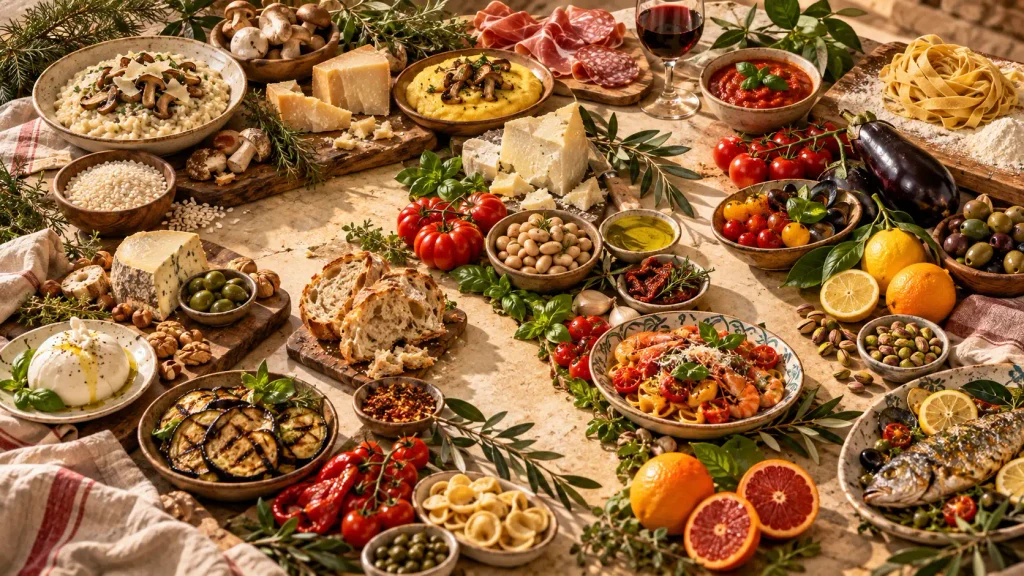
Italy’s regional differences are fundamental.
Climate, landscape, agricultural history and local economies created different traditions long before modern national identity connected them under the broader idea of Italian cuisine.
Today, regional identity remains visible in pasta shapes, cheeses, breads, cured meats, sauces, soups, desserts, cooking fats and everyday family meals.
The official tourism guide to Italian cuisine describes the country as a gastronomic mosaic created by different landscapes, cultures and biodiversity.
This is why traveling through Italy can feel like moving through several culinary worlds rather than following one national menu.
Northern Italian Food Culture
Northern Italy includes Alpine landscapes, fertile plains, major rice-growing areas, dairy traditions and regions historically connected with Central Europe.
In many northern cuisines, butter may appear more frequently than olive oil, while rice, polenta, cheese and meat can play especially important roles.
Risotto is closely associated with northern regions such as Lombardy and Piedmont. Polenta appears in many forms across northern and northeastern Italy, while mountain regions have traditions built around dairy products, hearty dumplings, preserved meats and cheeses.
Piedmont is known for ingredients and dishes associated with hazelnuts, truffles, rice and slow-cooked meats. Lombardy contributes risotto traditions and rich dairy products. Veneto offers seafood, rice, polenta and dishes shaped by both inland and Adriatic influences.
In the Alps, food often reflects colder climates and pastoral traditions.
This does not mean every northern dish is heavy. Rather, the region shows how Italian cuisine adapts itself to very different landscapes and agricultural systems.
Central Italian Food Culture
Central Italy includes regions such as Tuscany, Umbria, Marche and Lazio, each with distinct traditions but many shared connections to agriculture, olive oil, legumes, bread, vegetables and straightforward cooking.
Tuscan cuisine is especially associated with dishes that transform humble ingredients into deeply satisfying food. Bread, beans, leafy vegetables, olive oil and seasonal produce appear repeatedly in traditional preparations.
Dishes such as ribollita and pappa al pomodoro demonstrate how bread can be reused rather than wasted, reflecting an important practical tradition in Italian cooking.
Rome and the surrounding region of Lazio have another highly recognizable food identity. Pasta dishes associated with Roman cooking often rely on relatively short ingredient lists where technique and ingredient quality matter enormously.
Cacio e pepe, for example, centers on pasta, cheese and black pepper. Its apparent simplicity makes technique particularly important.
Central Italian food shows that complexity does not necessarily require many ingredients.
Southern Italy and the Islands
Southern Italy and the islands are closely connected with Mediterranean agriculture, warm climates, long coastlines and centuries of trade and cultural exchange.
Tomatoes, olive oil, durum wheat, vegetables, legumes, citrus fruits, herbs, seafood and cheeses appear prominently across many southern traditions, although exact combinations vary enormously by region.
Campania is famous internationally for Neapolitan pizza, but the region’s food culture includes much more: pasta traditions, vegetables, cheeses, seafood and pastries.
Apulia is strongly associated with olive oil, vegetables, durum-wheat pasta and breads. Sicily reflects centuries of Mediterranean interaction, with ingredients such as citrus, almonds, pistachios, seafood, eggplant and sweet-and-sour preparations appearing in regional cooking.
Sardinia has its own distinctive pastoral, agricultural and coastal traditions, including breads, cheeses, handmade pasta and foods that are very different from mainland stereotypes of Italian cuisine.
The south demonstrates particularly clearly that “Italian food” is not one cuisine but many connected traditions.
Bread, Pasta, Rice and Grains
Grains are central to many Italian food traditions, but they do not appear in only one form.
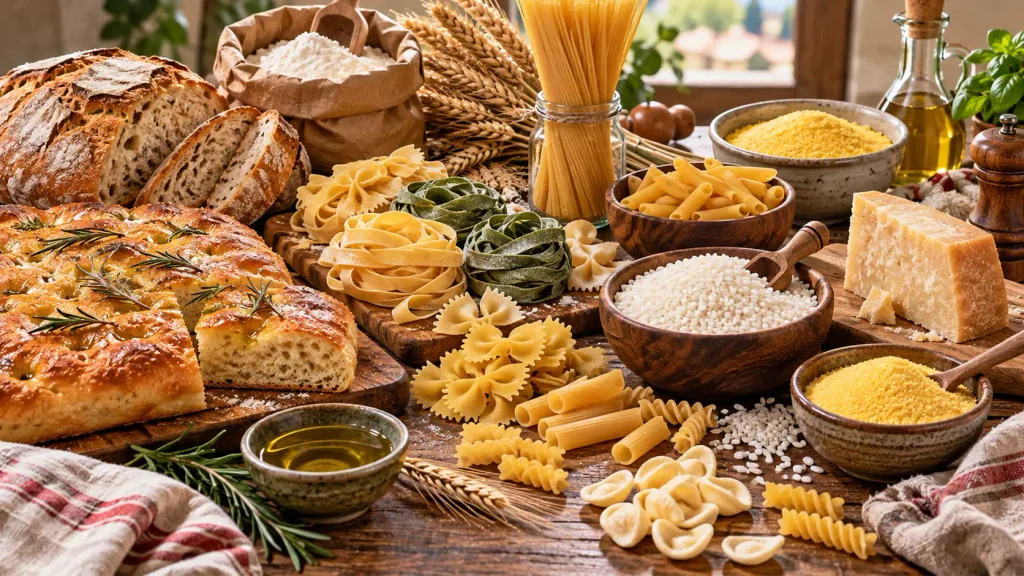
Pasta receives the most international attention, yet Italy also has important traditions built around bread, rice, polenta and other grain preparations.
Pasta
Italian pasta culture is remarkably regional. Shapes, sauces and flour traditions can vary according to local ingredients and history.
Some pasta dishes rely on rich meat sauces. Others emphasize seafood, vegetables, cheese, olive oil or legumes. The relationship between pasta shape and sauce is also important because texture affects how sauce clings to the pasta.
A dish such as cacio e pepe demonstrates how a handful of ingredients can become a complete culinary identity through technique.
Bread
Bread is equally important.
Italy has an enormous variety of regional breads, including soft enriched loaves, crusty country breads, flatbreads and focaccia-style preparations.
Focaccia is especially associated with Liguria, though many variations exist elsewhere. Olive oil is essential to its texture and characteristic surface.
Explore our version: Golden Rosemary Focaccia →
Rice and Polenta
Rice plays a particularly important role in parts of northern Italy, where it forms the foundation of many risotto traditions.
Polenta, historically an important staple in northern and mountain communities, shows another side of Italian grain culture that international stereotypes sometimes overlook.
Olive Oil, Cheese and Mediterranean Ingredients
Extra-virgin olive oil is one of the most recognizable ingredients associated with Italian food, particularly in central and southern regions.
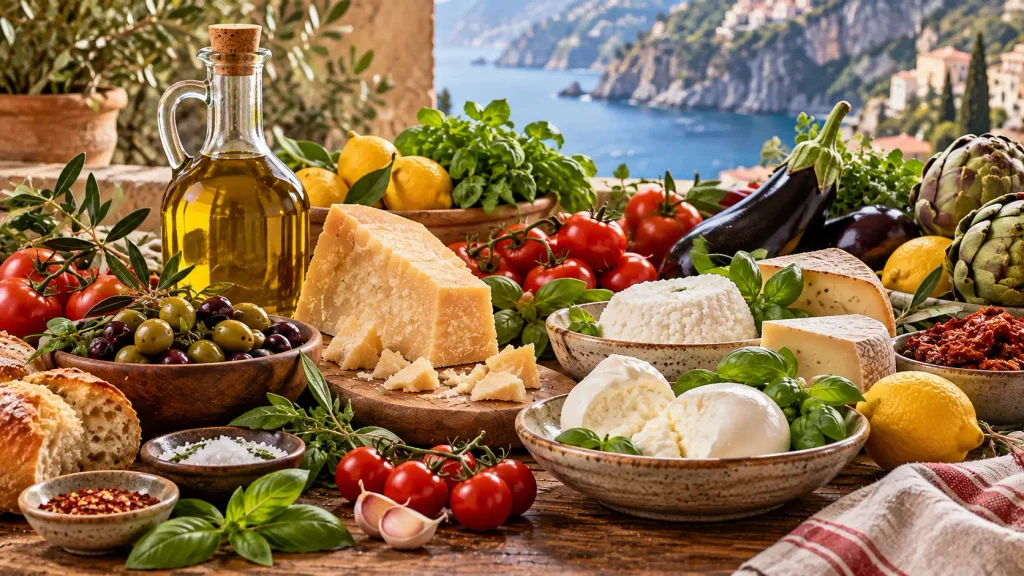
But Italian cuisine does not use one universal cooking fat. Butter has a stronger presence in many northern traditions, while rendered animal fats have historically played roles in specific local cuisines.
Italian food culture is also deeply connected with cheeses.
Parmigiano Reggiano, Pecorino Romano, mozzarella, ricotta, gorgonzola and many other cheeses belong to particular regions, production methods and culinary uses.
Fresh herbs, tomatoes, garlic, legumes, leafy vegetables, mushrooms, citrus and seasonal fruits contribute to the wide range of flavors found throughout the country.
A simple combination such as tomatoes, mozzarella and basil illustrates an important principle: when few ingredients are used, freshness and quality become especially noticeable.
Seasonality, Simplicity and the Value of Ingredients
Italian food is often described as simple, but simplicity should not be confused with lack of technique.
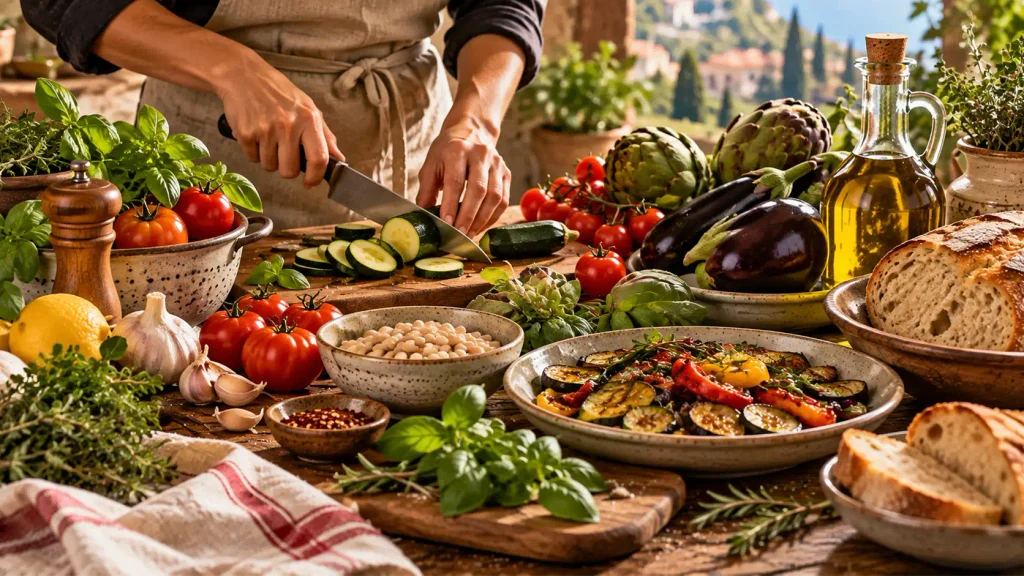
Many dishes depend on using a small number of ingredients carefully.
A sauce may need the correct texture rather than additional seasonings. Vegetables may be cooked according to season. Bread from a previous day may become part of another meal rather than being discarded.
This practical relationship with ingredients is one of the recurring themes in Italian culinary heritage.
UNESCO’s 2025 recognition of Italian cooking specifically highlights respect for ingredients, sustainability, anti-waste recipes and the transmission of culinary knowledge.
Seasonality is therefore not merely a modern restaurant trend. It connects deeply with agricultural traditions and the practical realities of cooking with what is available.
The Mediterranean diet, also recognized by UNESCO as intangible cultural heritage, similarly emphasizes agriculture, fishing, preservation, preparation and especially the social practice of eating together.
Family Meals, Sunday Lunch and Conviviality
Food in Italy is strongly connected with conviviality: the experience of eating together.

Not every Italian family eats the same way, and modern work schedules have changed daily routines, but shared meals continue to hold important social meaning.
Sunday lunch is one familiar example. For many families, it can become an occasion for relatives to gather around a longer meal, particularly for celebrations or family visits.
Recipes can also function as family memory.
A sauce, soup, cake or pasta preparation may be associated with a particular parent or grandparent. Quantities may originally have been learned through observation rather than written measurements.
This intergenerational transmission is one reason Italian cooking is difficult to reduce to a single “correct” recipe.
Two families from the same region can prepare the same dish differently while both maintaining meaningful connections to local tradition.
How Italian Meals Are Structured
Formal or celebratory Italian meals may follow several courses, although everyday meals are often much simpler.
Antipasto
The antipasto comes before the main courses and may include vegetables, cheeses, cured foods or other small preparations.
Primo
The first course often features pasta, risotto, soup or another grain-based dish.
Secondo
The second course usually focuses on protein such as meat, fish, eggs or another main preparation.
Contorno
Vegetables or salads may be served separately as a side dish rather than being placed automatically on the same plate as the secondo.
Dolce
Dessert may follow, particularly during special meals, restaurant dining or celebrations.
Fruit, coffee or a digestif may also appear after the meal depending on the occasion.
This course structure helps explain why some Italian dishes that international diners think of as complete entrées may traditionally represent only one part of a larger meal.
Breakfast and Everyday Eating
Italian breakfast is generally much lighter than the large savory breakfast common in some other countries.
Coffee often plays a central role, accompanied by bread, pastries, biscuits or another simple item.
At home, breakfast routines vary considerably by household and region.
Egg dishes such as frittata are versatile and may be eaten at different times of day. They are useful examples of practical Italian home cooking because vegetables, herbs and cheese can be incorporated according to what is available.
Lunch and dinner vary according to family routines, work schedules and region. Modern everyday meals are often far simpler than the full multi-course structure associated with celebrations.
Italian Coffee Culture
Coffee is another important part of everyday Italian food culture.
Espresso forms the foundation of many familiar drinks, while habits surrounding when and how coffee is consumed are also culturally significant.
A small coffee at a bar can be a quick everyday ritual rather than a long café session.
Cappuccino is strongly associated with breakfast and morning routines, while espresso may appear after meals or throughout the day.
Coffee also enters Italian desserts.
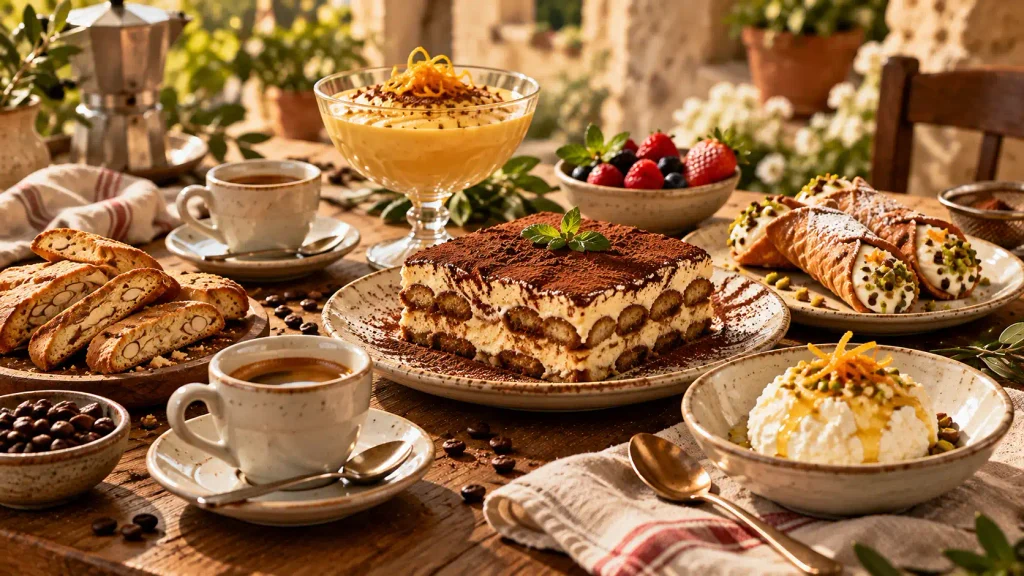
Tiramisu combines coffee with creamy mascarpone and cocoa, showing how a familiar everyday beverage can become part of dessert culture.
Italian Desserts: More Than Gelato
Italian dessert traditions are as regional as savory cooking.
Biscotti, panna cotta, cannoli, tiramisu, zabaglione, cakes, pastries, fruit desserts and regional festival sweets all represent different techniques and ingredients.
Some desserts are baked and designed for keeping. Others are creamy, chilled and meant to be eaten soon after preparation.
Explore at home: our Italian Almond Biscotti use the characteristic twice-baked method that creates their crisp texture.
For something softer and fresher, try our Italian-Inspired Ricotta and Honey Dessert Cups.
We also have an approachable Italian Cannoli-Inspired Dip, which is intentionally presented as an adaptation rather than a traditional cannolo.
For another creamy dessert, explore our Italian-Inspired Zabaglione.
Migration and Italian Food Around the World
Italian migration has had an enormous influence on global food culture.
As Italian families established communities abroad, food traditions traveled with them. Recipes were adapted according to available ingredients, local tastes, economic circumstances and new cultural environments.
This process helped create Italian-American and other diaspora cuisines that are related to Italian regional cooking but should not always be treated as identical to food eaten in Italy.
Some dishes became larger, richer or more heavily sauced abroad. Other preparations combined traditions from several Italian regions because migrants who would rarely have lived near one another in Italy became neighbors in new cities.
This distinction is useful because food can be both authentically meaningful to a diaspora community and different from contemporary regional cooking in Italy.
Italian Food Culture Today
Italian food culture continues to evolve.
Traditional home cooking exists alongside modern restaurants, global influences, convenience foods, contemporary culinary techniques and new interpretations of regional classics.
What remains especially important is the connection between cuisine and place.
Regional ingredients, local producers, agricultural traditions and family knowledge continue to give Italian food much of its identity.
The 2025 UNESCO recognition describes Italian cooking as a living practice rather than something frozen in the past. That idea is essential: traditions survive because people continue to cook them, discuss them, change them carefully and pass them forward.
Italian Recipes to Explore at Home
Family Flavor Atlas continues to build its collection of approachable Italian and Italian-inspired recipes for home cooks.
Golden Rosemary Focaccia
A soft, airy Italian-style bread with olive oil, rosemary and a deeply dimpled golden crust.
Italian Almond Biscotti
Crisp twice-baked almond cookies designed for serving with coffee, tea or milk.
View the Almond Biscotti Recipe →
Italian Cannoli-Inspired Dip
An approachable dessert inspired by cannoli flavors, with a creamy filling and crunchy dippers for family sharing.
Italian-Inspired Ricotta and Honey Dessert Cups
A quick no-bake dessert combining creamy ricotta, honey, citrus, berries and optional pistachios.
View the Ricotta and Honey Dessert →
Italian-Inspired Zabaglione
A simplified creamy dessert inspired by the character of classic Italian zabaglione.
Explore More Italian Recipes
Discover pasta, soups, breakfast dishes, salads and desserts in our growing Italian recipe collection.
Watch: Italy Through Food — More Than Pizza and Pasta
Our upcoming Family Flavor Atlas documentary, Italy Through Food: More Than Pizza and Pasta, will explore how geography, regional identity, agriculture, migration, family traditions and culinary craftsmanship have shaped the way Italy eats.
The documentary will move beyond internationally famous dishes to explore the differences between northern, central and southern cooking, the importance of seasonal ingredients, the family table and the cultural meaning behind everyday Italian food.
The full documentary will be added here when it is released.
Italian Food Culture: The Bigger Picture
Italian food culture is not one recipe book shared by an entire country.
It is a collection of regional traditions shaped by mountains, plains, islands, coastlines, farms, markets and generations of families.
It is risotto in the north, bread and legumes in central Italy, durum-wheat pasta in the south, seafood along the coasts and distinctive traditions on Sicily and Sardinia.
It is olive oil and butter used according to region. It is cheese connected to specific landscapes. It is bread transformed rather than wasted, seasonal vegetables cooked simply, and recipes passed between grandparents, parents and children.
It is also movement.
Italian migrants carried their food traditions around the world, where those traditions met new ingredients and communities and developed new identities of their own.
Most importantly, Italian cuisine shows that food culture is not defined only by famous dishes.
It lives in everyday choices: which ingredients are available, how a family prepares them, who sits at the table and which memories are carried forward through cooking.
Around the World, Around the Table.
Good Food Brings Us Closer.
Frequently Asked Questions About Italian Food Culture
What is Italian food culture?
Italian food culture includes the regional cuisines, ingredients, cooking techniques, eating habits, family traditions and social practices that shape how food is produced, prepared and shared across Italy.
Is Italian cuisine the same across the country?
No. Italian cuisine is highly regional. Ingredients, pasta shapes, cheeses, breads, sauces, cooking fats and traditional dishes vary considerably between northern, central and southern Italy and the islands.
Why is regional food so important in Italy?
Italy contains very different climates and landscapes, from Alpine mountains to Mediterranean islands. Local agriculture, history and cultural exchange helped individual regions develop distinctive culinary identities.
Is Italian food only pasta and pizza?
No. Italian cuisine also includes rice, polenta, breads, soups, legumes, vegetables, seafood, meat, cheeses, cured foods, eggs, fruit, pastries and a wide range of regional desserts.
What are common ingredients in Italian cooking?
Common ingredients vary by region but may include olive oil, grains, pasta, rice, tomatoes, vegetables, legumes, cheeses, herbs, seafood, meat, eggs, nuts, citrus and seasonal fruits.
What is a traditional Italian meal structure?
A formal Italian meal may include antipasto, primo, secondo, contorno and dolce, although everyday meals are usually much simpler and do not necessarily include every course.
Why is seasonality important in Italian food?
Italian cooking has deep connections with agriculture and local food production. Many traditional dishes developed around ingredients available in particular places and seasons.
What role does family play in Italian food culture?
Family is important to the transmission of recipes, techniques and food memories. UNESCO specifically recognizes the intergenerational sharing of culinary knowledge as part of Italian cooking’s cultural heritage.
What is the difference between Italian food and Italian-American food?
Italian-American cuisine developed through Italian migration and adaptation to new ingredients, communities and circumstances. It is connected to Italian traditions but has developed its own dishes, portions and culinary identity.
Was Italian cuisine recognized by UNESCO?
Yes. In 2025, UNESCO inscribed “Italian cooking, between sustainability and biocultural diversity” on the Representative List of the Intangible Cultural Heritage of Humanity.
Sources and Further Reading
UNESCO — Italian Cooking, Between Sustainability and Biocultural Diversity
UNESCO — Mediterranean Diet
Italia.it — Italian Cuisine and Regional Food Traditions
Italia.it — Food Culture in Italy
Italia.it — Italian Regions, Landscapes and Local Traditions
Family Flavor Atlas — Italian Recipes
Family Flavor Atlas — Explore Food Cultures Around the World
Family Flavor Atlas — International Recipes