Jamaican Food Culture: Traditions, Flavors, Everyday Meals and Iconic Dishes
Jamaican food culture is much more than jerk chicken. It is the result of an island landscape, Indigenous food traditions, African knowledge, colonial history, migration, agriculture, fishing, faith, family life, and generations of cooks adapting ingredients to the realities around them.
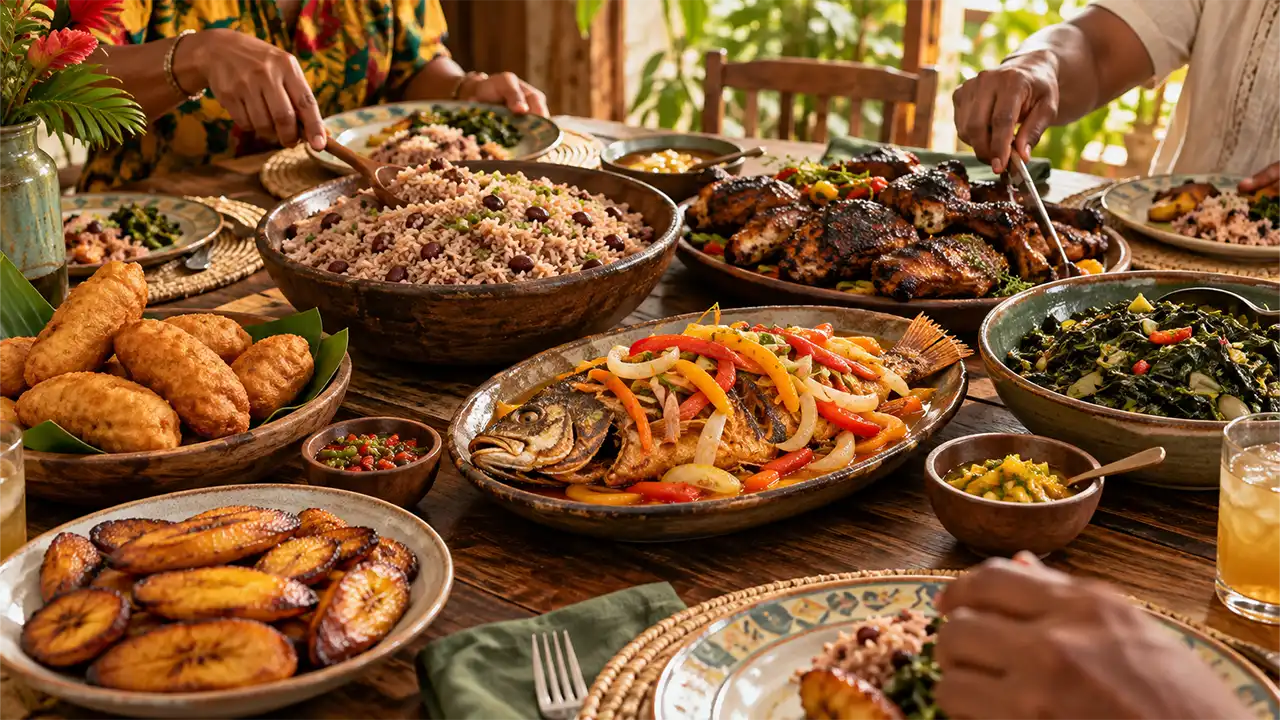
Across Jamaica, a meal might bring together rice and peas cooked with coconut milk, fried or steamed fish, callaloo, ground provisions, curry, peppery soups, plantains, dumplings, or a breakfast of ackee and saltfish. On another day, food might come from a roadside jerk stand, a bakery selling patties, a market stall, or a family kitchen.
The result is a cuisine built on contrast: smoky and bright, spicy and comforting, rich and acidic, deeply traditional yet constantly evolving.
Understanding Jamaican cuisine therefore means looking beyond individual dishes and asking how history, geography, migration, and community helped shape what Jamaicans cook and eat today.
What Is Jamaican Food Culture?
Jamaican food culture is the collection of ingredients, cooking methods, regional traditions, everyday meals, celebrations, historical influences, and social practices connected with food in Jamaica.
It reflects centuries of interaction among different peoples. The Jamaica Information Service describes Jamaican cuisine as a combination of local and imported ingredients, spices, flavors, and techniques influenced by Taíno, African, European, Chinese, and Indian traditions.
That does not mean Jamaican cuisine is simply a collection of foods borrowed from elsewhere. What makes it distinctly Jamaican is the way communities adapted ingredients, techniques, seasonings, and inherited knowledge to the island’s climate, agriculture, available foods, and historical circumstances.
Jamaican cooking is therefore a living cuisine. Recipes change from household to household, ingredients can vary by season or location, and dishes continue to evolve both on the island and within Jamaican communities around the world.
How Geography Shaped Jamaican Food
Jamaica is a mountainous Caribbean island surrounded by the sea, and both its interior and coastline have influenced the foods people eat.
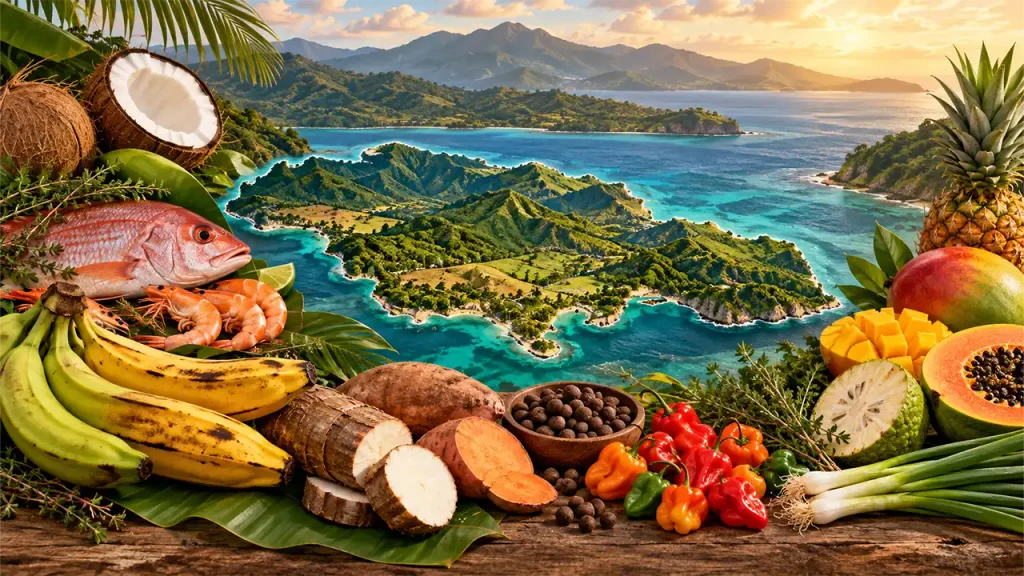
Fishing communities have long had access to snapper and other seafood, while fertile tropical areas support fruits, vegetables, herbs, root crops, coconuts, plantains, bananas, and spices.
The island’s mountainous regions have also played an important role in cultural history. The Blue and John Crow Mountains, now a UNESCO World Heritage site, provided refuge for Taíno communities and later for Maroons resisting the colonial system.
Food traditions developed within these environments through survival, cultivation, trade, preservation, and adaptation.
This relationship between place and food remains visible today. Seafood is strongly associated with coastal communities, jerk has an especially important connection with Portland, agricultural areas produce distinctive crops, and markets across the island reflect Jamaica’s tropical abundance.
A Cuisine Shaped by Many Histories
Jamaican food culture cannot be separated from the history of the people who lived on the island, arrived through migration, were brought through slavery or indenture, or settled there through trade and colonial expansion.
Taíno Food Traditions
Before European colonization, Taíno communities cultivated and ate foods including cassava, sweet potato, corn, peppers, pumpkin, fruits, fish, and shellfish.
The National Library of Jamaica documents Taíno use of the barbacoa, a wooden framework used over a slow fire for preparing fish and meat.
Cassava remains visible in Jamaican food through bammy, a cassava flatbread commonly paired with fish.
These Indigenous foundations are an important reminder that Jamaican culinary history did not begin with European arrival.
African Knowledge and Adaptation
The forced migration of Africans through slavery profoundly shaped Jamaican culture and food.
African cooking knowledge, ingredients, one-pot preparations, tools, and approaches to vegetables and ground provisions became intertwined with the foods available under plantation conditions.
The National Library of Jamaica identifies African influence in foods and cooking traditions that became deeply embedded in Jamaican cuisine, including preparations involving saltfish, ground provisions, and one-pot cooking.
Ackee, now Jamaica’s national fruit, also has West African origins. The Jamaica Information Service notes that ackee was brought to Jamaica from West Africa and later became inseparable from the island’s culinary identity.
European Colonial Influences
Spanish and later British colonial rule introduced additional ingredients, livestock, cooking traditions, and food customs.
Some foods were adapted so thoroughly that their foreign ancestry is no longer the most important part of their modern identity.
Escovitch fish, for example, is linked by Jamaican historical sources to Spanish culinary influence, yet its combination with Jamaican peppers, seasonings, fish, and local accompaniments turned it into a distinctly Jamaican preparation.
British influence can also be seen in baked goods, puddings, buns, pastries, and the historical ancestry of the Jamaican patty.
Indian and Chinese Influences
After emancipation, indentured laborers from India and China arrived in Jamaica during the 19th century.
The National Library of Jamaica documents the lasting contribution of these communities to Jamaican food culture.
Indian migration helped establish curry preparations as an enduring part of Jamaican cuisine. Chinese communities contributed ingredients, noodles, and cooking methods including stir-frying, steaming, and deep-frying.
These traditions did not remain unchanged. Jamaican cooks adapted them with local ingredients, Scotch bonnet peppers, thyme, allspice, coconut, and other island flavors.
Jerk: One of Jamaica’s Most Famous Food Traditions
Jerk is internationally associated with Jamaica, but its history is more complex than a single origin story.
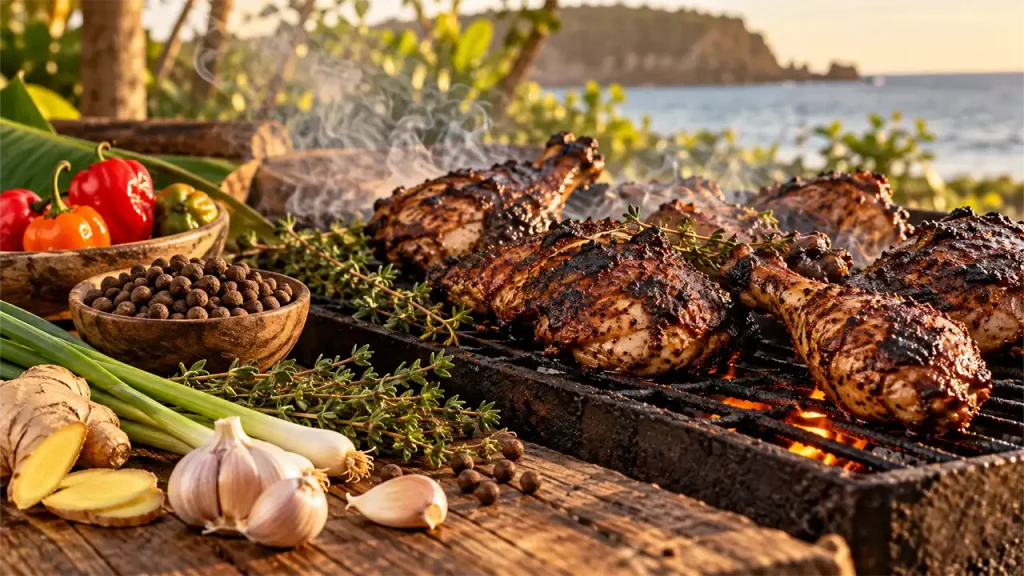
Official Jamaican historical sources point to several layers of influence: Taíno barbacoa cooking, African and Coromantee traditions, and the practices developed by Maroon communities living in Jamaica’s mountainous interior.
The Jamaica Information Service connects Maroon survival with methods of seasoning and cooking meat while limiting visible smoke, while the National Library of Jamaica also traces elements of jerk to African cooking traditions.
Rather than choosing one simple origin story, it is more accurate to understand jerk as a Jamaican tradition shaped over time by Indigenous knowledge, African techniques, Maroon history, local ingredients, and the environment of the island.
What Makes Jerk Taste Like Jerk?
Modern jerk seasoning commonly combines ingredients such as allspice, thyme, Scotch bonnet pepper, scallions, garlic, ginger, and other spices.
Traditional smoking over pimento wood adds another layer of aroma that cannot be reproduced exactly with seasoning alone.
Today jerk can be used with pork, chicken, fish, seafood, and even vegetables. It is found everywhere from roadside stands to restaurants and family cookouts.
One common accompaniment is festival, a lightly sweet cornmeal-and-flour dough that is traditionally fried.
The Flavors of Jamaican Cooking
Jamaican cuisine is often bold, but bold does not simply mean spicy.
Many dishes balance heat, acidity, herbs, sweetness, smoke, richness, and savory depth.
Allspice, or Pimento
Allspice is one of the ingredients most closely associated with Jamaican flavor. In Jamaica, it is commonly called pimento.
Its aroma can suggest several warm spices at once, which helps explain the English name “allspice.” It appears in jerk seasoning and many other preparations.
Scotch Bonnet Pepper
Scotch bonnet peppers bring intense heat but also a distinctive fruity aroma.
They can be used whole for gentler perfume or chopped for much stronger heat. Jamaican cooks use them in soups, stews, jerk marinades, sauces, seafood, and many other dishes.
Thyme, Scallions and Ginger
Fresh thyme and scallions form an aromatic foundation in many Jamaican savory dishes, while ginger appears across both savory foods and drinks.
The interaction among these ingredients is often more important than any one spice by itself.
Rice, Peas and Coconut
Rice and peas is one of Jamaica’s most recognizable side dishes.
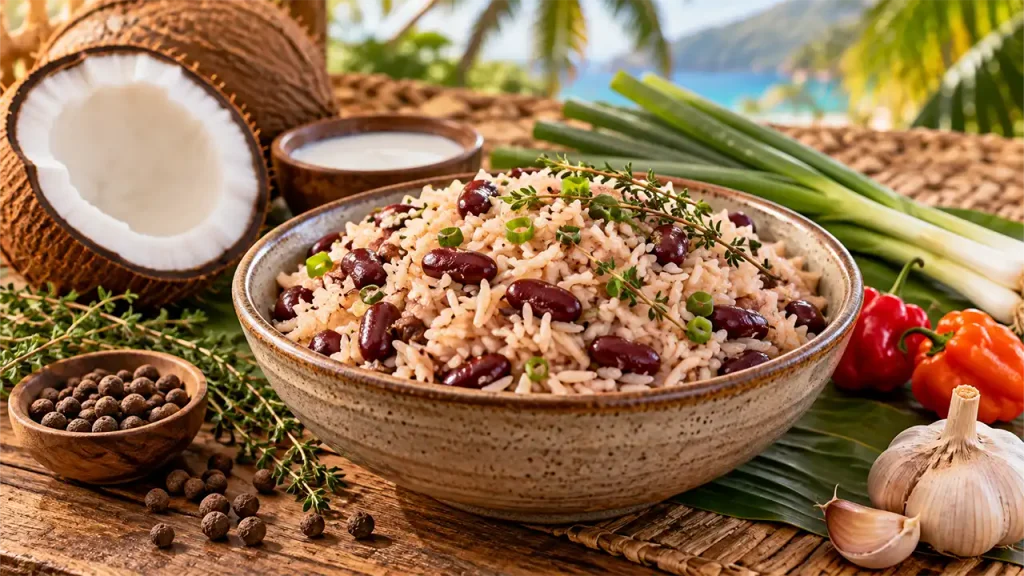
Despite the name, “peas” often refers to beans—commonly kidney beans or pigeon peas—cooked with rice, coconut milk, aromatics, herbs, and seasonings.
The dish is a strong example of how Jamaican meals are built around complementary components rather than one isolated main course.
Rice and peas can accompany jerk, stewed meats, fish, vegetables, or other dishes, absorbing sauces and balancing stronger seasonings.
Try it at home: our Jamaican Rice and Peas with Coconut Milk introduces this classic combination in a family-friendly format.
Ackee and Saltfish: Jamaica’s National Dish
Ackee and saltfish is widely recognized as Jamaica’s national dish.
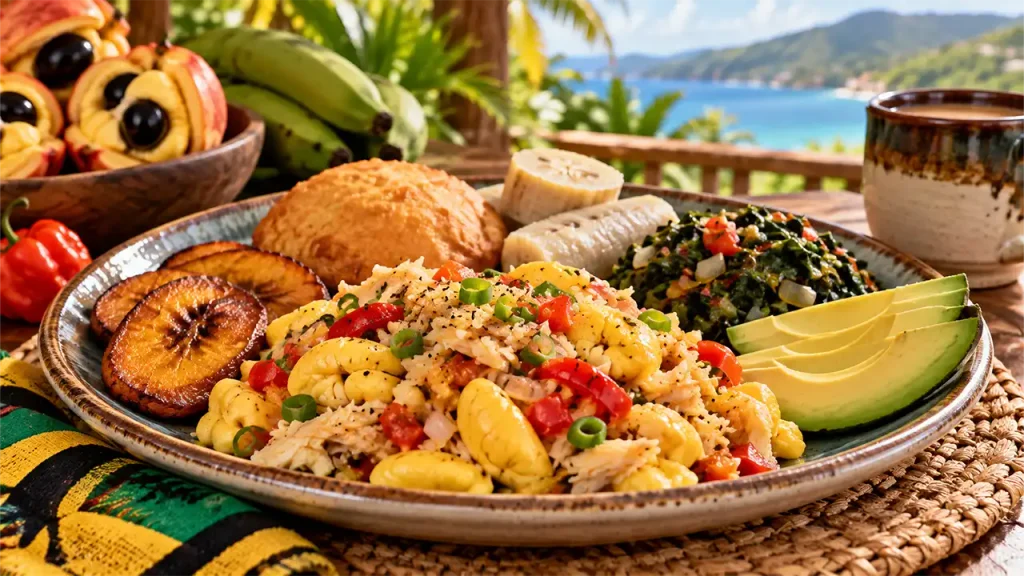
Ackee originated in West Africa but became deeply rooted in Jamaican agriculture and food culture. When properly harvested and prepared, its soft cooked arils pair with salted cod, onions, peppers, tomatoes, seasonings, and often Scotch bonnet.
The dish is especially associated with breakfast, although it can be eaten at other times of day.
The official tourism site Visit Jamaica highlights ackee and saltfish as a breakfast favorite commonly served with accompaniments such as callaloo, green banana, plantain, avocado, or dumplings.
Ackee also demonstrates something important about Jamaican food history: an ingredient can arrive through painful historical circumstances and still become part of a new cultural identity created by generations of people who made Jamaica their home.
Fish, Escovitch and Coastal Food
Surrounded by the Caribbean Sea, Jamaica has a strong seafood tradition.
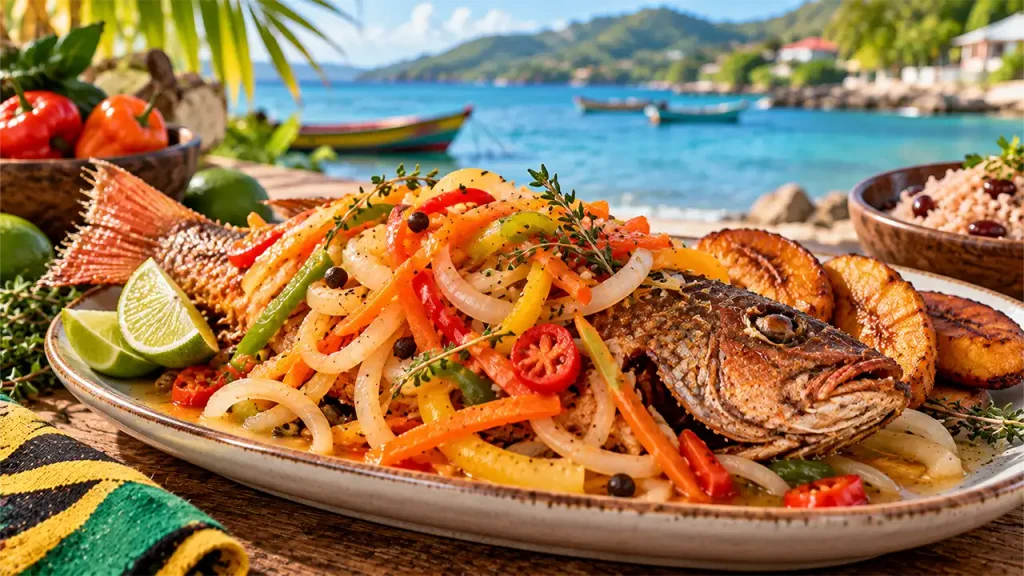
Fish can be fried, steamed, grilled, cooked in soups, prepared with sauces, or served with bammy, festival, rice, or ground provisions.
Escovitch fish is one of the island’s most recognizable preparations.
Fish is fried and finished with a sharp mixture of vinegar and vegetables such as onions, carrots, peppers, and hot chile.
The result is a striking contrast: rich fried fish against an acidic, lightly pickled topping.
Explore the recipe: our Jamaican Escovitch Fish uses boneless fish fillets for a more approachable family version while preserving the characteristic vinegar-forward topping.
Callaloo, Ground Provisions and Vegetables
Vegetables are an important part of Jamaican food culture, even though meat and jerk often receive more international attention.
Jamaican callaloo usually refers to amaranth greens. The leaves can be cooked with onions, scallions, thyme, tomato, garlic, and pepper and served at breakfast, lunch, or dinner.
Try a simple vegetable dish: our Jamaican Callaloo Stir Fry with Garlic provides an accessible way to explore these greens.
Callaloo can also be paired with saltfish, bringing together leafy vegetables and one of Jamaica’s long-standing preserved-food traditions.
Explore breakfast: Jamaican Callaloo and Saltfish.
What Are Ground Provisions?
The phrase ground provisions generally refers to starchy root crops and similar staples such as yam, cassava, sweet potato, coco, and dasheen.
These ingredients can be boiled, roasted, fried, added to soups, or served alongside savory dishes.
Their importance reflects both Jamaica’s agricultural environment and the historical need for filling foods that could sustain households through physically demanding work and difficult economic circumstances.
Jamaican Curry and Indian Influence
Curry is now a familiar part of Jamaican cooking, especially in preparations involving goat, chicken, seafood, or vegetables.
Its development is closely connected with Indian migration to Jamaica after emancipation.
Jamaican curry did not remain identical to curries from India. Over time, local spice blends, Scotch bonnet, thyme, allspice, potatoes, coconut, and other ingredients helped create distinctive Jamaican approaches.
This is an excellent example of how culinary migration works: a technique or flavor tradition travels, then changes as new communities cook it in a different landscape.
Family Flavor Atlas currently has a plant-based recipe inspired by this Jamaican curry tradition: Jamaican-Inspired Curry Chickpea Stew.
It is not presented as a historic national dish, but it uses familiar Jamaican-style curry flavors in an accessible family meal.
What Do People Eat in Everyday Jamaican Meals?
Everyday Jamaican eating is much broader than the dishes that appear most frequently on international restaurant menus.
Meals can include rice, beans, vegetables, fish, chicken, pork, curry, soups, porridges, ground provisions, breads, dumplings, patties, fruit, and many other foods.
Breakfast
Breakfast can be savory and substantial.
Ackee and saltfish is one famous example, but callaloo, saltfish, fried dumplings, boiled green bananas, plantains, breadfruit, eggs, and porridges can also appear.
Porridge is an especially comforting part of Jamaican breakfast culture. Different versions may use cornmeal, oats, plantain, peanuts, hominy, or root vegetables.
Our Jamaican-Inspired Sweet Potato Porridge explores this tradition through sweet potato, coconut milk, warm spices, and vanilla.
Lunch and Food on the Go
The Jamaican patty is one of the island’s most recognizable portable foods.
The golden pastry can hold beef, chicken, vegetables, seafood, cheese, or other fillings and is sold widely in bakeries and patty shops.
Visit Jamaica describes patties as a staple food commonly eaten for lunch or at other times of day, often paired with cocoa bread.
Dinner and Comfort Food
Home dinners may center on stews, curry, fish, chicken, rice and peas, vegetables, soups, or combinations of several dishes.
Soup can itself be a substantial meal, particularly when filled with vegetables, dumplings, beans, or ground provisions.
Explore a soup: our Jamaican Pepperpot Soup offers a vegetable-forward interpretation for an approachable family dinner.
Rastafari and Ital Food
Rastafari has also contributed a distinctive food philosophy to Jamaican culture.
Ital food emphasizes natural, minimally processed ingredients and a close relationship with the earth.
Practices vary among individuals and communities, but Ital cooking is strongly associated with plant-based foods, vegetables, fruits, legumes, coconut, herbs, and spices.
The official Jamaica tourism site describes Ital cuisine as a Rastafarian approach centered on natural foods and fresh fruits and vegetables.
Ital reminds us that Jamaican food culture cannot be reduced to meat, spice, or jerk. The island also has strong traditions of vegetable cookery, beans, greens, fruit, roots, and plant-based meals.
Food, Family and Community in Jamaica
Jamaican food exists in many settings: home kitchens, markets, roadside stands, bakeries, restaurants, celebrations, community gatherings, and informal cookouts.
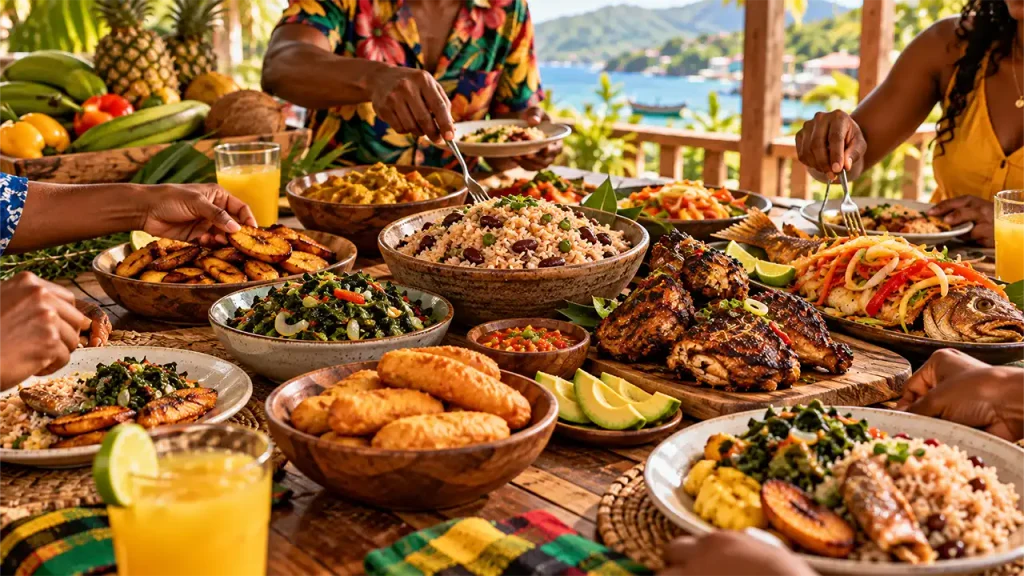
Some foods are especially well suited to sharing.
A large pot of rice and peas can feed a family. Soup can stretch across several portions. Festival can be passed around beside fish or jerk. Patties make practical portable lunches, while larger stews and curries fit naturally onto communal tables.
Food traditions also travel through generations. A family recipe may not follow an exact written formula. Measurements, seasoning levels, cooking time, and ingredients can be learned by watching parents, grandparents, relatives, and community cooks.
This is one reason there can be many valid versions of a Jamaican dish.
Differences do not necessarily mean one household is “wrong.” They often reveal geography, migration, access to ingredients, family preference, and memory.
Festival, Bammy and the Foods Beside the Main Dish
Some of Jamaica’s most memorable foods are accompaniments rather than center-of-the-plate dishes.
Bammy is made from cassava and carries a direct connection to Jamaica’s Indigenous food heritage.
Festival is a lightly sweet flour-and-cornmeal dough traditionally fried until golden. It is frequently served with jerk or fish.
Try the fried version: Jamaican Festival Fried Dough.
FFA also has a Baked Festival-Inspired Treat. This is intentionally presented as a modern family adaptation rather than the traditional preparation, since classic festival is fried.
Jamaican Sweets, Tropical Fruit and Drinks
Jamaica’s tropical climate supports a wide variety of fruits including mango, pineapple, papaya, guava, soursop, coconut, bananas, and citrus.
Sweet foods include puddings, cakes, coconut sweets, buns, pastries, fruit desserts, and treats made with root vegetables.
Sweet potato pudding is a particularly familiar Jamaican dessert, traditionally associated with slow baking and warm spices.
Drinks are another important part of the food landscape.
Ginger beer brings the unmistakable heat of fresh ginger, while sorrel—a hibiscus-based drink—is especially associated with the Christmas season.
Jamaica is also internationally known for coffee grown in the Blue Mountains.
Jamaican Food Culture Today
Jamaican cuisine continues to evolve both on the island and across a large global diaspora.
Jerk restaurants, Jamaican bakeries, patties, curry, rice and peas, and other foods can now be found in cities across North America, the United Kingdom, and elsewhere.
The National Library of Jamaica notes that jerk has become especially visible in countries where Jamaican communities migrated.
Migration also creates new versions of familiar foods. Cooks substitute ingredients that are easier to find locally, adjust spice levels for family members, or combine Jamaican techniques with foods from their new surroundings.
At the same time, cooks, historians, cultural institutions, farmers, and families continue preserving older food traditions on the island.
Modern Jamaican food culture therefore contains both continuity and change.
Jamaican Recipes to Explore at Home
Family Flavor Atlas currently has nine Jamaican or Jamaican-inspired recipes that connect directly with the food traditions discussed throughout this guide.
Jamaican Rice and Peas with Coconut Milk
Rice, beans, coconut milk, thyme, and aromatic seasonings create one of Jamaica’s best-known accompaniments.
View the Jamaican Rice and Peas Recipe →
Jamaican Escovitch Fish
Golden fish meets a bright vinegar-based topping of onions, carrots, peppers, and chile.
View the Escovitch Fish Recipe →
Jamaican Callaloo and Saltfish
Leafy callaloo and salted fish come together in a savory dish connected with Jamaican breakfast traditions.
View the Callaloo and Saltfish Recipe →
Jamaican Callaloo Stir Fry with Garlic
A quick vegetable preparation with callaloo, garlic, scallions, tomato, thyme, and optional Scotch bonnet.
Jamaican-Inspired Sweet Potato Porridge
A warm breakfast bowl made with sweet potato, coconut milk, cinnamon, nutmeg, and vanilla.
View the Sweet Potato Porridge Recipe →
Jamaican-Inspired Curry Chickpea Stew
A plant-based family meal inspired by Jamaican curry flavors, with chickpeas, potatoes, coconut milk, thyme, and warm spices.
View the Curry Chickpea Stew Recipe →
Jamaican Pepperpot Soup
A comforting vegetable-forward soup inspired by Jamaica’s tradition of hearty soup meals.
View the Pepperpot Soup Recipe →
Jamaican Festival Fried Dough
A lightly sweet cornmeal-and-flour dough fried until golden and served as a snack or accompaniment to savory food.
View the Festival Fried Dough Recipe →
Baked Jamaican Festival-Inspired Treats
A modern oven-baked Family Flavor Atlas adaptation inspired by festival flavors for families who prefer not to deep-fry.
View the Baked Festival-Inspired Recipe →
Watch: Jamaica Through Food — More Than Jerk Chicken
Our upcoming Family Flavor Atlas documentary, Jamaica Through Food: More Than Jerk Chicken, will explore how Indigenous traditions, African heritage, Maroon history, migration, tropical agriculture, seafood, curry, Rastafari, family life, and cultural exchange helped shape Jamaican food.
The full documentary will be added here when it is released, allowing you to continue exploring Jamaica through stories, landscapes, ingredients, people, and the food traditions discussed throughout this guide.
Jamaican Food Culture: The Bigger Picture
Jamaican food culture cannot be explained by jerk chicken alone.
It is cassava connecting modern bammy with Indigenous foodways. It is African knowledge surviving and adapting under brutal historical conditions. It is ackee crossing the Atlantic and becoming one of Jamaica’s most recognizable foods. It is Maroon communities developing ways to live, cook, and resist in the mountains. It is Indian curry changing in a Caribbean kitchen. It is Chinese techniques becoming part of everyday island food.
It is rice and peas beside Sunday food, callaloo on a breakfast plate, vinegar cutting through fried fish, a pot of porridge warming the morning, Scotch bonnet perfuming a stew, festival beside jerk, and a patty eaten on the go.
Most importantly, it is a living culture rather than a fixed collection of recipes.
Jamaican cooks continue to adapt food to new generations, new countries, new ingredients, and changing family routines while preserving flavors and traditions that carry history with them.
Exploring Jamaica through food therefore means asking a larger question: what can the way people grow, season, preserve, cook, share, and adapt food tell us about the history and communities of an island?
That question is at the heart of Family Flavor Atlas.
Good Food Brings Us Closer.
Frequently Asked Questions About Jamaican Food Culture
What is Jamaican food culture?
Jamaican food culture includes the ingredients, cooking techniques, everyday meals, regional traditions, historical influences, celebrations, and social practices connected with food in Jamaica. It reflects Taíno, African, European, Indian, Chinese, Rastafarian, and other influences that developed into distinctly Jamaican food traditions.
What are the main flavors in Jamaican cuisine?
Common Jamaican flavor elements include allspice, Scotch bonnet pepper, thyme, scallions, garlic, ginger, coconut, vinegar, citrus, and warm spices. Different dishes emphasize different combinations of heat, acidity, sweetness, smoke, and savory flavor.
Is jerk originally Jamaican?
Jerk is a Jamaican culinary tradition, but its historical development is layered. Jamaican sources connect elements of jerk with Taíno barbacoa cooking, African and Coromantee traditions, and Maroon survival and cooking practices in Jamaica.
What is Jamaica’s national dish?
Ackee and saltfish is widely recognized as Jamaica’s national dish. Ackee originated in West Africa but became deeply established in Jamaican agriculture and cuisine, where it is commonly cooked with salted cod and seasonings.
What is rice and peas?
Jamaican rice and peas usually combines rice with beans or pigeon peas, coconut milk, herbs, and seasonings. It is commonly served alongside meat, fish, curry, vegetables, or other savory dishes.
What is Jamaican callaloo?
Jamaican callaloo usually refers to amaranth greens. The leaves are commonly cooked with aromatics such as onion, scallion, thyme, tomato, garlic, and pepper and may be served alone or with saltfish.
Why is curry common in Jamaica?
Curry became an important part of Jamaican cuisine partly through Indian migration during the period of indentured labor after emancipation. Jamaican cooks adapted curry traditions using local ingredients, seasonings, peppers, and cooking styles.
What is Ital food?
Ital is a food philosophy associated with Rastafari that emphasizes natural, minimally processed ingredients and a strong connection with plant foods. Practices vary, but many Ital meals are vegetarian or vegan and rely on vegetables, fruits, legumes, herbs, spices, and coconut.
What is festival in Jamaican food?
Festival is a lightly sweet Jamaican dough traditionally made with flour and cornmeal and fried until golden. It is often served with jerk, fish, or other savory foods.
Is Jamaican food always very spicy?
No. Scotch bonnet peppers are important in many dishes, but Jamaican cuisine includes plenty of mild foods as well. Heat levels can vary greatly by dish, household, and cook.
Sources and Further Reading
Jamaica Information Service — Jamaican Food and Culinary Traditions
Jamaica Information Service — Traditional Food Preparation in Jamaica
National Library of Jamaica — Traditional Foods and Jamaica’s Cultural History
Jamaica Information Service — Jamaica’s National Fruit: Ackee
UNESCO World Heritage Centre — Blue and John Crow Mountains