
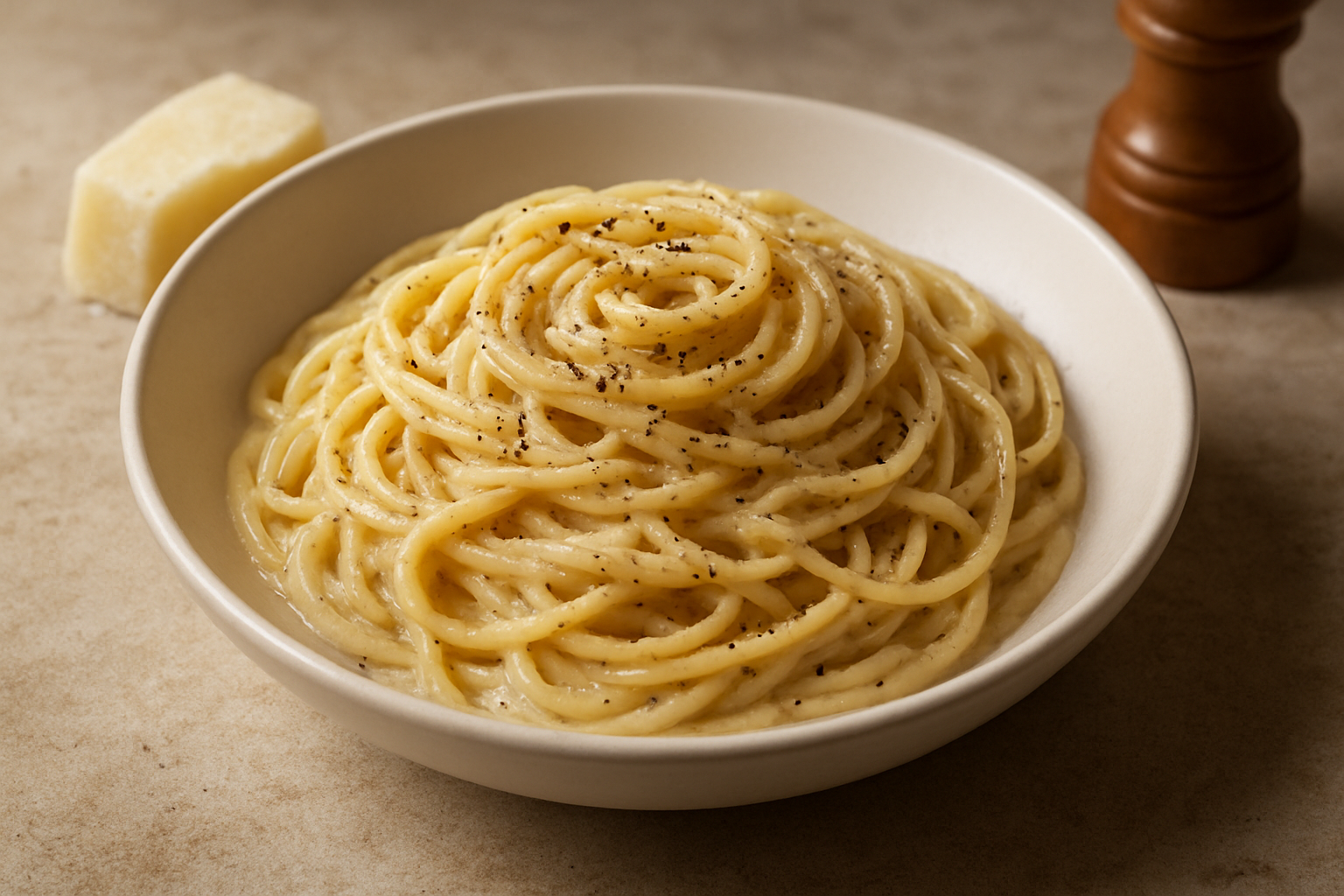
easy italian cacio e pepe recipe: Simple Pasta with Cheese and Black Pepper for Dinner
easy italian cacio e pepe recipe: Simple Pasta with Cheese and Black Pepper for Dinner
Ingredients
- 12 ounces dried spaghetti 340 g
- 4 quarts water 3.8 L
- 1 tablespoon kosher salt 15 mL; about 15 g, plus more only if needed
- 1 1/2 teaspoons freshly ground black pepper 3 g, plus more for serving
- 2 ounces Pecorino Romano cheese very finely grated (57 g; about 1 1/2 cups loosely packed)
- 1 1/2 cups reserved hot pasta water 360 mL, divided
Instructions
- Bring the water to a boil in a large pot. Add the kosher salt, then add the spaghetti. Cook, stirring occasionally, until the pasta is just shy of al dente, following the package timing as a guide.
- Before draining, scoop out 1 1/2 cups (360 mL) of the starchy pasta water. Drain the spaghetti; do not rinse it.
- While the pasta cooks, warm a large skillet over medium heat. Add the black pepper and toast for 30 to 60 seconds, stirring, just until fragrant. Add 1/2 cup (120 mL) of the reserved pasta water and let it gently simmer for about 30 seconds. Turn off the heat.
- In a medium bowl, whisk the finely grated Pecorino Romano with 1/3 cup (80 mL) warm reserved pasta water until it becomes a thick, smooth paste. Do not use actively boiling water, which can make the cheese seize.
- Add the drained spaghetti to the skillet with the pepper water. Toss well for 30 seconds so the pasta absorbs some liquid.
- With the skillet off the heat, add the cheese mixture and toss continuously with tongs. Add the remaining reserved pasta water a splash at a time, tossing after each addition, until the sauce is glossy, creamy, and coats the spaghetti. If the skillet becomes too hot, wait 1 minute before adding more cheese sauce.
- Taste and add a little more black pepper if desired. Serve immediately, topped with extra finely grated Pecorino Romano and black pepper.
This easy italian cacio e pepe recipe turns a few humble pantry staples into a cozy, restaurant-style pasta dinner. Cacio e pepe means “cheese and pepper” in Italian, and the classic Roman dish proves that a satisfying meal does not need a long ingredient list. The magic comes from starchy pasta water, finely grated Pecorino Romano, and plenty of fragrant black pepper, all tossed until they create a silky coating for the noodles.
Why this simple Italian pasta belongs in your dinner rotation
For busy evenings, this is the kind of simple italian pasta dinner that feels special without requiring a complicated sauce. The active work is minimal, and the ingredients are easy to find in most U.S. grocery stores. It is also a helpful recipe for learning a valuable pasta technique: using reserved cooking water to bring cheese and pasta together into a glossy sauce.
The flavor is bold but family-friendly when you adjust the pepper to taste. Pecorino Romano has a savory, salty tang, while freshly ground black pepper adds warmth rather than chile-like heat. The result is a comforting cheese pepper pasta with a clean, focused flavor. Serve it as a meatless main dish, or pair it with a simple green salad and warm bread for a fuller meal.
Because the dish is so streamlined, ingredient quality matters. Choose a wedge of Pecorino Romano and grate it as finely as possible, ideally with the small holes of a box grater or a Microplane. Pre-shredded cheese often contains anti-caking ingredients and does not melt as smoothly. Freshly ground black pepper is equally worthwhile; its aroma is much brighter than pepper that has been ground long in advance.
Tips for a smooth easy italian cacio e pepe recipe
The most important tip is to save the pasta water before draining. As pasta cooks, it releases starch into the water. That starch helps the cheese and water form a sauce that clings to the spaghetti instead of pooling at the bottom of the bowl. Keep more pasta water than you think you will need, then add it gradually while tossing. A little extra splash can turn a tight, sticky sauce into a creamy one.
Temperature also matters. Toasting the pepper briefly in the skillet wakes up its flavor, but the pan should not be piping hot when the cheese goes in. High heat can cause Pecorino to seize into little clumps. For the smoothest results, make the cheese-and-water mixture separately, turn off the burner, and toss the pasta energetically. If the pan feels very hot, give it a minute to cool before adding the cheese mixture.
Use tongs to lift and toss the noodles rather than simply stirring them. This motion distributes the sauce and encourages it to emulsify. If the sauce seems too thin at first, keep tossing for a few seconds; it will tighten as it coats the pasta. If it looks dry, add another small splash of reserved water. This flexible technique is what makes an easy italian cacio e pepe recipe approachable even for new cooks.
Easy variations and serving ideas
Classic cacio e pepe is intentionally simple, so consider additions optional rather than required. A small amount of finely grated Parmesan can soften Pecorino’s sharper flavor, although it is less traditional. Bucatini, linguine, or tonnarelli are good noodle choices when spaghetti is not on hand. For a fresh contrast, serve the pasta with this simple Italian Caprese salad with balsamic glaze. The tomatoes and basil brighten the rich, peppery pasta nicely.
If you need a heartier quick italian dinner, add a side of roasted broccoli, sautéed mushrooms, or cooked chicken separately rather than stirring many ingredients into the pasta. Keeping the noodles mostly unadorned lets the cheese-and-pepper sauce stay smooth. For another comforting Italian-style weeknight option, try this easy Italian minestrone soup on a different evening.
Storage and gentle reheating
Cacio e pepe is best served right after it is tossed, when the sauce is glossy and fluid. Leftovers are still useful, but the cheese sauce naturally firms as it cools. Transfer any extra pasta to a shallow covered container and refrigerate it promptly. It is best enjoyed within three to four days.
To reheat, place the pasta in a skillet over low heat with a splash of water. Toss gently and often until the noodles are hot and loosened. Add water a little at a time instead of turning up the heat. A microwave can work in short bursts with a splash of water and a loose cover, but skillet reheating gives you more control. Avoid reheating repeatedly, since the sauce can become oily or grainy.
Food safety notes
Cooked pasta should not sit at room temperature for more than two hours. Refrigerate leftovers promptly in a clean, covered container. When reheating, warm the pasta until it is steaming hot throughout. If leftovers have been left out too long or smell unusual, discard them rather than trying to reheat them.
Frequently asked questions
Is cacio e pepe supposed to contain cream or butter?
No. Traditional cacio e pepe gets its creamy texture from Pecorino Romano, starchy pasta water, and vigorous tossing. Cream and butter are not needed for this easy italian cacio e pepe recipe.
Why is my sauce grainy?
Graininess usually means the cheese was heated too aggressively or was grated too coarsely. Use very finely grated cheese, mix it with warm rather than boiling pasta water, and add it after turning off the skillet heat.
Can I make it less peppery for children?
Yes. Start with less black pepper, then offer extra at the table for adults. The dish will still be savory and creamy, though pepper is one of its signature flavors.
What can I serve with this pasta?
A crisp salad, roasted vegetables, or the fresh Caprese salad suggested above are excellent partners. Choose a light side so the simple cheese sauce remains the star of dinner.


One Comment