Easy Indonesian Sambal Oelek Recipe
easy indonesian sambal oelek recipe: Quick Chili Sauce for Family Meals
Ingredients
- 8 ounces fresh red Fresno chiles or red jalapeños stems removed (225 g)
- 2 tablespoons unseasoned rice vinegar or distilled white vinegar 30 ml
- 1 teaspoon kosher salt 3 g
- 1 teaspoon granulated sugar optional (4 g)
- 1 to 2 tablespoons water only as needed to help blend (15 to 30 ml)
Instructions
- Wash the chiles well and dry them thoroughly. Wear disposable gloves if desired, then remove the stems. For a milder sauce, split the chiles lengthwise and scrape out some or all of the seeds and white membranes.
- Coarsely chop the chiles and add them to a food processor or blender with the vinegar, salt, and optional sugar.
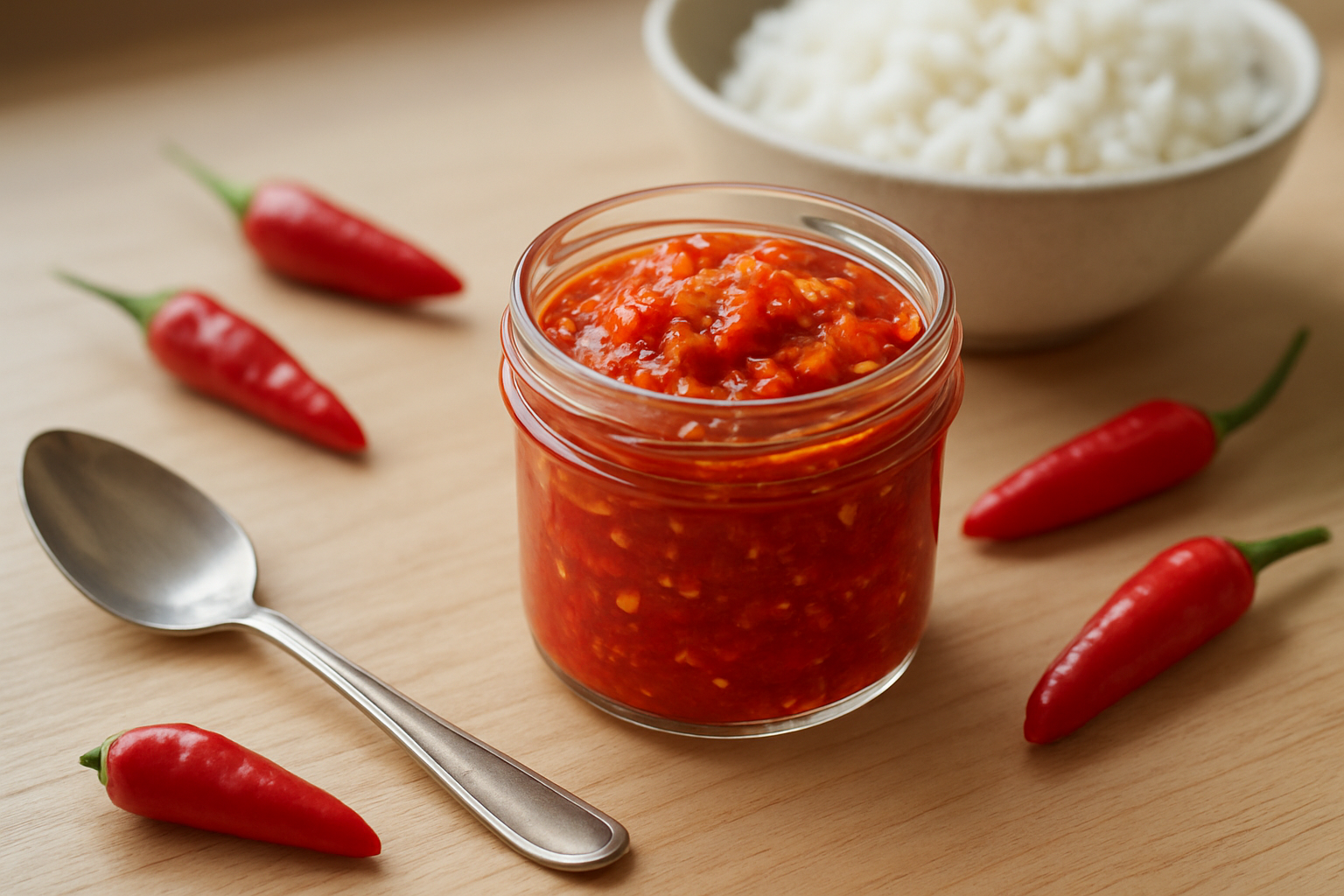
- Pulse, stopping to scrape down the sides as needed, until the chiles form a coarse, spoonable paste. Add water 1 teaspoon at a time only if the mixture will not blend. Sambal oelek should be textured rather than completely smooth.
- Taste carefully with a clean spoon. Add a small pinch more salt if needed. Transfer the sambal to a clean jar with a tight-fitting lid.
- Refrigerate for at least 30 minutes before serving if time allows. The flavor will settle and the chile pieces will soften slightly.
 Sale!
The Lunch Atlas – Collection I: 22 International Lunch Recipes
Explore lunchtime around the world with 22 approachable international recipes from 15 countries. The Lunch Atlas – Collection I brings together soups, wraps, salads, breads, rice…
View ProductIf your table needs a quick hit of heat, this easy indonesian sambal oelek recipe brings bright red-chile flavor to everyday family meals without a long ingredient list or complicated cooking. Sambal oelek is an Indonesian-style chile condiment with a pleasantly coarse texture: more like a fresh chile paste than a smooth bottled hot sauce. A small spoonful can wake up plain rice, scrambled eggs, roasted vegetables, noodles, sandwiches, and grilled chicken.
The beauty of this simple condiment is its direct flavor. Fresh red chiles, salt, and a little vinegar create heat with tang and a clean finish. This version uses red Fresno chiles or red jalapeños, which are widely available in many U.S. grocery stores and make the sauce easier to adjust for a family table. Keep the seeds for more fire, or remove some for a gentler batch.
Why You’ll Love This Easy Indonesian Sambal Oelek Recipe
This is an excellent first homemade indonesian spicy sauce because there is no frying, simmering, or special equipment beyond a small food processor, blender, or mortar and pestle. The active work is brief, and the result keeps in the refrigerator so lunch can come together faster later in the week.
It is also flexible at serving time. Put the jar on the table and let adults and heat-loving family members add their own spoonfuls, while keeping mild portions of the meal separate. That approach is especially useful with rice bowls, simple proteins, and vegetables. Try a little with quick Indonesian nasi goreng fried rice, where the fresh chile tang balances savory rice beautifully. It is also a lively finishing condiment for eggs, tofu, burgers, and leftover rotisserie chicken.
Unlike sweeter chili sauces, sambal oelek keeps the chile front and center. The texture should remain slightly rough, with tiny pieces of pepper visible. That rustic consistency helps the sauce cling to food and makes it easy to stir into a bowl without disappearing into the dish.
Helpful Tips for a Bright, Balanced Chili Sauce Recipe
Choose firm, glossy red chiles without soft spots. Fresno chiles offer a vivid color and moderate-to-hot heat, while red jalapeños are often easier to find and can be somewhat milder. Chile heat naturally varies, even within the same type, so taste cautiously after blending rather than assuming the finished sauce will be mild.
For the best texture, pulse instead of running the machine continuously. A few short pulses make a coarse paste; overblending can turn the mixture watery and smooth. If the blades struggle, add only a little water at a time. The vinegar should provide enough moisture in most food processors. A mortar and pestle is another great option when you want an even more traditional, hand-pounded texture.
Wear gloves if you have sensitive skin, especially when cutting several chiles. Avoid touching your face or eyes, and wash your hands thoroughly with soap afterward. If young children are eating the meal, serve the sambal separately and start adults with just a small amount. It is easier to add extra heat than to take it away.
A traditional-style easy sambal recipe does not need garlic, tomato, or a heavy dose of sugar. The optional small amount of sugar in this version simply rounds out sharp vinegar or particularly assertive chiles. Leave it out for a more direct, savory chile flavor. For a hotter batch, replace a few Fresno chiles with Thai bird’s eye chiles; for a more mild batch, remove the seeds and white membranes from red jalapeños.
Ways to Serve It for Lunch and Dinner
This versatile condiment is ideal when a meal needs a final punch rather than another full sauce. Spoon it beside grilled meat, fried eggs, steamed rice, or roasted sweet potatoes. Add a little to mayonnaise for a quick sandwich spread, or stir a small amount into soup just before serving. It is particularly good alongside Indonesian chicken satay with peanut sauce, since the sharp chile cuts through the richness of the peanut sauce.
For a vegetable-focused lunch, offer sambal next to Indonesian gado gado salad with peanut sauce. Use it as a customizable table condiment instead of mixing it into the whole dish, so everyone can choose their own heat level. A small spoonful also works well in a quick noodle bowl or as a dipping sauce for crisp vegetables.
Storage, Food Safety, and Make-Ahead Advice
Transfer the finished sambal to a clean jar with a tight lid and refrigerate it promptly. It is best used within two weeks. The flavor may mellow slightly after a day in the refrigerator, and a little liquid separation is normal; simply stir it with a clean spoon before serving. This fresh sauce does not require reheating.
Because it contains fresh produce, this easy indonesian sambal oelek recipe is not a shelf-stable canning recipe. Keep it refrigerated, do not leave it out for extended periods, and always use a clean utensil rather than dipping food directly into the jar. Discard it if you notice mold, an off smell, bubbling, or a change that seems unusual.
Frequently Asked Questions
Is sambal oelek the same as hot sauce?
They are both spicy condiments, but sambal oelek is usually thicker and coarser than pourable hot sauce. Its simple chile flavor makes it useful as a topping, mix-in, or dipping condiment.
Can I make this sauce without a food processor?
Yes. A mortar and pestle produces an excellent textured paste. You can also mince the chiles very finely with a knife, then mash them with the salt and vinegar until they become saucy.
How can I make the sauce less spicy?
Use red jalapeños, remove the seeds and membranes, and avoid adding hotter chiles. Serving the sambal on the side is the easiest family-friendly way to control spice.
Can I freeze extra sambal?
Yes. Freeze it in small portions, such as an ice cube tray, then store the frozen portions in a freezer-safe container. Thaw only what you plan to use in the refrigerator.