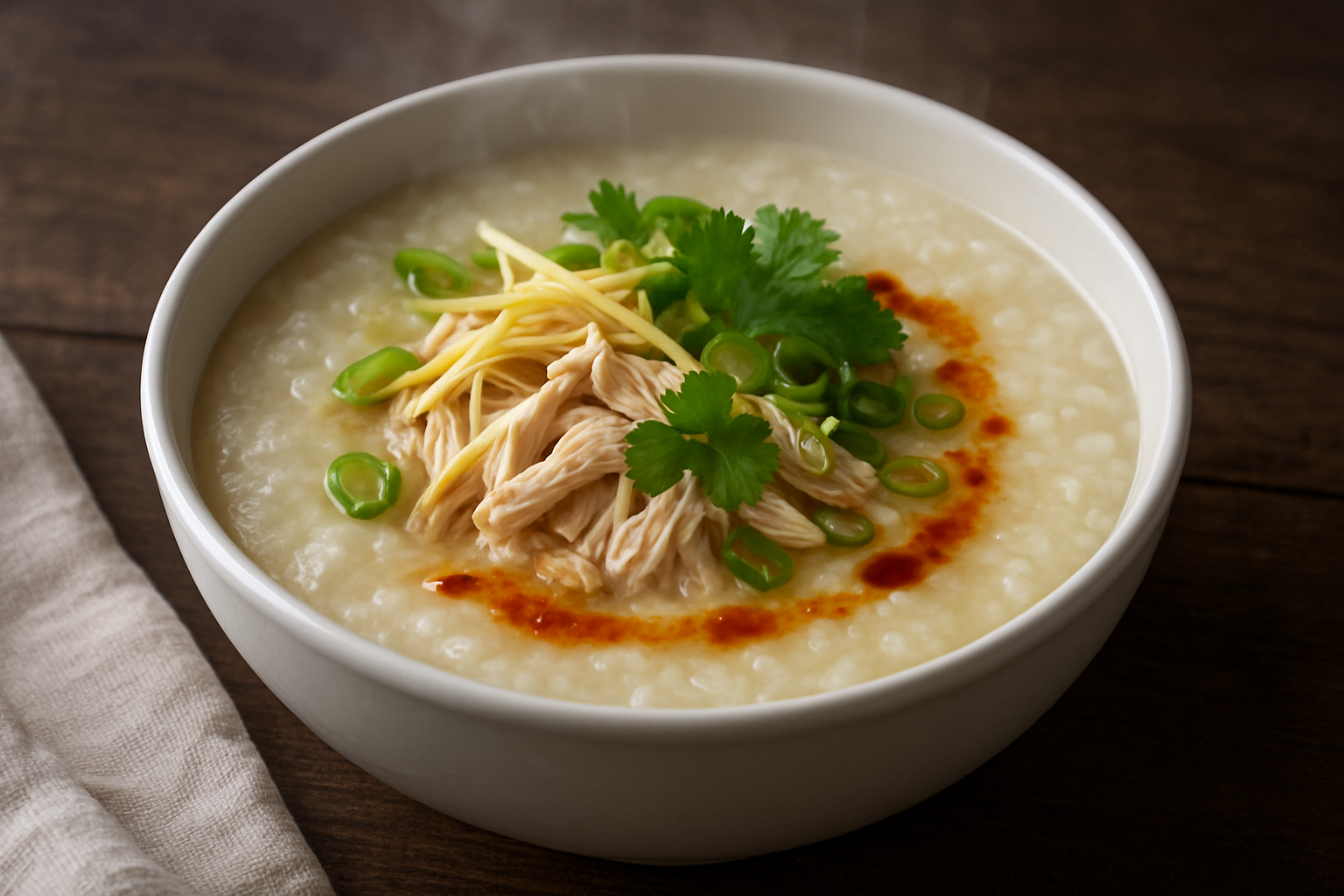
Chicken and Ginger Congee: A Cozy Chinese Breakfast Bowl
Chicken and Ginger Congee: A Cozy Chinese Breakfast Bowl
Ingredients
- 5 cups low-sodium chicken broth 1.2 L
- 1 cup water 240 ml
- 1 pound boneless skinless chicken thighs (454 g)
- 2 tablespoons thinly sliced fresh ginger 30 g, plus a little extra finely julienned ginger for serving if desired
- 3 cups cooked long-grain white rice preferably chilled or day-old (465 g)
- 1 tablespoon light soy sauce 15 ml
- 1/2 teaspoon kosher salt 3 g, plus more to taste if needed
- 1/4 teaspoon ground white pepper 0.5 g
- 2 scallions thinly sliced (about 1/3 cup / 30 g), divided
- 1 teaspoon toasted sesame oil 5 ml
- 1/4 cup cilantro leaves 4 g, optional, for serving
- Chili oil or chili crisp optional, for serving
Instructions
- Place the chicken broth, water, chicken thighs, and sliced ginger in a large pot or Dutch oven. Bring to a gentle boil over medium-high heat, then lower the heat to maintain a steady simmer.
- Simmer until the chicken reaches an internal temperature of 165°F (74°C), about 8 to 10 minutes. Transfer the chicken to a clean plate or bowl. Keep the broth simmering.
- Add the cooked rice to the pot. Stir well, breaking up any cold clumps with a spoon. Simmer uncovered, stirring often and pressing some of the rice grains against the side of the pot, until the mixture becomes thick, creamy, and porridge-like, about 18 to 20 minutes.
- While the congee simmers, use two forks to shred the chicken into bite-size pieces. Return the shredded chicken to the pot along with the soy sauce, salt, white pepper, and half of the scallions.
- Cook for 2 minutes, stirring, until the chicken is hot throughout. If the congee becomes thicker than you like, stir in a splash of hot water or broth until it reaches your preferred consistency.
- Remove the pot from the heat and stir in the sesame oil. Taste and adjust the salt if needed. Divide among bowls and top with the remaining scallions, optional cilantro, julienned ginger, and chili oil or chili crisp.
 Sale!
The Breakfast Atlas — Collection I: 21 International Breakfast Recipes
Start your morning with flavors from around the world! Discover 21 approachable international breakfast recipes from 15 countries across 6 world regions in The Breakfast Atlas…
View ProductThis easy chinese chicken congee recipe turns cooked rice, tender chicken, and fresh ginger into a warm, savory bowl that feels especially welcome on a cool morning. Known as congee in English and often called jook in Cantonese-speaking communities, this rice porridge is a familiar breakfast comfort in China. Traditional versions can simmer for a long time until raw rice melts into the broth. This practical home version uses leftover cooked rice to create the same soothing, spoonable style on a weekday-friendly schedule.
Why this chicken and ginger congee belongs in your breakfast rotation
Congee is gentle but never bland when it is built with a flavorful broth, aromatic ginger, and savory toppings. The rice softens into a creamy texture without dairy, while shredded chicken makes the bowl more sustaining than a plain porridge. It is also a helpful way to use rice left from another meal, including a batch made for easy Chinese egg fried rice later in the week.
For new cooks, the appeal is in the method: everything cooks in one pot, and the texture is flexible rather than fussy. Prefer a looser, soupier bowl? Add a little more hot broth. Like it thick enough for a spoon to leave a trail? Let it simmer a few minutes longer. There is no need to chase an exact texture, because congee is commonly adjusted to personal preference.
This is also an easy breakfast to set out family-style. Keep the base mildly seasoned, then offer scallions, cilantro, chile oil, extra ginger, and white pepper at the table. Children or diners who prefer milder food can have a simple bowl, while adults can add as much bright ginger or chile heat as they like.
Tips for an easy Chinese chicken congee recipe
Cooked, chilled white rice is the key shortcut here. Cold rice separates more readily in the broth than freshly steamed rice, so it helps the porridge turn creamy faster. Stir regularly as it simmers, and gently press a few grains against the side of the pot. That small action releases starch and gives the congee its characteristic silky body without needing a blender.
Use low-sodium broth when possible. Broths vary widely in saltiness, and the soy sauce adds seasoning near the end. Waiting to make final salt adjustments gives you more control. White pepper is a classic finishing flavor for this style of savory porridge; it has a warm, subtle bite that works particularly well with ginger. Black pepper is acceptable if it is already in your pantry, but its flavor will be more pronounced.
Chicken thighs are a forgiving choice because they remain juicy after poaching and shredding. If you use chicken breast, keep the heat gentle and remove it as soon as it is cooked through so it stays tender. Do not skip the ginger: it perfumes the broth and gives chicken and ginger congee its clean, warming character.
Simple variations and serving ideas
This bowl is deliberately straightforward, but toppings are where you can make it your own while keeping its Chinese breakfast identity. Thin strips of fresh ginger, scallions, cilantro, sesame oil, and chile crisp are all good additions. A few roasted peanuts or fried shallots can add crunch, although they are optional rather than essential.
For a fuller breakfast spread, serve congee with crisp, savory sides rather than sweet pastries. A plate of Chinese scallion pancakes is especially satisfying for sharing, with its chewy layers and browned edges providing contrast to the soft porridge. A simple cucumber salad can also bring a cool, garlicky counterpoint if you are serving congee for brunch.
If you have guests, present the congee in a large warmed bowl with toppings in small dishes nearby. This keeps the porridge warm and lets each person finish their serving according to taste. It is a relaxed, practical format for a weekend breakfast without turning the meal into a complicated project.
Storage, reheating, and food safety
Congee thickens noticeably in the refrigerator because the rice continues to absorb liquid. That is normal, not a sign that anything went wrong. Store cooled leftovers in a covered container, then loosen them with water or broth while reheating. Warm the porridge gently and stir often so the bottom does not catch. Add fresh scallions and any crisp toppings only after reheating for the best texture.
Because this recipe contains chicken and cooked rice, cool leftovers promptly and refrigerate them within two hours. Keep raw chicken and its juices away from ready-to-eat ingredients, and make sure the chicken is fully cooked before it is shredded. Reheat only the portion you plan to eat until it is steaming hot throughout.
Frequently asked questions
Is this easy chinese chicken congee recipe traditional?
It is a practical shortcut version of Chinese-style chicken congee. The flavors and porridge format are rooted in the dish, while using cooked rice shortens the long simmer often used to make congee from uncooked rice.
Can I make it ahead for breakfast?
Yes. Make the congee up to three days ahead, refrigerate it promptly, and add broth or water as you reheat it. Save fresh herbs, scallions, and chile oil for serving.
How do I know when the texture is right?
The ideal texture is personal. The rice should be very soft and suspended in a thick, creamy broth, but the bowl should still be loose enough to eat easily with a spoon. Add liquid if it seems stiff.
Can I use brown rice?
You can use cooked brown rice, but expect a nuttier flavor, darker color, and less silky texture. White rice is the more traditional choice for the soft, pale porridge associated with chicken congee.