Chinese Beef and Snow Pea Stir-Fry for a Fast Family Lunch
Chinese Beef and Snow Pea Stir-Fry for a Fast Family Lunch
Ingredients
- 1 pound flank steak or sirloin thinly sliced across the grain (450 g)
- 1 tablespoon low-sodium soy sauce for the beef (15 mL)
- 1 teaspoon Shaoxing wine or dry sherry 5 mL
- 1 teaspoon cornstarch 3 g
- 1 teaspoon toasted sesame oil 5 mL
- 2 tablespoons low-sodium soy sauce for the sauce (30 mL)
- 2 tablespoons oyster sauce 30 mL
- 1 tablespoon Shaoxing wine or dry sherry for the sauce (15 mL)
- 1 teaspoon granulated sugar 4 g
- 1/4 cup water or unsalted beef broth 60 mL
- 1 teaspoon cornstarch for the sauce (3 g)
- 2 tablespoons neutral cooking oil divided (30 mL)
- 8 ounces snow peas strings removed (225 g)
- 1 tablespoon finely minced fresh ginger 6 g
- 2 garlic cloves finely minced (6 g)
- 2 scallions thinly sliced (30 g)
- 1/8 teaspoon ground white pepper or black pepper 0.3 g
- Hot cooked white rice for serving, optional
Instructions
- In a medium bowl, toss the thinly sliced beef with 1 tablespoon soy sauce, 1 teaspoon Shaoxing wine, 1 teaspoon cornstarch, and the sesame oil. Set aside while you prepare the sauce and vegetables.
- In a small bowl, whisk together the remaining 2 tablespoons soy sauce, oyster sauce, 1 tablespoon Shaoxing wine, sugar, water or broth, and 1 teaspoon cornstarch until smooth. Keep the sauce nearby; the cornstarch settles quickly, so stir it again just before using.
- Heat a large wok or 12-inch skillet over medium-high heat until hot. Add 1 tablespoon of the neutral oil, then add the beef in a single layer. Cook without moving it for about 45 seconds, then stir-fry for 1 to 2 minutes more, until mostly browned but not fully cooked through. Transfer the beef and any juices to a clean plate.
- Add the remaining 1 tablespoon oil to the same wok. Add the snow peas and stir-fry for 2 minutes, until bright green and beginning to blister in spots. Add the ginger, garlic, scallions, and pepper; stir-fry for 30 seconds, just until fragrant.
- Stir the sauce once more, then pour it into the wok. Cook, stirring, for 30 to 60 seconds, until the sauce bubbles and lightly thickens.
- Return the beef and its juices to the wok. Toss for 1 to 2 minutes, until the beef is cooked through and everything is coated in sauce. Serve immediately with hot cooked rice, if desired.
 Sale!
The Lunch Atlas – Collection I: 22 International Lunch Recipes
Explore lunchtime around the world with 22 approachable international recipes from 15 countries. The Lunch Atlas – Collection I brings together soups, wraps, salads, breads, rice…
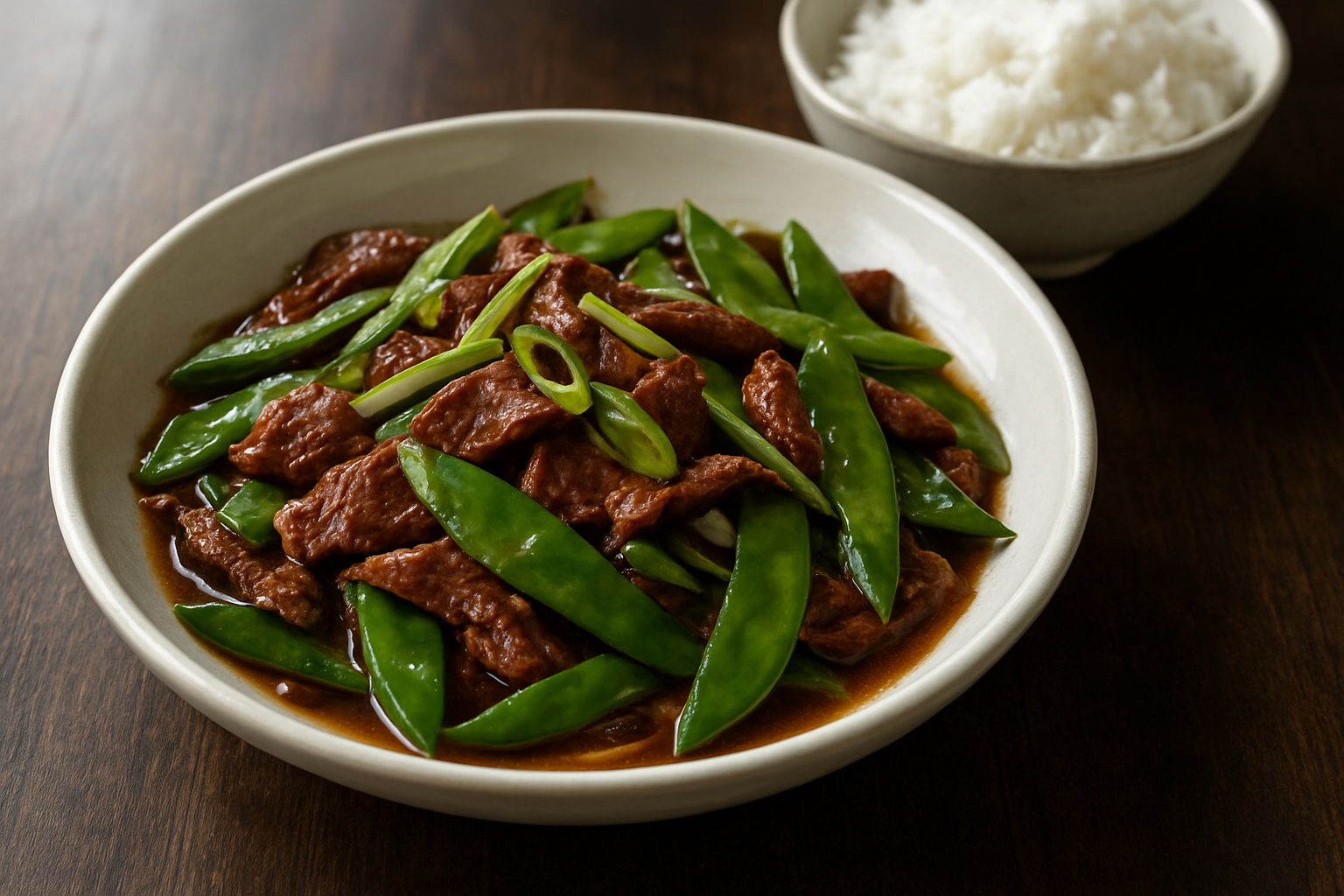
View ProductThis easy chinese beef snow pea stir fry recipe brings a classic Chinese combination of tender beef and crisp green peas to the lunch table without requiring a long ingredient list or complicated techniques. A hot skillet, thinly sliced beef, and a simple savory sauce are all it takes to make a satisfying meal that feels special enough for a weekend lunch yet moves quickly on a busy weekday.
Beef with snow peas is a familiar Chinese stir-fry pairing: the beef is sliced thin for quick cooking, while the snow peas stay bright, snappy, and lightly sweet. The sauce has savory depth from soy sauce and oyster sauce, with ginger, garlic, and a small splash of Shaoxing wine rounding out the flavor. Serving it with rice turns the dish into a complete, comforting lunch for the family.
Why this easy chinese beef snow pea stir fry recipe works
Stir-frying is especially useful when time is short because each component is cooked only as long as it needs. The beef gets a brief coating of soy sauce and cornstarch, a simple home-cook version of a common Chinese technique for protecting its tender texture. The snow peas need only a few minutes of high heat, so they retain their fresh bite instead of becoming limp.
The sauce is also intentionally straightforward. Rather than relying on a bottled stir-fry sauce, it uses pantry-friendly seasonings that create a glossy coating when they meet the heat of the pan. The result is savory and balanced rather than overly sweet. Everything is cooked in one wok or wide skillet, which makes cleanup manageable for a midday meal.
For beginner cooks, the biggest advantage is that the recipe follows a reliable stir-fry rhythm: prepare everything before heating the pan, cook the protein briefly, cook the vegetables, then bring it together with sauce. Having the ingredients measured and placed beside the stove prevents the rushed feeling that can make stir-frying seem difficult.
Helpful stir-fry tips for tender beef and crisp peas
Choose flank steak, sirloin, flat iron steak, or another cut that can be sliced thinly. For the most tender pieces, chill the beef in the freezer for 15 to 20 minutes before slicing if you have time; firmer meat is easier to cut evenly. Most importantly, cut across the visible muscle fibers rather than along them. Thin, even strips cook in moments and are easier for children to eat.
Let the skillet become properly hot before adding the beef. If the pan is merely warm or overcrowded, the meat releases moisture and steams instead of browning. A large skillet is completely suitable if a wok is not available; simply cook the beef in two batches if necessary. Removing the beef before it is fully done is intentional, since it finishes gently in the sauce at the end.
Snow peas should look vivid green and still have a little crunch. Trim the stem ends and pull away any strings before cooking. Sugar snap peas are a convenient substitute, though they are thicker and need a little more time in the pan. Fresh ginger makes a noticeable difference here, but pre-minced refrigerated ginger is a helpful shortcut for particularly busy days.
Shaoxing wine contributes a subtle, traditional aroma found in many Chinese stir-fries. Dry sherry is the most practical widely available alternative. If your household avoids alcohol, use a little extra unsalted broth or water instead; the dish will still be good, though it will have a less layered flavor. This is a Chinese-style home stir-fry, so the substitutions are meant to keep the meal accessible without changing its essential beef-and-snow-pea character.
What to serve alongside it
Steamed white rice is the natural choice because it catches every bit of the savory sauce. Brown rice works too, and leftover rice makes this an even faster lunch. For a fuller spread, pair the stir-fry with a cool, crunchy Chinese cucumber salad with garlic dressing; its refreshing acidity is a welcome contrast to the rich beef.
If you have extra rice and want a second dish for a larger family lunch, try this easy Chinese egg fried rice. A small bowl of quick Chinese hot and sour soup is another fitting accompaniment when you want a warming, takeout-style lunch at home.
Storage, reheating, and food safety
This dish is at its crispest immediately after cooking, but leftovers are useful for next-day lunches. Store cooled beef and snow peas in a covered container in the refrigerator, ideally separate from rice. Reheat in a skillet with a spoonful of water over moderate heat just until the sauce is hot and the beef is warmed through. Microwave reheating works in short bursts, but the peas will soften more quickly.
Use a clean cutting board and knife for the vegetables after handling raw beef, or wash them thoroughly between tasks. Keep raw meat away from the sauce ingredients and cooked food, and refrigerate leftovers within two hours. When reheating, bring leftovers to a steaming temperature before serving.
Frequently asked questions
Can I use frozen snow peas?
Fresh snow peas give the best crisp texture. Frozen peas can work in a pinch, but thaw and dry them well first, then add them near the end so they do not water down the sauce.
Why did my stir-fry sauce become too thick?
Cornstarch thickens quickly over high heat. If the sauce tightens more than you like, stir in a tablespoon or two of water until it loosens and evenly coats the beef and vegetables.
Is this easy chinese beef snow pea stir fry recipe suitable for meal prep?
Yes, with one small tradeoff: the snow peas will lose some crunch after storage. Portion the cooked stir-fry with rice in airtight containers, then reheat gently for a practical lunch during the next few days.