easy gravlax recipe: Quick Scandinavian Cured Salmon with Dill Mustard Sauce
easy gravlax recipe: Quick Scandinavian Cured Salmon with Dill Mustard Sauce
Ingredients
- 1 1/2 lb center-cut skin-on salmon fillet pin bones removed (680 g), preferably farm-raised Atlantic salmon from a reputable fish seller
- 1/3 cup kosher salt 70 g
- 1/3 cup granulated sugar 67 g
- 1 tsp coarsely ground black pepper 2 g
- 1 packed cup fresh dill sprigs divided (30 g)
- 2 tbsp Dijon mustard 30 g
- 1 tbsp whole-grain mustard 15 g
- 1 tbsp honey 21 g
- 1 tbsp apple cider vinegar 15 ml
- 2 tbsp neutral oil such as grapeseed or avocado oil (30 ml)
- 1 tbsp finely chopped fresh dill 3 g
Instructions
- Pat the salmon dry with paper towels. Run clean fingers over the flesh and remove any pin bones with clean tweezers or fish pliers. Leave the skin on; it makes slicing the cured salmon easier.
- In a small bowl, mix the kosher salt, sugar, and black pepper. Scatter about one-third of the dill in the center of a rimmed dish or small baking pan just large enough to hold the salmon.
- Sprinkle half of the salt mixture over the dill. Place the salmon skin-side down on top, then cover the flesh evenly with the remaining salt mixture. Pack the remaining dill over the salmon.
- Cover the salmon tightly with plastic wrap or place it in a large resealable bag. Set a second small pan or plate on top and weigh it down with a few cans. Refrigerate for 36 to 48 hours, turning the salmon over once about halfway through the curing time. Keep it refrigerated throughout.
- To make the dill mustard sauce, whisk the Dijon mustard, whole-grain mustard, honey, apple cider vinegar, and oil until smooth and slightly thickened. Stir in the chopped dill. Refrigerate until ready to serve.
- Unwrap the salmon and discard the dill and liquid. Briefly rinse the surface under cold running water, then pat very dry. Place the salmon skin-side down on a cutting board. Holding a sharp slicing knife at a low angle, cut very thin slices from the wide end, leaving the skin behind.
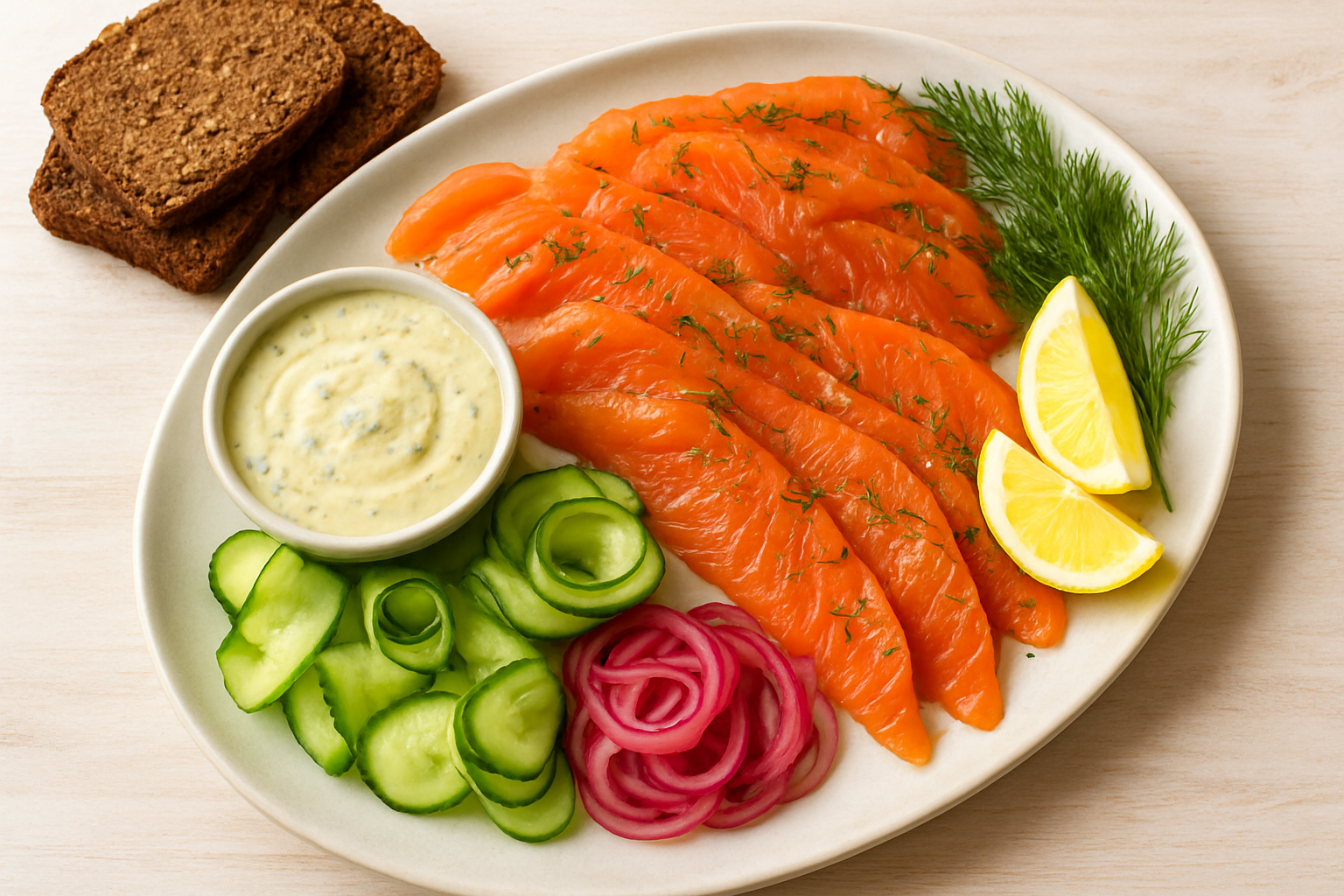
- Serve chilled with the dill mustard sauce. For an easy lunch or appetizer platter, add rye bread or crackers, cucumber slices, lemon wedges, pickled red onions, and greens.
This easy gravlax recipe brings the bright, clean flavors of Scandinavian cured salmon to a make-ahead lunch or casual appetizer board without any stovetop cooking. A brief hands-on cure turns a good salmon fillet into silky, thin slices with a gently seasoned flavor, while the tangy dill mustard sauce adds the familiar Nordic sweet-and-sharp finish. It is an especially useful option when you want something that feels special but can be prepared ahead for guests or a relaxed family weekend.
Why You’ll Love This Easy Gravlax Recipe
Gravlax looks elegant on a platter, yet the method is approachable for beginners. The refrigerator does nearly all the work: the cure firms the fish, draws out a little moisture, and gives it its distinctive texture. There is no complicated equipment, no hot pan to watch, and no last-minute cooking. Once cured and sliced, it is ready to set out cold.
The flavor is also easy to tailor. Traditional gravlax centers on fresh dill, a balanced salty-sweet cure, and mustard sauce, but you can adjust the sauce to suit your family’s taste. A little more honey softens its bite, while an extra spoonful of mustard makes it more assertive. The salmon itself is lovely with dark rye, crisp cucumber, pickled onions, lemon, capers, or a simple green salad.
For a heartier Nordic-inspired lunch, serve the salmon alongside crispy German potato pancakes; their mild, savory flavor works beautifully with cool cured fish and sauce. If you are building a broader Scandinavian-style spread for company, Swedish meatballs with cream sauce make a warm, crowd-friendly companion.
Helpful Tips for Scandinavian Cured Salmon
Start with a thick, even piece of salmon rather than a thin tail section. An evenly shaped fillet cures more predictably and is much easier to slice. Skin-on salmon is the best choice because the skin holds the fish steady on the cutting board; slice the flesh away from it instead of trying to remove it first.
Accurate measuring matters with cured fish. The salt and sugar are not merely seasonings: together, they create the curing environment and affect both the final texture and flavor. Measuring by weight is the most reliable approach, particularly because brands of kosher salt vary in crystal size. Do not reduce the salt substantially or replace it with a random amount of another salt.
Use a rimmed dish, as the salmon will release liquid while it cures. The gentle weight on top helps the cure stay in close contact with the fish and encourages even firming. Turn the wrapped fish carefully about halfway through so both sides cure evenly. If your fillet is thinner than average, begin checking it toward the earlier end of the curing window; it should feel firm but still supple.
Thin slicing is the finishing skill that makes this easy gravlax recipe feel restaurant-worthy. Chill the cured salmon well, use a long sharp knife, and keep the blade at a shallow angle. Draw the knife smoothly across the surface rather than sawing. Imperfect pieces are still delicious, so do not worry if your first few slices are uneven.
Easy Variations and Serving Ideas
Keep the classic dill profile for the most traditional result, or add a small amount of crushed coriander seed, lemon zest, or lightly crushed juniper berries to the cure for a different aroma. Use these accents sparingly so they support rather than cover the salmon’s delicate taste. A touch of horseradish in the dill mustard sauce offers a pleasantly sharp variation for adults who enjoy more heat.
For weekday lunches, make open-faced sandwiches with rye bread, gravlax, cucumber ribbons, and a thin layer of sauce. For an appetizer, arrange slices in a loose fan on a chilled plate and let guests build crackers or small toasts. The salmon also makes an appealing addition to a brunch spread with soft eggs, fresh fruit, and a salad. Keep the sauce on the side so everyone can add as much as they like.
Storage and Serving Cold
After curing, keep the salmon tightly wrapped or in an airtight container in the coldest part of the refrigerator. Store the sauce separately so the salmon stays neat and easy to slice. This is a cold preparation, so reheating is not recommended; heat would change its delicate texture. If you freeze leftovers, divide them into small portions first and thaw only what you plan to use in the refrigerator.
Raw Fish Food Safety
Although curing changes the salmon’s texture and flavor, gravlax remains uncooked. Buy fish from a reputable seller, keep it cold from purchase through serving, and use clean hands, tools, and work surfaces. Choose salmon appropriate for raw preparation or commercially frozen for parasite control; home curing alone is not a substitute for appropriate sourcing. Do not leave the finished salmon at room temperature for extended serving periods. People who are pregnant, very young, older, or immunocompromised should choose fully cooked fish or seek individualized advice from a healthcare professional.
Frequently Asked Questions
What is the difference between gravlax and lox?
Both are cured salmon, but gravlax is traditionally associated with Nordic seasoning, especially dill. Lox is commonly brined and may have a saltier, more straightforward flavor. Neither name automatically means the fish has been smoked.
Can I make this easy gravlax recipe ahead for guests?
Yes. It is designed for advance preparation because the fish needs refrigerator curing time. Slice it shortly before serving for the tidiest presentation, and keep the platter chilled until it goes to the table.
Why is my cured salmon firmer around the edges?
The thinner edges cure faster than the thick center, which is normal. Starting with an even fillet, weighing it gently, and avoiding an overly long cure helps keep the texture balanced.
What should I do with leftover dill mustard sauce?
Use it on turkey or ham sandwiches, spoon it over roasted potatoes, or whisk a little into a vinaigrette for a potato or green salad. Keep it refrigerated in a covered container.