Japanese Food Culture: Traditions, Ingredients, Everyday Meals and Iconic Dishes
Japanese food culture is much more than sushi, ramen, and the dishes that have become famous around the world. It is shaped by geography, seasonality, rice, fermentation, regional traditions, everyday home cooking, and a long relationship between food and nature.
One of the most important ideas for understanding Japanese cuisine is washoku. Rather than referring to a single recipe or fixed menu, washoku describes a broader food culture built around knowledge, preparation, ingredients, customs, and shared meals. UNESCO inscribed “Washoku, traditional dietary cultures of the Japanese, notably for the celebration of New Year” on its Representative List of the Intangible Cultural Heritage of Humanity in 2013.
From a bowl of rice eaten at home to elaborate New Year dishes, Japanese food tells stories about place, season, family, adaptation, and continuity. Understanding those stories reveals a cuisine that is far more diverse than its most internationally famous dishes suggest.
What Is Japanese Food Culture?
Japanese food culture is the collection of cooking traditions, ingredients, eating practices, regional cuisines, seasonal customs, and social meanings connected with food in Japan. It includes traditional washoku, regional specialties, everyday home meals, festival foods, tea and sweets, as well as newer Japanese dishes shaped by international influences.
Japan’s Ministry of Agriculture, Forestry and Fisheries describes washoku as extending beyond individual dishes to the larger food culture of Japan. Rice, soup, side dishes, seasonal ingredients, fermented seasonings, regional foods, presentation, and meals connected with annual celebrations are all part of that broader picture.
This is why studying Japanese cuisine by listing “famous foods” alone misses much of what makes it interesting. The way ingredients are chosen, the season in which they are eaten, the region they come from, and the occasion surrounding the meal can matter as much as the dish itself.
Washoku: More Than a Collection of Traditional Dishes
The word washoku is often translated as “Japanese food” or “Japanese cuisine,” but its cultural meaning is broader. UNESCO describes washoku as a social practice involving the skills, knowledge, practices, and traditions connected with producing, processing, preparing, and consuming food. It also emphasizes a relationship with nature and the use of locally available ingredients such as rice, fish, vegetables, and edible plants.
That definition is important because washoku should not be treated as one rigid menu that every Japanese family follows every day. It is better understood as a framework of food traditions that includes seasonality, regional variation, cooking knowledge, presentation, shared meals, and food connected with celebrations.
What Is Ichiju Sansai?
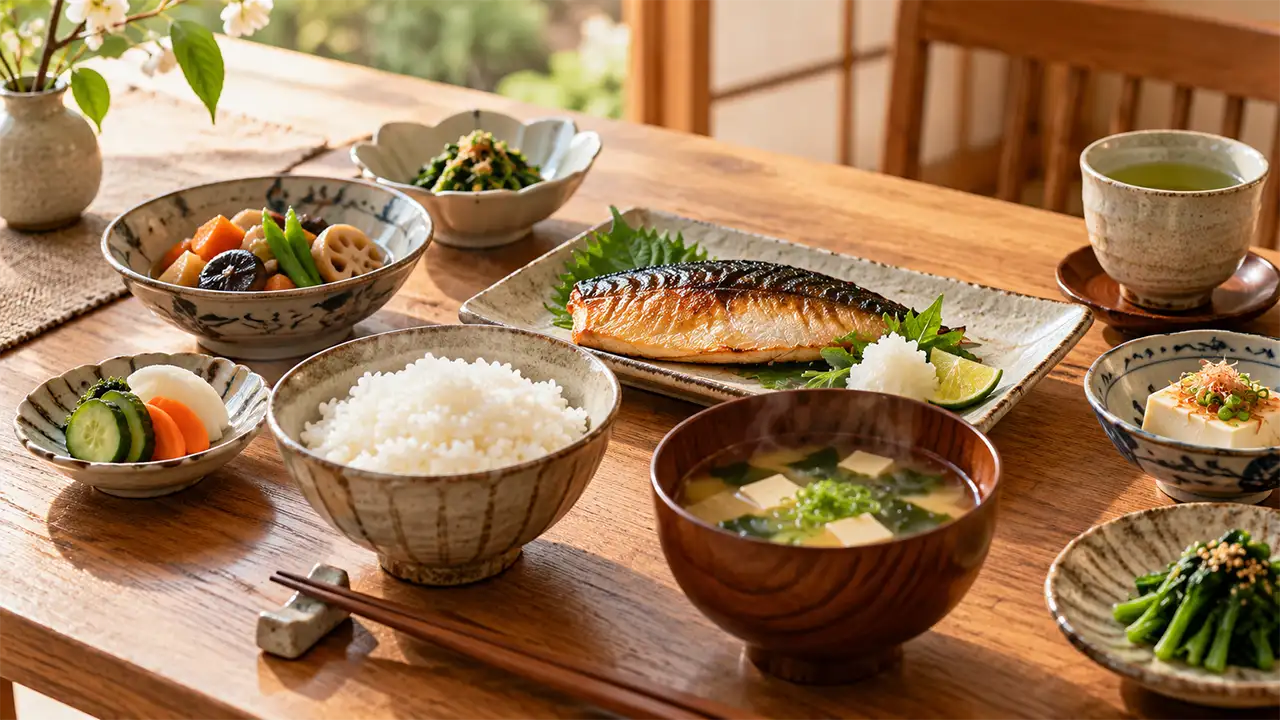
One well-known traditional meal structure is ichiju sansai, usually translated as “one soup, three dishes.” A meal based on this idea commonly centers on rice and soup alongside a main dish and vegetable or other side dishes.
The structure helps explain how different tastes, ingredients, textures, and cooking methods can appear together at one meal. It remains an important reference point for understanding washoku, even though modern Japanese meals can take many other forms.
How Geography Shaped Japanese Food
Japanese cuisine cannot be separated from Japan’s geography. The country stretches a long distance from north to south, from the colder environment of Hokkaido to the subtropical climate of Okinawa. Mountains, coastlines, agricultural areas, and different local climates have all influenced what people grow, catch, preserve, cook, and eat.
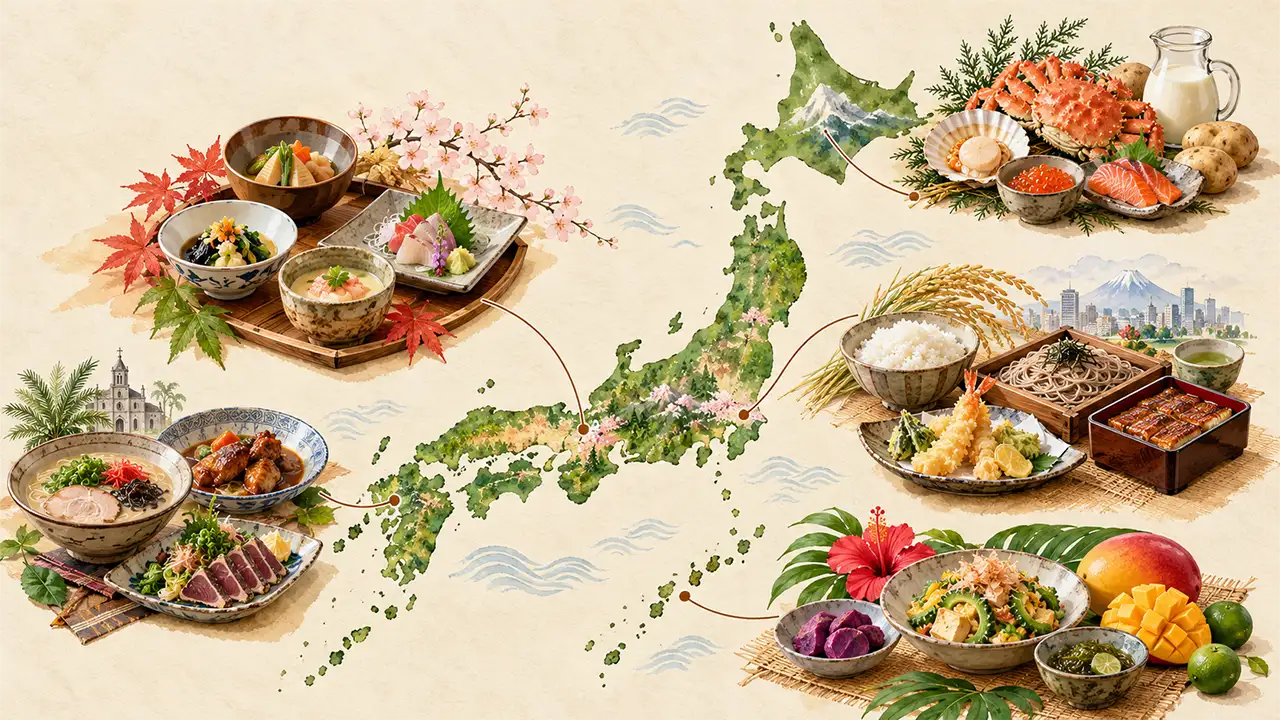
Japan’s Ministry of Agriculture, Forestry and Fisheries highlights this climatic diversity as one of the reasons the country developed so many regional foods and preservation techniques. Before modern refrigeration and transportation made ingredients easy to move across the country, communities depended much more heavily on what could be produced or preserved locally.
This helps explain why talking about “Japanese cuisine” as if it were completely uniform can be misleading. A dish associated with Hokkaido may have little in common with a specialty from Okinawa. Seasonings, seafood, vegetables, preservation methods, and even New Year soups can change substantially from one region to another.
Regional food is therefore more than variety for variety’s sake. It reflects climate, landscape, agriculture, local history, trade, and the practical ways communities adapted to the ingredients available around them.
Rice and Its Place in Japanese Food Culture
Rice has long occupied a central place in Japanese food culture. Japan’s Ministry of Agriculture describes washoku as a rice-centered culinary culture, and rice appears in everyday meals as well as celebrations and foods made from processed rice.
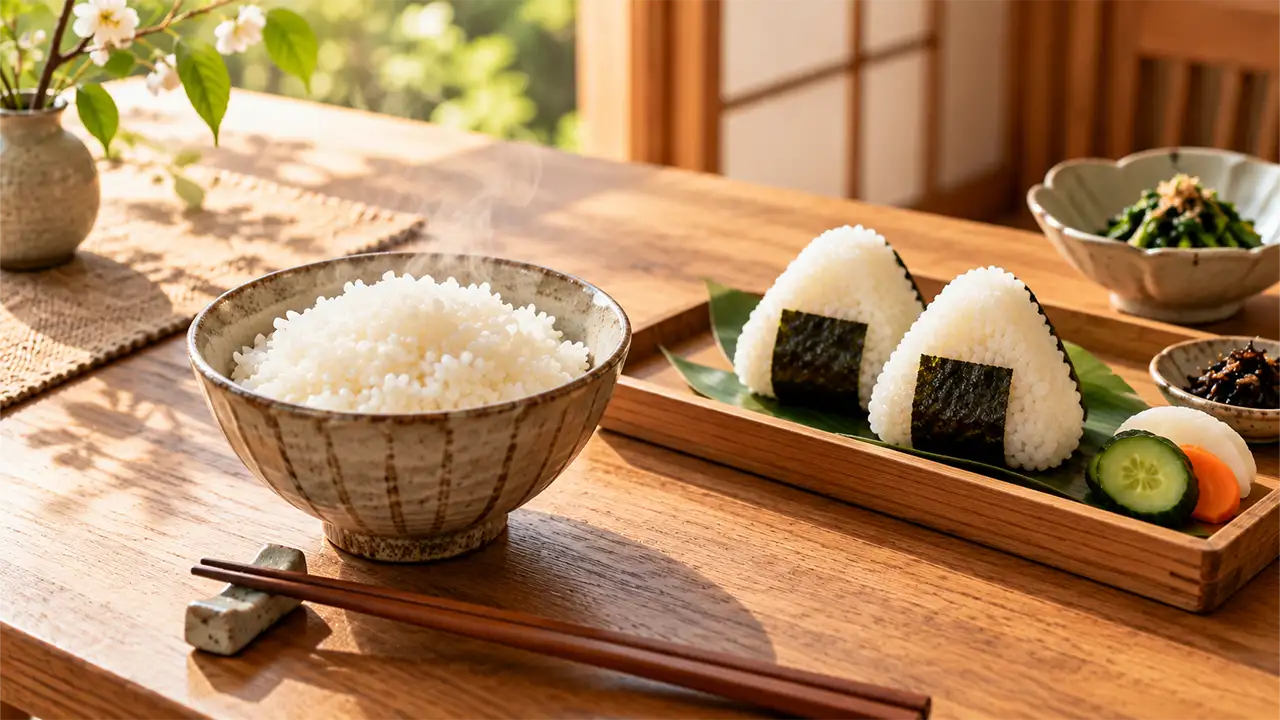
A bowl of steamed rice can form the center of a simple meal. Rice is also transformed into foods such as onigiri, mochi, and sushi rice. In these different forms, the same ingredient can move from an ordinary lunch to a festival or ceremonial setting.
Onigiri is a particularly useful example of the everyday side of Japanese cooking. These rice balls are usually shaped for convenient eating and can contain a wide range of fillings. They are portable, practical, and closely connected with lunch culture and simple home cooking.
Try it at home: Family Flavor Atlas has an Easy Japanese Onigiri Tuna Recipe made with short-grain rice, tuna mayonnaise, and nori. It is a beginner-friendly way to explore one everyday use of Japanese rice.
Fermentation, Dashi and the Foundations of Japanese Flavor
Some of the most recognizable flavors in Japanese cooking come from ingredients that are fermented, dried, aged, or carefully preserved. Miso and soy sauce are two especially important examples, while fermented foods and seasonings vary widely by region.
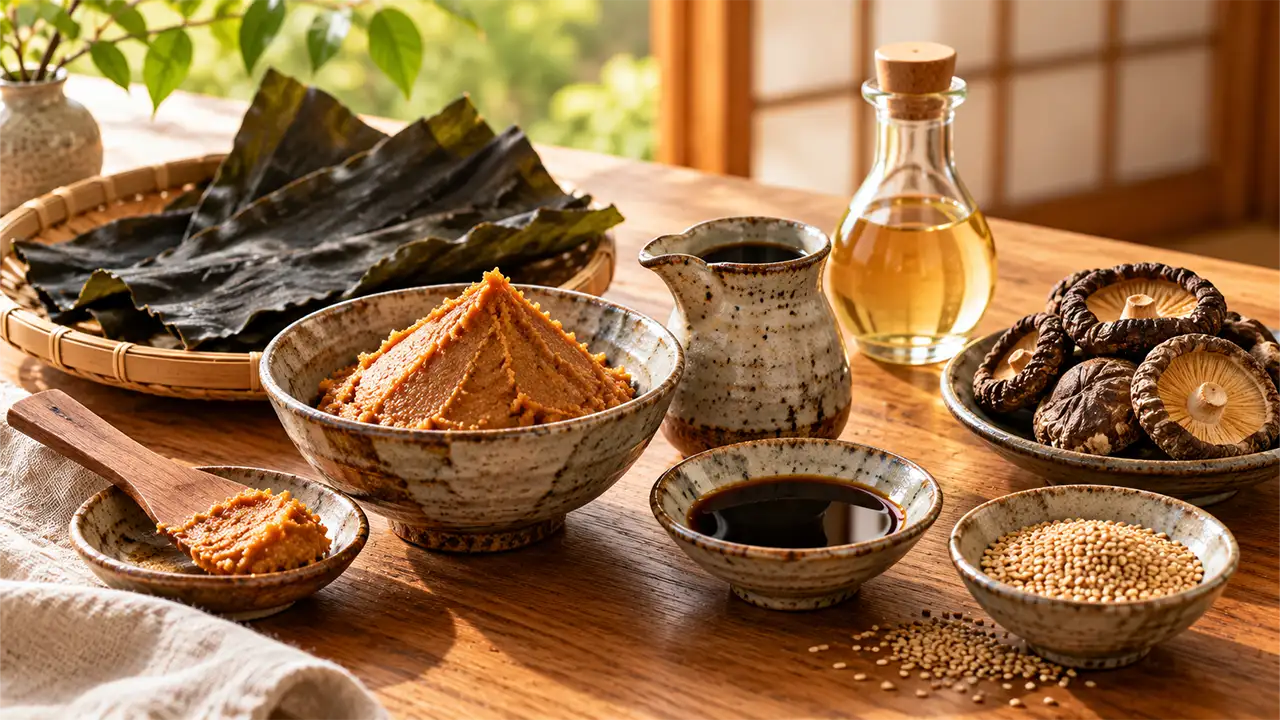
Japan’s humid climate contributed to the development of fermentation traditions, including seasonings such as miso and soy sauce. These products became fundamental components of Japanese cooking and are used in everything from soups and marinades to dipping sauces and braised dishes.
Another foundation is dashi, the family of stocks used to build savory flavor in many Japanese dishes. Common dashi ingredients include kombu seaweed, dried bonito, dried small fish, and dried mushrooms, with the exact choice depending on the dish and the cook.
What Is Umami?
Umami is the savory taste associated with ingredients rich in naturally occurring glutamates and related compounds. In Japanese cooking, dashi, kombu, dried mushrooms, miso, soy sauce, and other fermented or dried ingredients can contribute deeply savory flavor without requiring a heavy sauce.
This does not mean that all Japanese dishes taste the same. Instead, umami often works as one layer among sweetness, saltiness, acidity, bitterness, aroma, and texture.
A simple bowl of miso soup shows how several of these ideas come together. Dashi provides the base, fermented miso contributes flavor and aroma, and ingredients such as tofu and wakame create texture and substance.
Explore the recipe: Try our Easy Japanese Miso Soup with Tofu and Wakame.
Why Seasons Matter in Japanese Cuisine
Seasonality is one of the most frequently discussed characteristics of traditional Japanese food culture. It goes beyond simply eating strawberries in one season and squash in another. Seasonal awareness can influence ingredients, colors, garnishes, tableware, sweets, and the overall presentation of a meal.
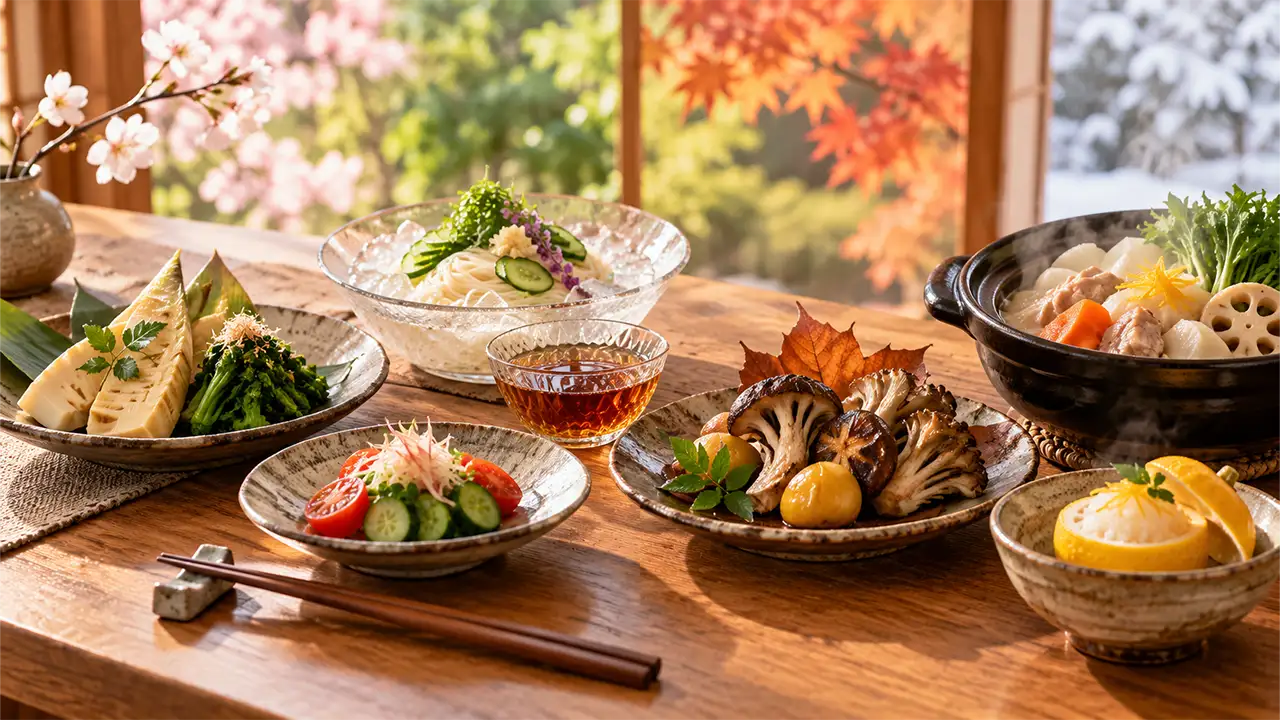
Japanese culinary traditions emphasize the concept of shun—the period when an ingredient is considered to be at its seasonal peak. Fish, vegetables, fruits, and other foods may be associated with particular times of year, while dishes can be decorated or served in ways that evoke seasonal changes.
Spring
Spring cooking can highlight young vegetables, bamboo shoots, greens, seasonal fish, and foods or sweets visually connected with cherry blossom season. The emphasis often shifts toward fresh colors and ingredients associated with renewal.
Summer
Hot and humid weather encourages lighter foods, chilled noodles, fresh vegetables, cold sweets, and dishes designed to feel refreshing. Presentation can also emphasize coolness through glassware, water imagery, or seasonal garnishes.
Autumn
Autumn brings ingredients such as mushrooms, chestnuts, sweet potatoes, and seasonal fish. It is a season strongly associated with harvest and deeper, earthier flavors.
Winter
Winter meals often become warmer and more comforting, with soups, hot pots, root vegetables, seafood, and seasonal citrus playing important roles. New Year food traditions also make winter especially significant in Japanese culinary culture.
Seasonality does not mean that every modern household follows a strict traditional calendar. Supermarkets, imports, refrigeration, and contemporary lifestyles have changed ingredient availability. Yet the idea of connecting food with the time of year remains highly visible in restaurants, confectionery, celebrations, and regional cuisine.
How the Edo Period Changed the Way Japan Ate
The Edo period, which began in the early 17th century, was enormously important for the development of food culture in Edo, the city now known as Tokyo. As the city grew, a vibrant food culture developed among townspeople, including the expansion of street-food stalls known as yatai.
Historical food-culture sources from Japan’s Ministry of Agriculture describe how sushi, tempura, and soba became associated with this urban food-stall culture. These foods suited a growing city where people wanted meals that could be prepared and eaten relatively quickly.
Sushi Before the Modern Sushi Bar
Sushi has a much longer history than the familiar pieces served at contemporary sushi restaurants. Earlier forms were connected with preservation and fermentation. Over time, different types of sushi developed, including faster preparations using vinegared rice.
Nigiri-zushi became popular in Edo during the Edo period, where it could be sold at food stalls as an accessible meal for ordinary townspeople.
This history makes an important point: foods that are now associated internationally with refined Japanese dining were not always formal or luxurious. Some evolved in busy urban environments as practical food for everyday people.
Tempura and Cultural Exchange
Tempura also illustrates how Japanese food has developed through cultural exchange. Japanese food-culture sources connect the history of tempura with European frying techniques introduced through Portuguese contact in the 16th century. The Edo version later developed around battered seafood fried in oil and became popular at street stalls.
Rather than making tempura “less Japanese,” this history demonstrates how cuisines evolve. Techniques can travel between cultures and then be adapted to local ingredients, tastes, technologies, and eating habits until they become part of a distinct culinary tradition.
What Do People Eat in Everyday Japanese Meals?
Everyday Japanese food is far broader than restaurant sushi. Home meals can include rice, soup, noodles, eggs, fish, chicken, vegetables, tofu, pickles, curry, donburi rice bowls, and many other practical dishes.
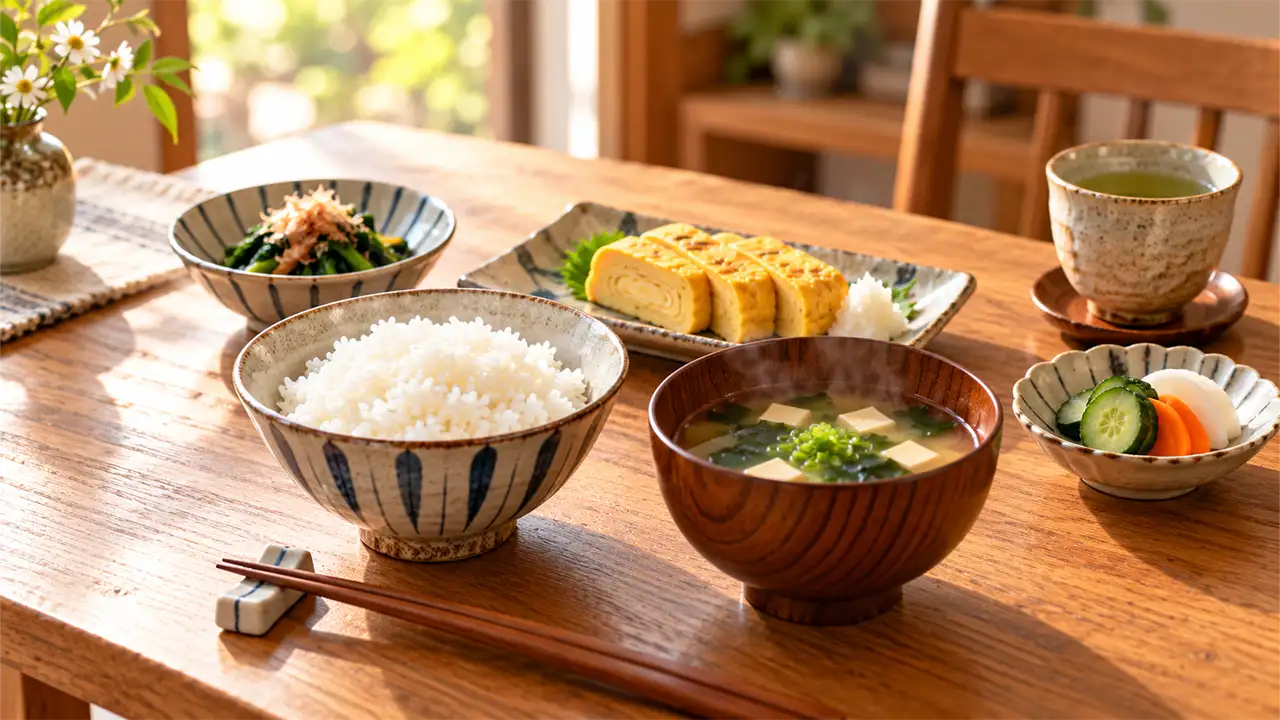
One meal might follow a more traditional rice-and-soup structure, while another might be a single bowl of noodles or a donburi topped with meat, egg, or vegetables. Bento lunches, prepared foods, convenience stores, supermarkets, cafés, family restaurants, and international influences are all part of contemporary eating in Japan.
Donburi—rice bowls topped with another preparation—are a good example of practical everyday food. Oyakodon, for instance, combines chicken, onion, and softly cooked egg over rice in a savory-sweet broth.
Try it at home: Explore our Easy Japanese Oyako Donburi Recipe.
Another example is onsen tamago, eggs traditionally associated with gentle cooking in hot spring water. Modern home versions can use controlled low-temperature cooking to create delicately set whites and creamy yolks.
Explore the recipe: Simple Japanese Onsen Tamago.
Japanese Regional Food: One Country, Many Local Traditions
There is no single regional cuisine that can represent all of Japan. Climate, agriculture, fishing, preservation, trade, and local history have produced distinctive food traditions across the country.
Regional diversity is one of the defining characteristics of Japanese cuisine. Local dishes and preservation methods developed in response to different climates and available ingredients, and many continue to be passed down today.
Hokkaido
Japan’s northern island is strongly associated with seafood and ingredients suited to a colder climate. Dairy farming also has a larger presence there than in many parts of the country, contributing to local dishes and sweets.
Tokyo and the Former Edo Food Culture
Tokyo carries the legacy of Edo food culture. Edomae sushi, tempura, soba, eel dishes, and foods linked with the former Tokyo Bay environment illustrate how the city’s geography and rapid urban growth shaped what its residents ate.
Kansai
The Kansai region, including cities such as Kyoto and Osaka, has its own long culinary traditions and approaches to ingredients, seasoning, sweets, and ceremonial foods. Even something as apparently universal as New Year soup can differ significantly from versions served in eastern Japan.
Kyushu
Kyushu’s history of international contact contributed to distinctive culinary exchanges. Nagasaki, for example, became an important point of contact with Portuguese and other foreign influences, leaving traces in fried foods, sweets, and other local specialties.
Okinawa
Okinawa has a food culture shaped by its subtropical climate and its own historical development. Its traditions differ in important ways from many foods associated with mainland Japan, another reminder that Japanese culinary culture is not uniform from north to south.
Food, Family and the Japanese New Year
New Year is especially important for understanding the cultural meaning of washoku. UNESCO’s inscription specifically highlights Japanese New Year food traditions because they bring together seasonal ingredients, symbolism, preparation, family, and community.
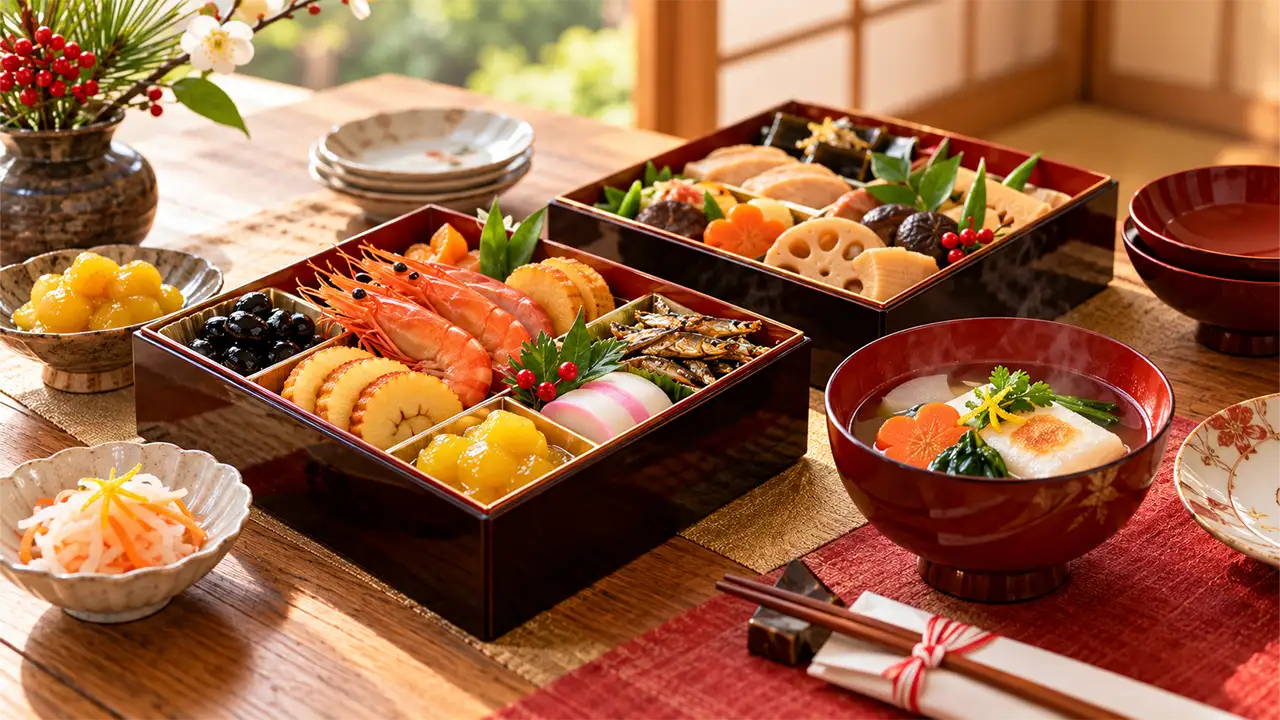
Osechi Ryori
Osechi ryori refers to foods prepared for the New Year period, often arranged in special boxes and selected partly for their symbolic meanings. Different ingredients can represent wishes connected with prosperity, health, longevity, fertility, or a good year ahead.
These foods are not simply a menu. Their preparation, presentation, symbolism, and the act of sharing them contribute to their cultural significance.
Mochi
Mochi, made from glutinous rice, has a strong connection with New Year traditions. Rice cakes can appear in offerings, celebrations, and dishes served to family members during the holiday period.
Ozoni: A New Year Soup That Changes From Place to Place
Ozoni, a soup containing mochi, is one of the clearest examples of regional diversity in Japanese food.
The broth may be clear or miso-based. The mochi may be round or square, grilled or simmered. Dashi ingredients and vegetables can change by region, and household traditions can differ even within the same area.
That makes ozoni especially meaningful for Family Flavor Atlas: the basic idea may be recognizable across Japan, but the version served at one family table can tell a much more local and personal story.
Tea, Matcha and Japanese Sweets
Japanese food culture also has a quieter side built around tea and sweets. Green tea is part of both formal traditions and everyday life, while Japanese confectionery often reflects the seasons through ingredients, shapes, colors, and names.
Different styles of Japanese tea include sencha, matcha, gyokuro, hojicha, and other teas produced through distinct cultivation and processing methods.
Wagashi and the Seasons
Wagashi is a broad term for traditional Japanese confectionery. Many wagashi are designed with seasonal imagery in mind and are commonly paired with tea. Shapes, colors, ingredients, and motifs can evoke flowers, leaves, festivals, or particular times of year.
Matcha Beyond the Tea Bowl
Matcha is powdered green tea closely associated with Japanese tea culture, but it has also become a popular flavor in contemporary desserts and baking. Its earthy bitterness works particularly well when balanced by sweetness.
Try a Japanese-inspired sweet: Explore our Easy Japanese Matcha Cookies.
Japanese Food Culture Today
Japanese food culture continues to change. Traditional dishes remain important, but they exist alongside modern home cooking, convenience foods, international cuisines, restaurant chains, creative desserts, and foods adapted from outside Japan.
One useful distinction is between washoku, traditional Japanese food culture, and yoshoku, Japanese dishes influenced by Western cooking.
That coexistence is not a contradiction. Japanese culinary history repeatedly shows adaptation: foreign techniques are adopted, ingredients change, urban lifestyles create new foods, and regional dishes move across the country.
Contemporary Japanese eating can therefore include an old regional soup, a convenience-store onigiri, a bowl of curry, handmade soba, a hamburger steak, sushi, pasta, ramen, or a home-cooked rice bowl—all within the same broader food culture.
Japanese Recipes to Explore at Home
You do not need to recreate an elaborate restaurant meal to start exploring Japanese flavors. Simple soups, rice dishes, bowls, and Japanese-inspired sweets can introduce some of the ingredients and techniques discussed in this guide.
Easy Japanese Onigiri Tuna Recipe
Short-grain rice wrapped around a creamy tuna-mayonnaise filling and finished with nori. This beginner-friendly recipe is a practical introduction to Japanese rice balls and packable lunches.
Easy Japanese Miso Soup with Tofu and Wakame
Dashi, fermented miso, tofu, wakame, and scallions come together in a light, savory soup that demonstrates several foundations of Japanese flavor in one bowl.
Easy Japanese Oyako Donburi
A comforting rice bowl topped with chicken, onion, and softly set egg simmered in a dashi, soy sauce, and mirin mixture.
View the Oyako Donburi Recipe →
Simple Japanese Onsen Tamago
Gently slow-cooked eggs served over warm rice with a simple soy and mirin sauce offer a different look at Japanese breakfast and rice-bowl culture.
View the Onsen Tamago Recipe →
Easy Japanese Matcha Cookies
These Japanese-inspired cookies pair a familiar buttery dough with the earthy character of matcha for an approachable family treat.
View the Matcha Cookies Recipe →
Easy Japanese Teriyaki Chicken Bowls
Chicken thighs, soy sauce, mirin, rice vinegar, ginger, and rice create a simple family dinner inspired by familiar Japanese flavors.
View the Teriyaki Chicken Bowls Recipe →
Watch: Japan Through Food — More Than Sushi
Our upcoming Family Flavor Atlas documentary, Japan Through Food: More Than Sushi, explores how geography, rice, fermentation, seasonality, regional traditions, everyday meals, and centuries of cultural exchange helped shape Japanese food culture.
The full documentary will be added here when it is released, allowing you to continue the journey through Japan with stories, visuals, and the food traditions explored throughout this guide.
Japanese Food Culture: The Bigger Picture
Japanese food culture cannot be explained by a list of famous dishes alone.
It is the bowl of rice at the center of an everyday meal. It is miso slowly developing flavor through fermentation. It is a market selling ingredients at their seasonal peak. It is nigiri evolving in the busy streets of Edo. It is an ozoni recipe that changes from one prefecture—or one family—to another. It is matcha served with a sweet chosen for the season.
Most importantly, it is a living culture rather than a frozen set of traditions.
Japanese cooking has continually responded to geography, seasons, trade, foreign influence, urban life, technology, and changing family routines. Traditional practices continue alongside modern food culture, and regional differences remain an essential part of the story.
Exploring Japan through food therefore means looking beyond what is most famous and asking a more interesting question: what can the way people cook, eat, preserve, celebrate, and share food tell us about the places they call home?
That question is at the heart of Family Flavor Atlas.
Good Food Brings Us Closer.
Frequently Asked Questions About Japanese Food Culture
What is Japanese food culture?
Japanese food culture includes the ingredients, cooking techniques, regional cuisines, eating habits, seasonal traditions, celebrations, and social practices connected with food in Japan. Traditional washoku is an important part of this culture, but modern Japanese food also includes regional specialties, everyday home cooking, international influences, and Japanese adaptations of foreign dishes.
What is washoku?
Washoku refers broadly to traditional Japanese dietary culture rather than one specific set of recipes. UNESCO describes it as a social practice involving knowledge and traditions related to producing, preparing, and consuming food, with a strong connection to nature and shared celebrations. Washoku was inscribed on UNESCO’s Representative List of the Intangible Cultural Heritage of Humanity in 2013.
What foods are commonly eaten in Japan besides sushi?
Japanese meals can include rice, miso soup, noodles, donburi rice bowls, grilled fish, eggs, tofu, vegetables, pickles, curry, hot pots, bento meals, and many regional dishes. Modern food culture also includes Japanese-style Western dishes and foods influenced by other cuisines.
Why are seasons important in Japanese cuisine?
Seasonality influences ingredient selection, presentation, colors, garnishes, sweets, and dining traditions. The concept of shun refers to the period when an ingredient is considered to be at its seasonal peak.
How does Japanese food vary by region?
Japan stretches across very different climates and landscapes, so local ingredients and cooking traditions vary considerably. Regional differences can be found in seafood, vegetables, seasonings, preservation methods, noodles, sweets, and ceremonial dishes.
Is sushi the most important food in Japanese culture?
Sushi is one of Japan’s most internationally recognized foods, but it represents only one part of Japanese food culture. Rice, soups, noodles, fermented seasonings, vegetables, seafood, regional foods, festival dishes, tea, sweets, and everyday home cooking are all important for understanding how people eat in Japan.
What is a traditional Japanese meal structure?
One traditional reference is ichiju sansai, or “one soup, three dishes,” typically organized around rice, soup, a main dish, and side dishes. It is an important model for understanding washoku, although modern Japanese meals can follow many different formats.